 Specialty Casters
Gate Casters
BBQ Pit & Smoker Casters
Keyed Drive Wheels
Drywall Cart Casters
Skid Wheels & Casters for RVs
Leveling Casters
Shopping Cart Wheels & Casters
Band Equipment Casters & Wheels
Low Profile Casters
Cart Wheels & Casters
Toolbox Caster Sets
Bakery Oven Rack Casters
Kitchen Prep Table Caster Sets
Wire Shelving Casters
Silent Glide Casters
Specialty Casters
Gate Casters
BBQ Pit & Smoker Casters
Keyed Drive Wheels
Drywall Cart Casters
Skid Wheels & Casters for RVs
Leveling Casters
Shopping Cart Wheels & Casters
Band Equipment Casters & Wheels
Low Profile Casters
Cart Wheels & Casters
Toolbox Caster Sets
Bakery Oven Rack Casters
Kitchen Prep Table Caster Sets
Wire Shelving Casters
Silent Glide Casters


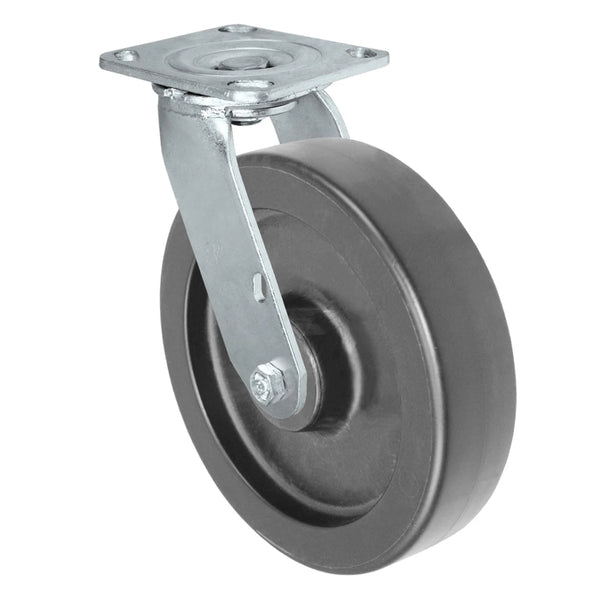
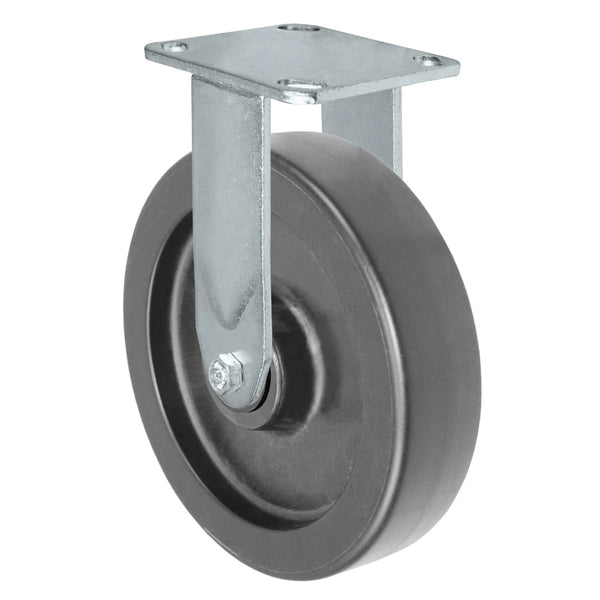
Polyolefin is a hard, lightweight plastic wheel: rigid, low-cost, and genuinely chemical-resistant. It's the right wheel for dry indoor environments where you need moderate capacity, frequent wash-downs, and a price that works at fleet scale.

Polyolefin is a molded hard-plastic wheel. It's not a tread on a core; the whole wheel is one material. That construction makes it cheap to produce, light to handle, and impervious to the water, grease, mild cleaning solutions, oils, and chemicals that degrade other wheel materials over time. For a dry indoor environment that gets washed down regularly — food prep areas, packaging lines, light institutional carts — polyolefin handles the chemistry that would slowly destroy a rubber or even a polyurethane wheel.
The trade-off is hardness. Polyolefin is rigid. It rolls easily and carries moderate loads (up to roughly 1,000 lb per wheel depending on size), but it transmits floor shock straight into the load and it can be noisy on hard floors. It is not a floor-protecting wheel the way polyurethane is, and it does not absorb impact.
Three environments rule it out. Hot or cold extremes — polyolefin loses strength at temperature and can crack in freezing conditions. Direct sunlight — prolonged UV exposure degrades the plastic. And outdoor use generally — the combination of UV and temperature swing shortens its life sharply. If any of those apply, move to polyurethane on a core or a rubber wheel.