 Specialty Casters
Gate Casters
BBQ Pit & Smoker Casters
Keyed Drive Wheels
Drywall Cart Casters
Skid Wheels & Casters for RVs
Leveling Casters
Shopping Cart Wheels & Casters
Band Equipment Casters & Wheels
Low Profile Casters
Cart Wheels & Casters
Toolbox Caster Sets
Bakery Oven Rack Casters
Kitchen Prep Table Caster Sets
Wire Shelving Casters
Silent Glide Casters
Specialty Casters
Gate Casters
BBQ Pit & Smoker Casters
Keyed Drive Wheels
Drywall Cart Casters
Skid Wheels & Casters for RVs
Leveling Casters
Shopping Cart Wheels & Casters
Band Equipment Casters & Wheels
Low Profile Casters
Cart Wheels & Casters
Toolbox Caster Sets
Bakery Oven Rack Casters
Kitchen Prep Table Caster Sets
Wire Shelving Casters
Silent Glide Casters


Match the stem: type, diameter, thread and length. How to measure a stem →


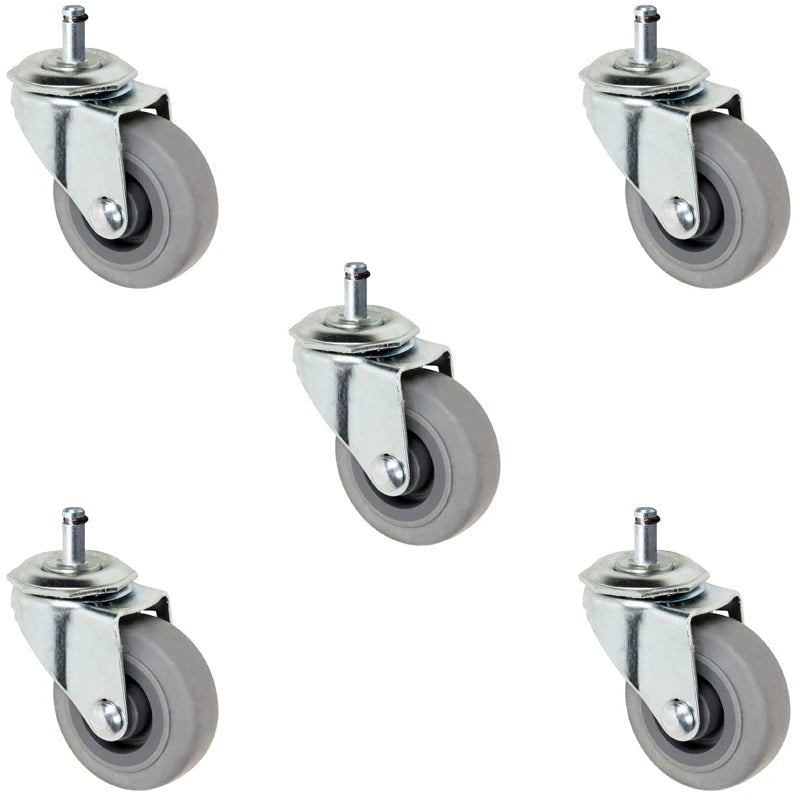
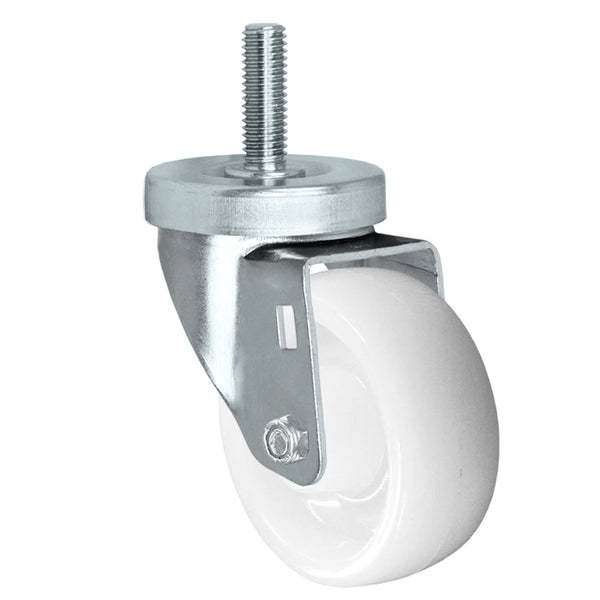
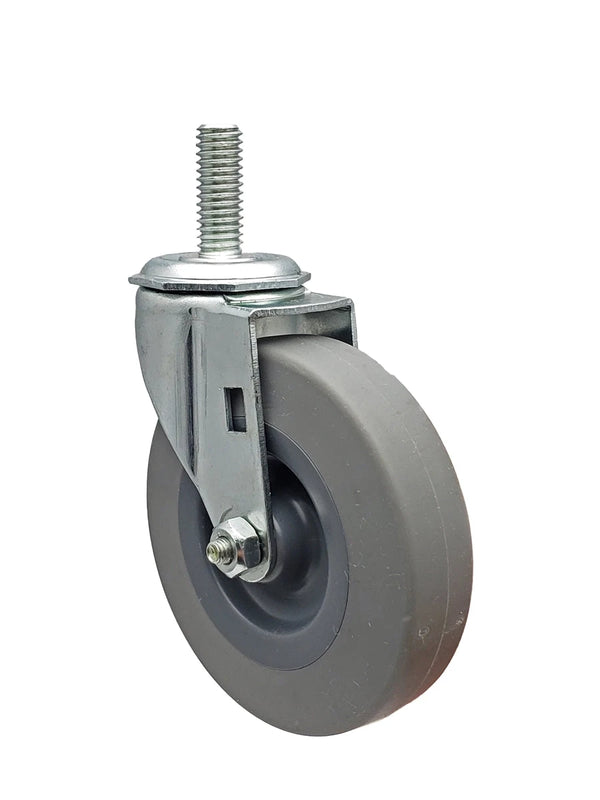
Stem casters that mount through one hole or socket: expanding adapters for tube legs, 1/2-13 and 3/8-16 threaded stems and 7/16 grip ring stems, mostly 3 to 5 in and rated 200 to 350 lb.
| Stem | Sizes listed | Fits |
|---|---|---|
| Expanding rubber adapter | Tube inside diameters from 3/4 to 1-7/8 in, round and square | Hollow round or square tube legs |
| Threaded | 1/2-13 x 7/8 to 2-1/2 in; 3/8-16 x 1 to 1-1/2 in | Tapped holes, threaded sockets, tee nuts and nuts |
| Grip ring | 7/16 x 7/8 and 7/16 x 1-3/8 in; 13/16 x 2 in | Plastic or metal grip ring sockets |
| Square stem | P&H 20 Series, .845 in square | Matching square sockets |
Product titles and fields [S1].
By stem size: 1/2 in threaded stem casters, 3/8 in threaded stem casters and threaded stem casters. Sockets: tee nuts and sockets.
Expanding rubber adapter stems, 1/2-13 and 3/8-16 threaded stems, 7/16 in grip ring stems and P&H square stems.
Measure the inside diameter of the tube. Each adapter fits only its listed range.
Most 3 to 5 in models are rated 200 to 350 lb each. 2 in models start at 80 lb, and P&H 6 and 8 in 40 Series casters reach 1,400 lb.
Yes. Side lock, top lock and total lock versions are listed.