 Specialty Casters
Gate Casters
BBQ Pit & Smoker Casters
Keyed Drive Wheels
Drywall Cart Casters
Skid Wheels & Casters for RVs
Leveling Casters
Shopping Cart Wheels & Casters
Band Equipment Casters & Wheels
Low Profile Casters
Cart Wheels & Casters
Toolbox Caster Sets
Bakery Oven Rack Casters
Kitchen Prep Table Caster Sets
Wire Shelving Casters
Silent Glide Casters
Specialty Casters
Gate Casters
BBQ Pit & Smoker Casters
Keyed Drive Wheels
Drywall Cart Casters
Skid Wheels & Casters for RVs
Leveling Casters
Shopping Cart Wheels & Casters
Band Equipment Casters & Wheels
Low Profile Casters
Cart Wheels & Casters
Toolbox Caster Sets
Bakery Oven Rack Casters
Kitchen Prep Table Caster Sets
Wire Shelving Casters
Silent Glide Casters


Wheel = wheel diameter · capacity is per caster.

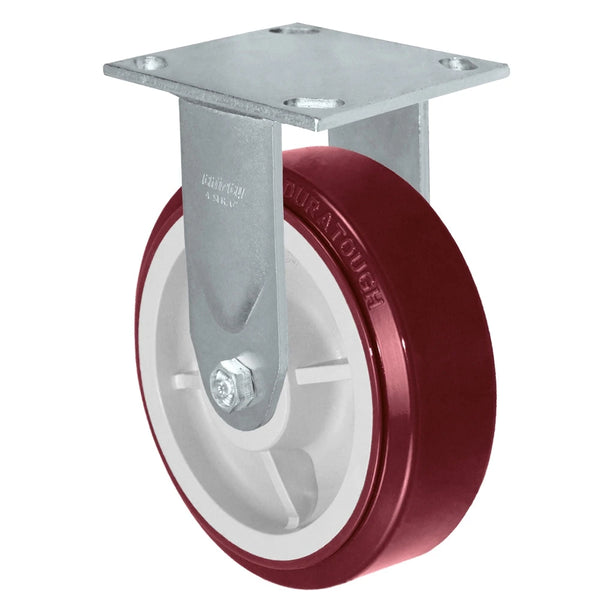
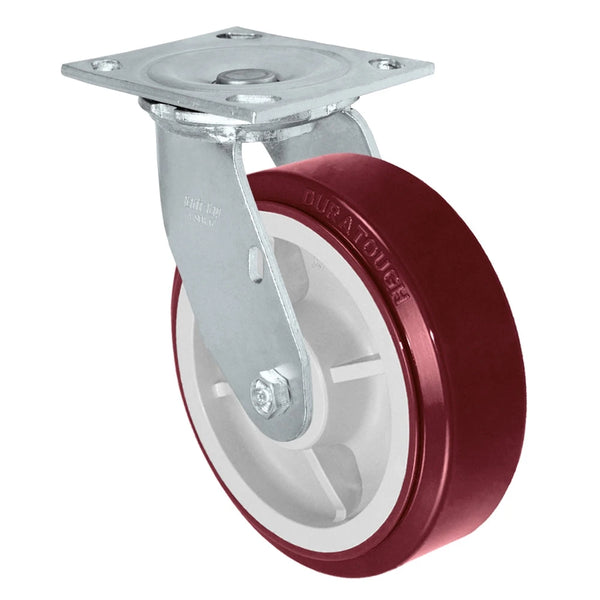
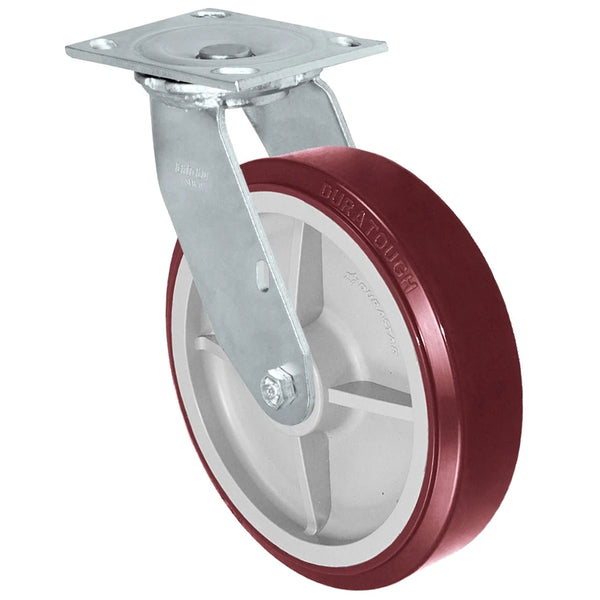
Polyurethane-on-polyolefin pairs a polyurethane tread with a lightweight polyolefin core. You get the floor protection, quiet roll, and smooth ride of polyurethane — at a price the iron-core version can't match. The economical middle of the polyurethane wheel range.
| Build | Capacity | Cost | Best for |
|---|---|---|---|
| Poly on polyolefin | up to ~1,000 lb | Lowest | Light-medium indoor, dry, temp-controlled |
| Poly on aluminum | up to ~1,500 lb | Middle | Medium duty, corrosion-resistant core |
| Poly on iron | up to ~8,000 lb | Highest | Heavy duty, the core carries the rating |
Poly-on-polyolefin keeps everything that matters about the tread: it's non-marking, it protects the floor, it rolls quietly, and it rides smoother than steel or phenolic. What you give up is in the core. A polyolefin core flexes more than aluminum or iron, which caps the capacity at roughly 1,000 lb per wheel — and like all polyolefin, it doesn't like heat, cold, or sunlight. Inside those limits — dry, indoor, temperature-controlled, under 1,000 lb — it's the best value in the polyurethane family.
Two triggers. Load: if your math lands above ~1,000 lb per wheel, the polyolefin core can't hold it — go to aluminum or iron. Environment: if the wheel sees heat, freezing, washdown with hot water, or any outdoor exposure, the polyolefin core degrades — go to an iron core, which is indifferent to all of it. Otherwise, poly-on-polyolefin does the same job as the pricier builds for less money.