 Specialty Casters
Gate Casters
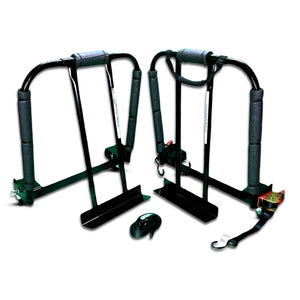
BBQ Pit & Smoker Casters
Keyed Drive Wheels
Drywall Cart Casters
Skid Wheels & Casters for RVs
Leveling Casters
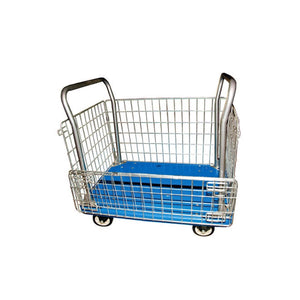
Shopping Cart Wheels & Casters
Band Equipment Casters & Wheels
Low Profile Casters
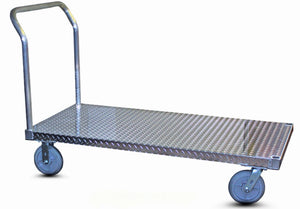
Cart Wheels & Casters
Toolbox Caster Sets
Bakery Oven Rack Casters
Kitchen Prep Table Caster Sets
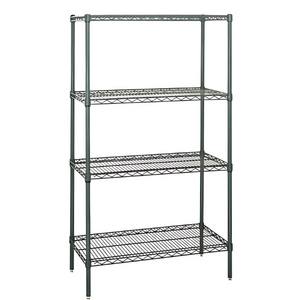
Wire Shelving Casters
Silent Glide Casters
Specialty Casters
Gate Casters
BBQ Pit & Smoker Casters
Keyed Drive Wheels
Drywall Cart Casters
Skid Wheels & Casters for RVs
Leveling Casters
Shopping Cart Wheels & Casters
Band Equipment Casters & Wheels
Low Profile Casters
Cart Wheels & Casters
Toolbox Caster Sets
Bakery Oven Rack Casters
Kitchen Prep Table Caster Sets
Wire Shelving Casters
Silent Glide Casters


| Cart Weight | Per-Caster Load (N-1) | With 1.25 Safety | With 1.35 Safety (impact) | Caster Class |
|---|---|---|---|---|
| 500 lb | 167 lb | 208 lb | 225 lb | Light institutional |
| 1,000 lb | 333 lb | 417 lb | 450 lb | Medium duty |
| 1,500 lb Most Common | 500 lb | 625 lb | 675 lb | Medium duty |
| 3,000 lb | 1,000 lb | 1,250 lb | 1,350 lb | Heavy duty |
| 6,000 lb | 2,000 lb | 2,500 lb | 2,700 lb | Extra heavy |
The maximum vertical load the caster can support without rolling. Tested on a flat surface, no motion. Catalog rating. Always the highest number. Use static rating only if the cart will sit still most of the time. Display stands, fixed tooling, parked equipment.
The maximum load the caster can support while rolling at walking speed (typically 3 mph). Typically 60 to 80 percent of static rating. The number you spec to for any cart that actually moves. Every industrial caster spec should be based on dynamic load, not static.
A momentary load spike from impact: dock plate transitions, expansion joint crossings, equipment handoffs. Shock loads run 3 to 5 times static rating in heavy industrial use. Standard ball bearings brinell under shock. Roller and tapered roller bearings handle shock without permanent deformation.
Forces parallel to the axle, generated when the caster turns under load. Standard bearings handle limited side load. Tapered roller bearings handle high thrust loads. Required for tow line carts where the swivel sees continuous thrust from cart drift during pulling.
A multiplier applied to calculated load to account for real-world variables: uneven floors, off-center loading, impact, partial caster lift, equipment drops. Industrial default is 1.5x. Use 2x to 3x for rough floors, dock plates, or impact-prone applications. Calculate load, multiply by safety factor, then spec to that number.
| Step | Calculation | Example (4-caster cart) |
|---|---|---|
| 1 | Total weight: cart tare + max load | 300 + 1,700 = 2,000 lb |
| 2 | Divide by (number of casters - 1) for partial lift | 2,000 / 3 = 667 lb per caster |
| 3 | Multiply by safety factor | 667 × 1.5 = 1,000 lb dynamic rating |
| 4 | Convert to static rating for spec lookup | 1,000 / 0.7 = 1,430 lb static |
| 5 | Pick caster with static rating ≥ calculated | Spec 1,500 lb static caster |
For uneven floors, dock plates, or shock duty: use safety factor 2.5x to 3x instead of 1.5x.
Engineer reviews your cart weight, environment, and use pattern. Returns spec'd casters within 4 business hours.