Certified Where It Matters | Exceeds ICWM Standards • ANSI Tested • NSF Certified • RoHS Compliant

The Most Trusted Source for Industrial Casters | 100,000+ Orders Fulfilled for OEMs & MRO Teams

Products Manufactured in ISO 9001:2015-Certified Facilities | Trusted by OEMs & MRO Teams

In Stock. Ready to Ship. Trusted by Industry Pros.

Caster Specialists Ready to Help | Get Fast Guidance for OEM & MRO Applications

Guaranteed Lowest Pricing on Bulk Orders | Automatic Discounts Applied Instantly at Checkout

Back

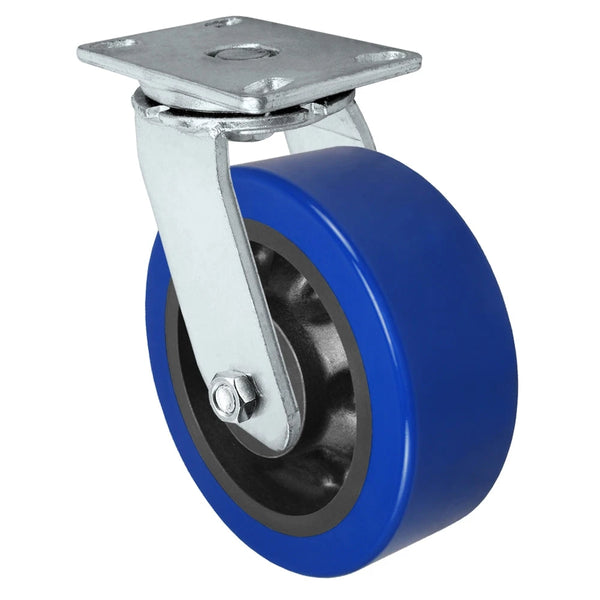
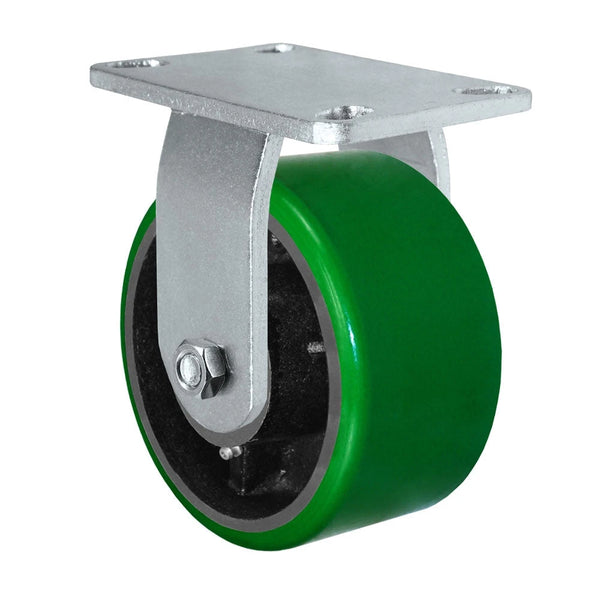
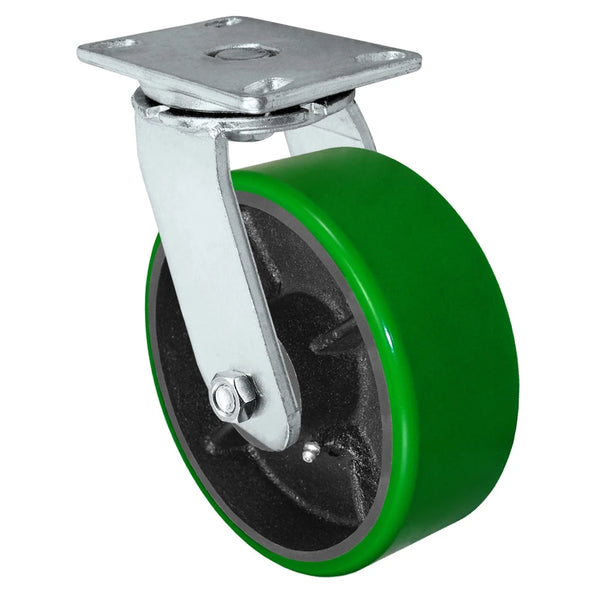
3" Wide Heavy Duty Plate Casters

Built for high-capacity industrial carts and equipment where wider wheels and a larger top plate improve stability, tracking, and load distribution. Featuring a 4-1/2" × 6-1/4" plate for stronger mounting on heavy frames.

Jump to Products ↓
3" wide wheel = more stability 4-1/2" × 6-1/4" top plate Heavy duty industrial Carts • equipment • machinery

These 3" wide casters are a go-to upgrade when standard-width wheels feel “tippy,” drift under load, or chew up floors from higher point-loading. The wider tread spreads contact area, helping with stability and smoother roll under heavy equipment.

The 4-1/2" × 6-1/4" mounting plate increases mounting rigidity and reduces fastener stress—critical for heavy-duty frames and high-cycle industrial use.

Best for

  • Heavy carts, fixtures, and industrial equipment bases
  • Loads that shift or start/stop frequently
  • Longer travel distances where tracking matters
  • Frames that need a stronger plate footprint

Fast decision rule

Choose 3" wide when you need more stability, reduced floor pressure, and better load distribution. Choose a larger plate when your frame is heavy, the duty cycle is high, or you want stronger mounting.


Plate size to confirm: 4-1/2" × 6-1/4"

Fitment checklist (verify before ordering)
  • Top plate size: 4-1/2" × 6-1/4"
  • Bolt-hole pattern: match center-to-center spacing and hole diameter
  • Overall height: confirm clearance under frame (incl. brakes if applicable)
  • Wheel width: confirm you have side clearance for a 3" wide wheel
  • Load rating: capacity is per caster; select with margin for impacts
Common mistakes (that cause returns)
  • Ordering by wheel diameter only and ignoring plate size + bolt pattern
  • Running near max rating without margin for starts/stops, impacts, and uneven floors
  • Forgetting clearance for 3" wheel width near frame corners/brackets
  • Choosing the wrong wheel material for floors (noise, marks, push force)
3" wide vs standard width (why it matters)
  • Stability: wider tread reduces rocking and improves tracking under load.
  • Floor loading: spreads weight over more contact area, often reducing point pressure.
  • Control: better behavior on seams, transitions, and slightly uneven industrial floors.
Why CasterHQ (EEAT trust block)
  • Industrial-grade product selection built for OEM/MRO buyers
  • Spec-forward content to reduce wrong orders and downtime
  • Consistent fitment guidance (plate size, bolt patterns, height, width)

Related Collections

Tip: if you’re replacing existing casters, match plate size + bolt pattern first, then choose wheel material for your floor and duty cycle.

FAQ: 3" Wide Heavy Duty Plate Casters
Why choose a 3" wide caster wheel?

A 3" wide wheel increases stability and spreads the load over more contact area. This can improve tracking, reduce rocking, and lower point-loading on floors compared to standard-width wheels—especially on heavy carts and equipment.

What plate size do these casters use?

This category emphasizes casters with a 4-1/2" × 6-1/4" top plate. Always verify your bolt-hole spacing and hole diameter to ensure direct fitment before ordering.

How do I confirm the bolt-hole pattern?

Measure the center-to-center spacing of the mounting holes (length and width), then confirm the hole diameter. Plate size alone is not enough—bolt-hole spacing must match your frame to avoid drilling or adapters.

Is the load capacity per caster or for the whole cart?

Caster load ratings are typically per caster. Multiply by the number of casters to estimate total supported load, then add margin for impacts, uneven floors, and start/stop forces in real use.

Do wider wheels reduce floor damage?

Often, yes. Wider wheels can reduce point pressure by spreading the load across more surface area. Floor protection still depends on wheel material, hardness, and debris conditions, so select wheel type for your specific floor.

What’s the difference between plate mount and stem mount?

Plate mount uses a flat plate with bolt holes for heavy-duty frames and provides a rigid connection. Stem mount inserts into a socket and is common on lighter equipment. For heavy industrial loads, plate mount is usually preferred.

How do I choose wheel material?

Match wheel material to floor and use: polyurethane often balances floor protection and roll efficiency; hard wheels roll easier but can transmit noise and impact; softer treads reduce vibration but may increase rolling resistance.

Are these casters good for uneven surfaces?

They are designed for industrial floors and heavy loads. For rough terrain (gravel/dirt/grass), pneumatic or flat-free options are typically better. On uneven indoor floors, larger diameters and appropriate tread can help.
How do I avoid flat-spotting?

Flat-spotting risk increases when heavy loads sit static for long periods, especially with certain wheel materials. Choose the correct wheel compound for your environment and avoid storing equipment fully loaded when possible.

Should I buy wheels-only or complete casters?

Buy wheels-only if the swivel rig is tight, aligned, and undamaged. Replace complete casters if the swivel is loose, bent, or worn, or if you need to change mounting type, height, or wheel width.

Do 3" wide wheels increase rolling resistance?

Sometimes. A wider tread can increase contact area, but rolling resistance depends more on wheel material, bearing type, diameter, and floor condition. For heavy loads, stability and control gains often outweigh small resistance changes.

What is the best upgrade path if my cart feels unstable?

Upgrading to a wider wheel (3"), a larger top plate, higher capacity, and appropriate wheel material typically improves stability. Also consider adding brakes or directional locks when control and positioning matter.
Caster Engineering Tools

These calculators apply to any caster application—even if you’re browsing a different category. Use them to estimate load rating per caster, select wheel material, and estimate push/pull force. Expand any tool for full analysis + a share-ready spec line.
CasterSpec Load Calculator
Fast estimate. Expand for safety factor + uneven floor + spec output.
Expand full calculator
Load
Copied.
Base per caster
Worst-case per caster
Recommended rating
Spec output (auto-generated)
Tip: paste into RFQs / threads. Expand tool for advanced inputs.
WheelMatch Material Selector
Fast recommendation. Expand for noise, duty cycle, floor protection.
Expand full selector
Wheel
Copied.
Primary recommendation
Good alternate
When to avoid
Spec output (auto-generated)
Engineers share tools that output a clean “why” line.
PushForce Push/Pull Calculator
Estimate effort fast. Expand for operators, materials, bumps, startup mode.
Expand full push/pull
Push
Copied.
Estimated total force
Per operator
Pass / target
Spec output (auto-generated)
If effort is high: bigger wheels + better material + smoother path wins.
More engineering tools
Customers
Stars Trusted by 100,000+ Industrial and Commercial Buyers | 98.7% on-time shipment rate

Industrial and Commercial Engineered Casters

Designed for engineers, manufacturers, and material handling professionals

Search