 Specialty Casters
Gate Casters
BBQ Pit & Smoker Casters
Keyed Drive Wheels
Drywall Cart Casters
Skid Wheels & Casters for RVs
Leveling Casters
Shopping Cart Wheels & Casters
Band Equipment Casters & Wheels
Low Profile Casters
Cart Wheels & Casters
Toolbox Caster Sets
Bakery Oven Rack Casters
Kitchen Prep Table Caster Sets
Wire Shelving Casters
Silent Glide Casters
Specialty Casters
Gate Casters
BBQ Pit & Smoker Casters
Keyed Drive Wheels
Drywall Cart Casters
Skid Wheels & Casters for RVs
Leveling Casters
Shopping Cart Wheels & Casters
Band Equipment Casters & Wheels
Low Profile Casters
Cart Wheels & Casters
Toolbox Caster Sets
Bakery Oven Rack Casters
Kitchen Prep Table Caster Sets
Wire Shelving Casters
Silent Glide Casters


Rubber and polyurethane favor floor protection; phenolic and steel favor heavy capacity. Compare materials →


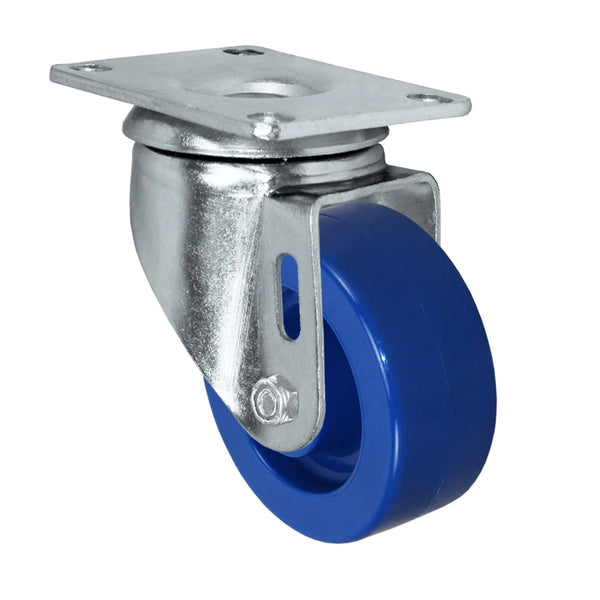
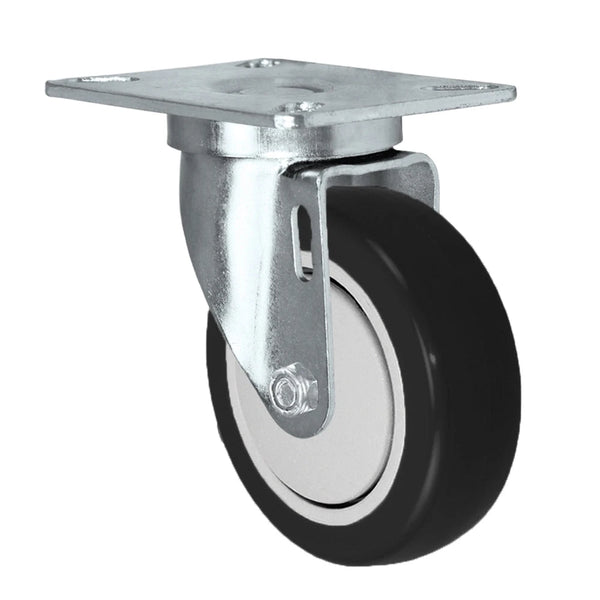
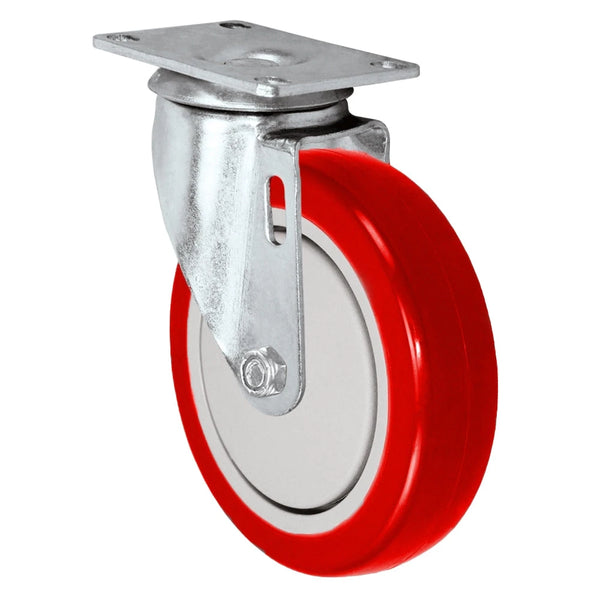
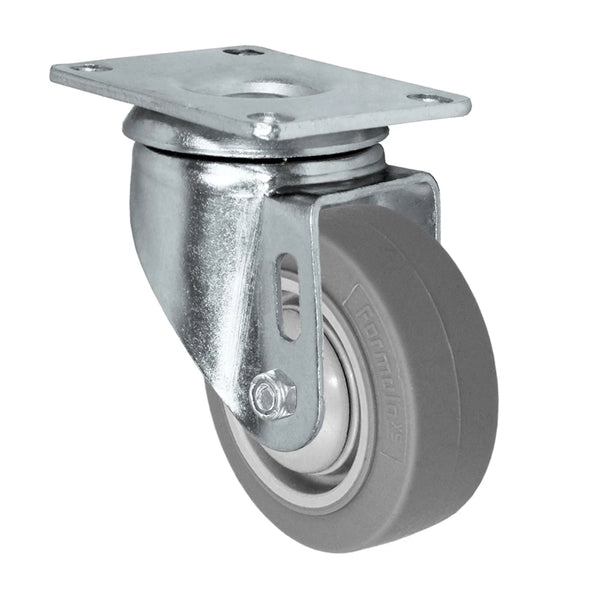
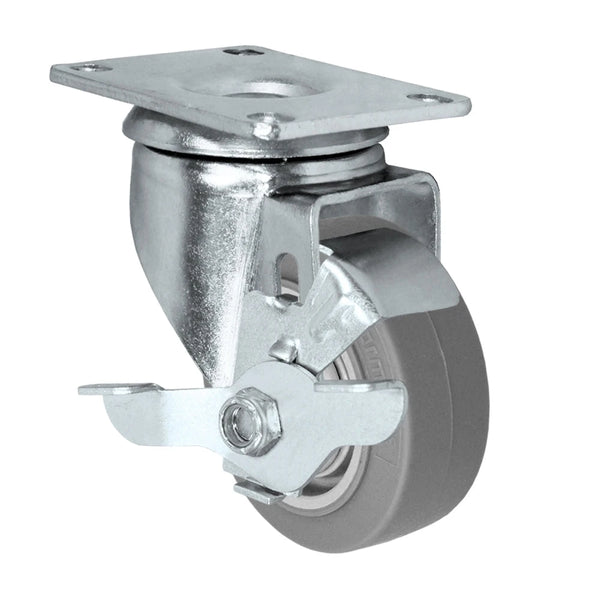
Light-medium duty plate mount casters with 2-3/8″ x 3-5/8″ top plate — the standard small-plate size for tool boxes, prep tables, equipment stands, and rolling fixtures. 136 SKUs across 6 wheel materials, 250 to 400 lb per caster, with a 1-3/4″ x 3″ bolt-hole pattern that fits Husky, Snap-On, Milwaukee, Craftsman, and most pre-fab medium-duty cart decks. Stocked at our Mansfield, TX facility.
Six wheel materials available on the same 2-3/8 x 3-5/8 plate. Pick by floor type, capacity, and brake configuration.
| Wheel Material | Wheel Diameter | Per-Caster Capacity | Floor Marks? | Best Application |
|---|---|---|---|---|
| Total Lock Series (36 styles) | 3" – 5" | 250–350 lb | Varies by tread | Tool boxes, prep tables, locking equipment carts |
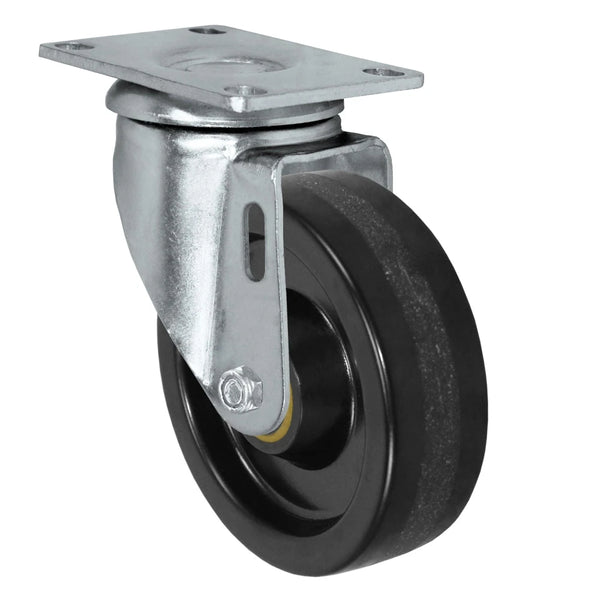
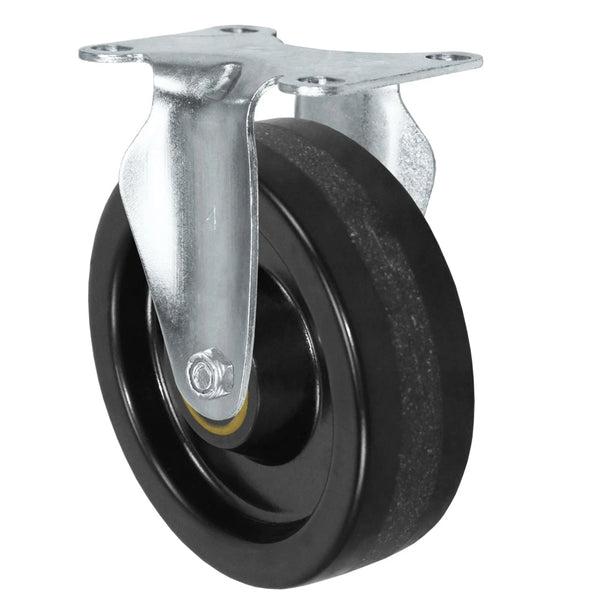
| Phenolic (30 styles) | 3" – 5" | 350 lb | Slight brown on light floors | Autoclave, oven trolleys, high-temp service |
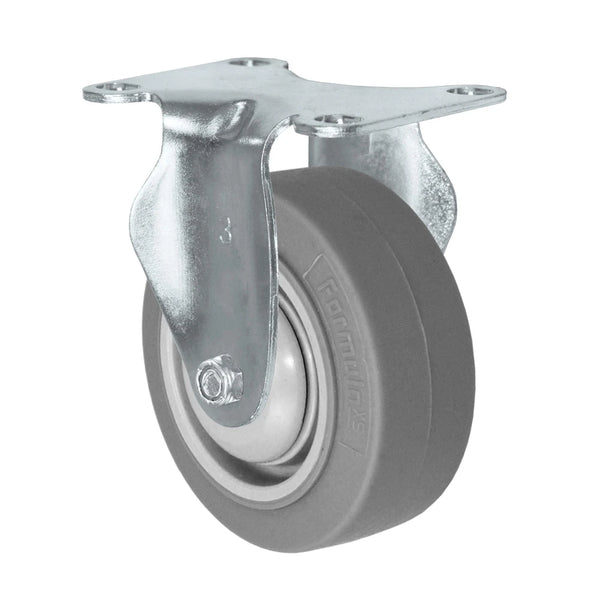
| Thermo Rubber / TPR (27 styles) | 3" – 5" | 250–325 lb | No (non-marking) | Hospital, retail, finished commercial floors |
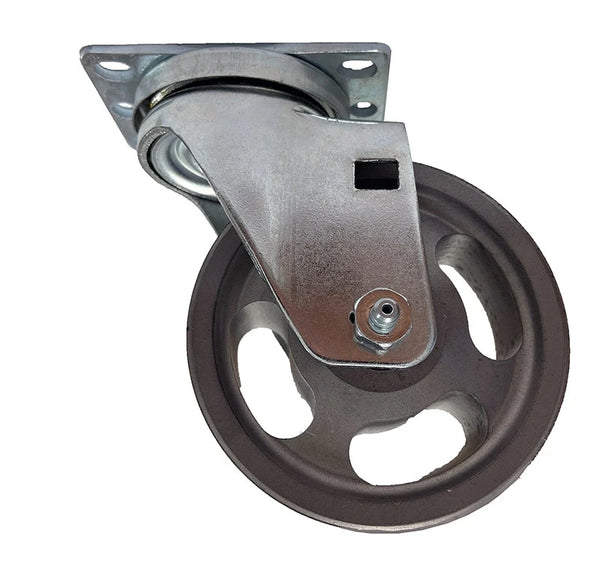
| Gray Iron / Semi-Steel (26 styles) | 3" – 5" | 300–400 lb | Slight | Heavy industrial, machine shops, warehouse |
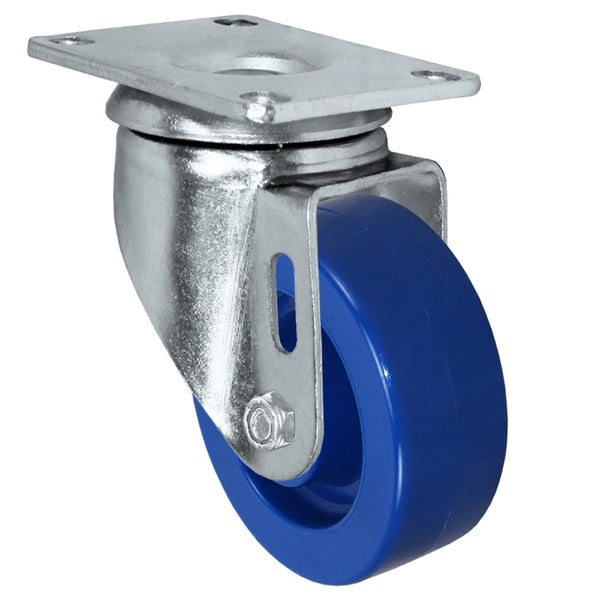
| Blue Solid Polyurethane (22 styles) | 3" – 5" | 300–400 lb | No (non-marking) | Greasy floors, chemical contact, food service |
| Polyurethane on Polyolefin | 3" – 5" | 250–325 lb | No | Quiet rolling, lab and medical equipment |
The 2-3/8″ x 3-5/8″ plate uses a 1-3/4″ x 3″ bolt-hole center-to-center pattern with 4 holes for 5/16″ mounting bolts. This is the dominant U.S. small-plate size for tool boxes (Husky, Snap-On, Milwaukee, Craftsman) and most light-medium duty pre-fab work tables. Measure bolt-hole-to-bolt-hole with calipers if your equipment is older or imported. The 1/8″ tolerance matters — mismatched holes won't accept mounting bolts.
Smooth shop floor, warehouse concrete: gray iron or semi-steel for max capacity. Finished commercial flooring (retail, office, hospital): non-marking thermo rubber, blue poly, or poly-on-polyolefin. High-temp service (bakery, autoclave): phenolic. Greasy floors and chemical contact: blue solid polyurethane. Total Lock series available across multiple wheel materials.
This plate handles 250–400 lb per caster — the light-medium duty band. A 4-caster cart at 300 lb per caster = 1,200 lb total static, ~780 lb practical payload (65% safety factor for dynamic loads). For higher capacities, step up to the 4″ x 4-1/2″ plate (handles up to 1,500 lb per caster).
Plain swivel for level-floor carts. Top-lock brake for carts that need to stop on smooth concrete. Total Lock for industrial safety on sloped floors and any cart that operators climb onto (rolling tool boxes especially). 36 of 136 SKUs on this plate are Total Lock variants — the strongest sub-collection here.
CasterHQ's 8-minute walkthrough of the right caster for tool boxes, light-medium duty carts, and pre-fab equipment stands. Covers plate sizing, wheel material trade-offs, and the Total Lock vs Top Lock brake decision.
The 2-3/8″ x 3-5/8″ plate is the highest-volume small-plate size in U.S. industrial caster sales — tool box manufacturers (Husky, Snap-On, Milwaukee, Craftsman) all use it as standard. We stock 136 SKUs covering every wheel material, so a one-stop replacement order works whether you have a phenolic-wheel cart for the autoclave room or a Total Lock blue-poly cart for the kitchen prep line.
All 136 SKUs ship from our Mansfield, TX facility with 99% same-day or next-day fulfillment when orders are placed before 3pm CT. Our most-stocked configuration is the 3″ x 1-1/4″ Total Lock with thermo rubber wheels — the dominant tool box and prep table replacement caster.
Cross-reference legacy SKUs. Most pre-2010 carts used a 2-3/8″ x 3-5/8″ plate without a brand name on the caster. If you have a worn caster and need a match, photograph the bolt pattern and capacity rating, then call 844-439-4335. Our team cross-references against Hamilton, Albion, Colson, Faultless, DuraStar, Shepherd, and legacy Bassick/Darnell catalogs in minutes.
1-3/4″ x 3″ center-to-center, 4 bolt holes for 5/16″ mounting bolts. Total plate outer dimension is 2-3/8″ x 3-5/8″. This is the dominant U.S. small-plate size for tool boxes, light-medium duty carts, and pre-fab equipment stands.
Yes — Husky tool boxes, Snap-On tool boxes, Milwaukee Packout Tool Box Series, and Craftsman 26″ and wider rolling tool chests all use the 2-3/8″ x 3-5/8″ standard plate. Measure your bolt-hole pattern with calipers to confirm before ordering. We stock 36 Total Lock variants that bolt directly to these tool box decks.
400 lb per caster on solid polyurethane or gray-iron wheel. A 4-caster cart at 400 lb each = 1,600 lb static rating, with practical payload around 1,040 lb at 65% dynamic safety factor. For heavier carts, step up to the 4″ x 4-1/2″ plate (handles up to 1,500 lb per caster).
Yes. Top Lock locks only the wheel rotation — the cart can still swivel and drift. Total Lock locks BOTH the wheel and the swivel raceway — the cart cannot move OR rotate. Total Lock is required for industrial safety on sloped floors and any cart operators climb onto. 36 of our 136 SKUs on this plate are Total Lock.
Phenolic is a hard resin wheel rated to 475°F continuous — the standard for autoclave trolleys, bakery rack ovens, and powder-coat ovens. Thermo rubber (TPR) is a soft non-marking rubber for finished commercial flooring — hospitals, retail, office. Different applications, different floors. We stock 30 phenolic and 27 thermo rubber SKUs on this plate.
Yes if the existing plate is 2-3/8″ x 3-5/8″ with the 1-3/4″ x 3″ bolt pattern. Most U.S.-built tool boxes from the 1980s onward use this standard. If your tool box uses a smaller plate (2″ x 3″ for instance), you need different casters — we stock those under separate plate-size collections.
Non-marking thermo rubber (gray TPR) or blue solid polyurethane. Both are non-marking on commercial vinyl, quarry tile, and sealed concrete — the dominant kitchen floor types. NSF-compatible. Choose blue poly for greasy floors (kitchens with deep fryers nearby); choose TPR for general food prep service.
15–20 ft-lb for 5/16″ grade-5 bolts on steel cart decks. 12–15 ft-lb on wood decks (avoid over-compressing the wood). Use lock washers or self-locking nuts. Re-check torque after 8 hours of initial cart use — wood and thin steel can compress under first-load and loosen bolts.
Light-medium duty service on appropriate flooring: 5-10 years before tread wear or bearing fatigue. Heavy daily use (full-shift tool box rolling, multi-shift prep tables): 2-5 years. Failure mode is usually tread wear; the plate and yoke typically outlast the wheel.
Mix of US and imported depending on series. Hamilton, Albion, and Faultless SKUs are US-manufactured. Some lower-cost imports are international-sourced. Call 844-439-4335 for country-of-origin certification on specific SKUs — required for some federal, defense, and Buy America Act procurement.