 Specialty Casters
Gate Casters
BBQ Pit & Smoker Casters
Keyed Drive Wheels
Drywall Cart Casters
Skid Wheels & Casters for RVs
Leveling Casters
Shopping Cart Wheels & Casters
Band Equipment Casters & Wheels
Low Profile Casters
Cart Wheels & Casters
Toolbox Caster Sets
Bakery Oven Rack Casters
Kitchen Prep Table Caster Sets
Wire Shelving Casters
Silent Glide Casters


Wheel = wheel diameter · capacity is per caster.


| Tread | Core | Wheel sizes | Rated per caster | Listed temperature | Where it fits |
|---|---|---|---|---|---|
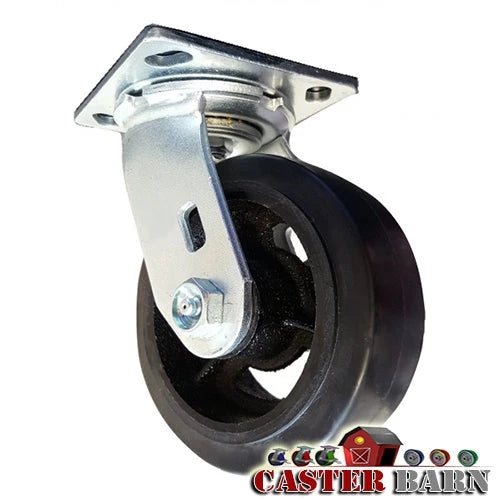
| Rubber | Polyolefin and Cast iron | 4 to 12 in | 250 to 675 lb | -30°F to 120°F | cushioned and quiet on finished floors |
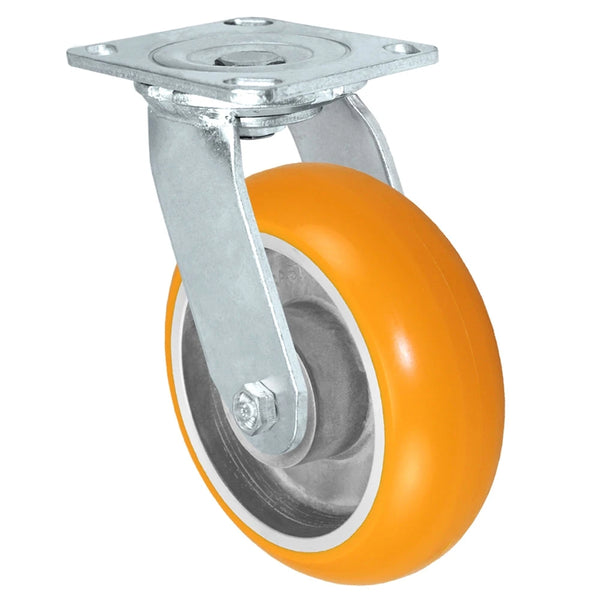
| Polyurethane | Cast iron and Aluminum | 4, 5, 6, 8 and 10 in | 280 to 1,250 lb | -40°F to 180°F | quiet, floor-friendly and long wearing |
| Phenolic | 4, 6 and 8 in | 800 to 1,250 lb | Up to 250°F | hard and easy rolling on smooth, dry floors | |
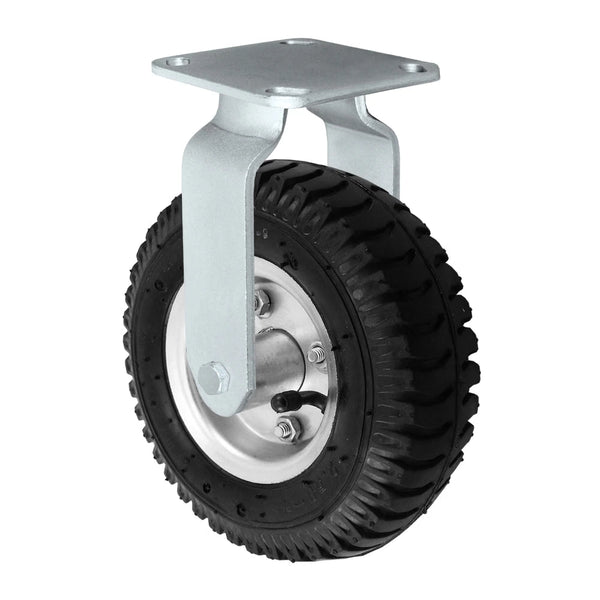
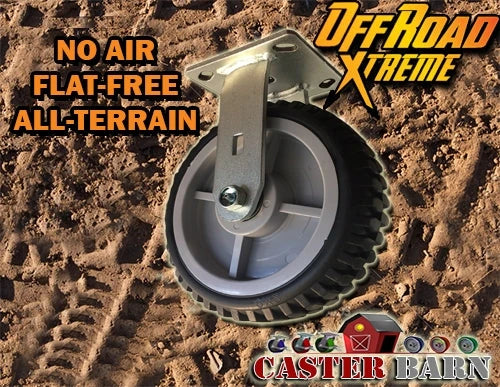
| Pneumatic | 8 and 10 in | 250 to 650 lb | rough ground, outdoors, fragile loads | ||
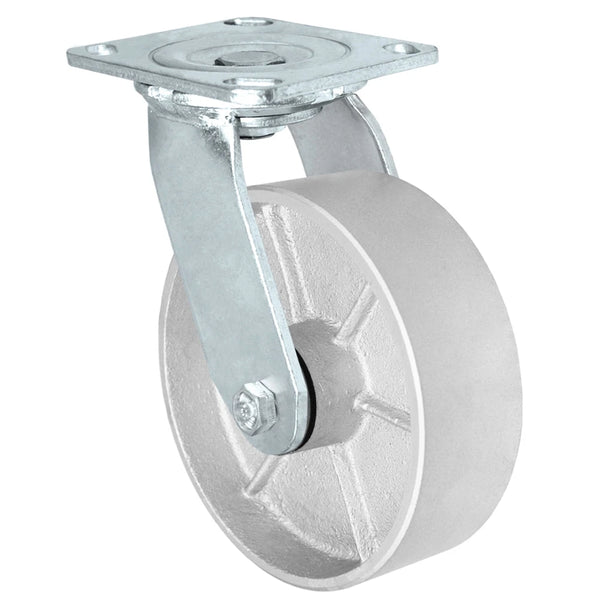
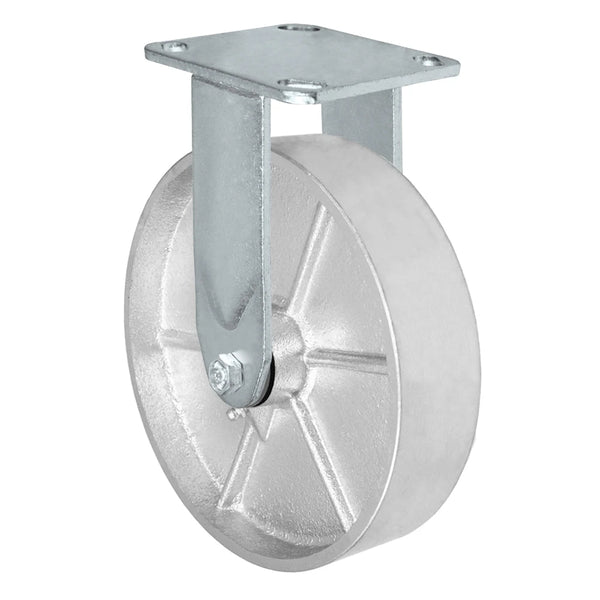
| Semi-steel | 4, 5, 6 and 8 in | 700 to 1,250 lb | -45°F to 600°F | rough floors, heat and heavy loads | |
| Polyolefin | 4, 6 and 8 in | 350 to 900 lb | -40°F to 180°F | wet and chemical areas, light to medium loads | |
| Nylon | 600 lb | -40°F to 250°F | low rolling effort on smooth floors, handles wet areas |
Ratings are for single casters of casters grouped by application, from product fields [S1].
| Wheel | Treads | Rated |
|---|---|---|
| 4 x 2 in | polyurethane, rubber and phenolic | 200 to 1,250 lb |
| 5 x 2 in | rubber, polyurethane and semi-steel | 250 to 1,500 lb |
| 6 x 2 in | polyurethane, rubber and polyolefin | 350 to 1,250 lb |
| 8 x 2 in | polyurethane, rubber and semi-steel | 400 to 1,250 lb |
| 8 x 2-1/2 in | rubber and pneumatic | 250 to 450 lb |
| 10 x 2.38 in | rubber | 480 lb |
| 10 x 3 in | pneumatic, polyurethane and rubber | 280 to 650 lb |
| 10 x 3-1/2 in | rubber and pneumatic | 350 to 480 lb |
Related: toolbox caster sets, kitchen prep table caster sets and BBQ pit and smoker casters.
Single casters grouped by application are rated 250 to 1,250 lb; most fall between 450 and 1,000 lb.
Most casters grouped by application use 4 x 4-1/2 in. Others listed: 4-1/2 x 6-1/2 in and 5-1/2 x 7-1/2 in.
Rubber leads on casters grouped by application, rated 250 to 675 lb per caster. Polyurethane is next at 280 to 1,250 lb.
Yes. Wheel-only listings for casters grouped by application are here, sized 4, 5, 6, 8 and 10 in; check the axle diameter and hub length on the old wheel.