 Specialty Casters
Gate Casters
BBQ Pit & Smoker Casters
Keyed Drive Wheels
Drywall Cart Casters
Skid Wheels & Casters for RVs
Leveling Casters
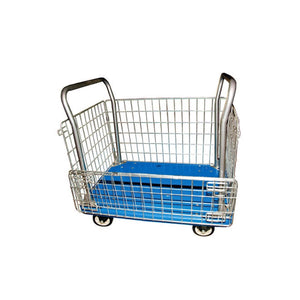
Shopping Cart Wheels & Casters
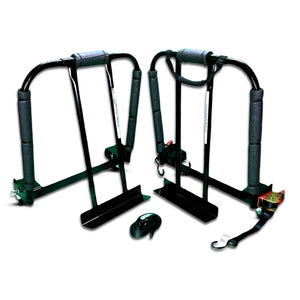
Band Equipment Casters & Wheels
Low Profile Casters
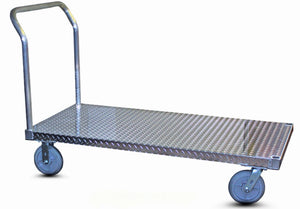
Cart Wheels & Casters
Toolbox Caster Sets
Bakery Oven Rack Casters
Kitchen Prep Table Caster Sets
Wire Shelving Casters
Silent Glide Casters
Specialty Casters
Gate Casters
BBQ Pit & Smoker Casters
Keyed Drive Wheels
Drywall Cart Casters
Skid Wheels & Casters for RVs
Leveling Casters
Shopping Cart Wheels & Casters
Band Equipment Casters & Wheels
Low Profile Casters
Cart Wheels & Casters
Toolbox Caster Sets
Bakery Oven Rack Casters
Kitchen Prep Table Caster Sets
Wire Shelving Casters
Silent Glide Casters


Rubber and polyurethane favor floor protection; phenolic and steel favor heavy capacity. Compare materials →


Spring loaded casters — Albion suspension casters with internal coil springs that absorb floor shock, vibration, and impact — protecting fragile cargo, sensitive electronics, and lab equipment. 6″ and 10″ poly-on-iron and rubber wheels. 450 to 3,100 lb single-caster capacity. Kingpinless swivel and rigid configurations. S310, S410, and S610 series. Stocked at our Mansfield, TX facility.
Three Albion spring-loaded series stocked. Match series to cart weight and shock-load requirements.
| Series | Plate Size | Wheel | Capacity | Best For |
|---|---|---|---|---|
| S610 Kingpinless | 7-1/2" x 6-1/4" | 10" x 3" Poly-on-Iron | Up to 3,100 lb | Heaviest shock-load applications |
| S410 Kingpinless | 7-1/4" x 5-1/4" | 10" x 3" Poly-on-Iron | Up to 3,000 lb | Heavy industrial transport carts |
| S310 Kingpinless | 6-1/4" x 4-1/2" | 6" and 10" Poly-on-Iron | 2,000–3,000 lb | Medium-heavy industrial |
| 40XS Rubber | 4" x 4-1/2" | 6" x 2" Gray Rubber | 450–500 lb | Light shock-load, sensitive cargo |
| 40XR Rubber | 4-1/2" x 4" | 6" x 2" Rubber | 450 lb | Quiet shock-load, finished floors |
Spring-loaded casters protect cargo by absorbing floor shock. Total cart weight divided by number of casters, then add 50% for the dynamic shock peaks the springs are designed to absorb. Standard rigid casters fail when shock loads exceed their static rating; spring-loaded casters absorb those peaks.
S310 (6-1/4" x 4-1/2" plate): 2,000-3,000 lb medium-heavy. S410 (7-1/4" x 5-1/4" plate): 3,000 lb heavy. S610 (7-1/2" x 6-1/4" plate): 3,100 lb heaviest. 40XS and 40XR series: lighter rubber-wheel spring-loaded for sensitive cargo <500 lb.
All S-series Albion spring-loaded casters use kingpinless swivel design — the swivel raceway is integrated into the top plate. Eliminates the kingpin failure point that loosens under repeated shock loads. Required for any high-cycle shock-load application.
2 swivel front + 2 rigid rear for stable straight-line tracking on warehouse aisles. All-swivel for tight maneuvering. Spring-loaded casters work in any configuration — the spring action is independent of swivel/rigid choice.
A caster with an internal coil spring between the wheel yoke and the mounting plate. The spring compresses when the cart hits a bump or expansion joint, absorbing the shock that would otherwise transfer to cargo. Specified for sensitive electronics, lab equipment, fragile cargo, glass transport, and any cart that traverses uneven warehouse floors.
Spring-loaded casters typically cost 2-3x rigid casters of the same capacity. The cost premium is justified by cargo protection — a single damaged electronics shipment or broken lab instrument often costs more than upgrading all 4 casters to spring-loaded.
Plate size and capacity. S310: 6-1/4" x 4-1/2" plate, 2,000-3,000 lb. S410: 7-1/4" x 5-1/4" plate, 3,000 lb. S610: 7-1/2" x 6-1/4" plate, 3,100 lb. Match plate size to your cart's existing mounting plate. Capacity scales with plate size.
Poly-on-iron wheels (S310/S410/S610): slight-marking under heavy load. Rubber wheels (40XS/40XR): non-marking. For finished commercial flooring, specify the rubber-wheel variant. For industrial concrete and warehouse floors, poly-on-iron is fine and provides higher capacity.
Spring travel is typically 1/2" to 1" on industrial spring-loaded casters. Within that range, the cart deck stays approximately level while the wheel absorbs floor imperfections. Beyond 1" deflection, the spring bottoms out and load transfers to the cart deck like a rigid caster.
Two failure modes: (1) spring fatigue at very high cycle counts (10+ years of daily use), (2) under-sizing — if a cart loads casters above their static rating, springs sit fully compressed and don't flex. Both are preventable: specify Albion S-series, size 30% above static load, replace at 8-10 year inspection.
Generally not recommended. AGVs rely on precise deck height for sensor and dock-plate alignment. Spring-loaded casters introduce variable deck height (springs compress and extend). For AGV applications use Hamilton Maxi-Duty DuraGlide rigid (no springs). Spring-loaded casters are for manual carts where the operator absorbs the height variation.
Not on the same cart corner pattern. Mixing creates uneven cart deck behavior — the spring-loaded corner sags under static load. Either specify 4 spring-loaded OR 2 spring-loaded swivel + 2 spring-loaded rigid. Never mix rigid and spring-loaded on the same cart.