 Specialty Casters
Gate Casters
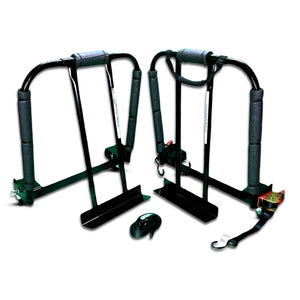
BBQ Pit & Smoker Casters
Keyed Drive Wheels
Drywall Cart Casters
Skid Wheels & Casters for RVs
Leveling Casters
Shopping Cart Wheels & Casters
Band Equipment Casters & Wheels
Low Profile Casters
Cart Wheels & Casters
Toolbox Caster Sets
Bakery Oven Rack Casters
Kitchen Prep Table Caster Sets
Wire Shelving Casters
Silent Glide Casters
Specialty Casters
Gate Casters
BBQ Pit & Smoker Casters
Keyed Drive Wheels
Drywall Cart Casters
Skid Wheels & Casters for RVs
Leveling Casters
Shopping Cart Wheels & Casters
Band Equipment Casters & Wheels
Low Profile Casters
Cart Wheels & Casters
Toolbox Caster Sets
Bakery Oven Rack Casters
Kitchen Prep Table Caster Sets
Wire Shelving Casters
Silent Glide Casters


Engineering Selection Guide · 2026
Specifying the wrong industrial caster is the #1 cause of premature failure in material handling. This guide walks the seven variables OEM engineers and MRO buyers must spec in order — load, mounting, wheel material, diameter, swivel construction, bearings, and brake action — with the failure modes if you skip any.
Caster selection is sequential — each variable narrows the next. Skip a step and you end up over-spec'ing on capacity (paying premium for unused load rating) or under-spec'ing on construction (failing under cyclic load within 6 months). This guide is the same 7-step process CasterHQ engineers use when sizing OEM custom builds.
Use the N-1 method: total loaded weight divided by (caster count − 1), then multiplied by safety factor (1.25 indoor concrete, 1.35 dock plates, 1.5 towed, 1.75 outdoor). N-1 accounts for one caster lifting off uneven floors. For 8+ caster carts use N-2.
Use the Load Calculator for the math.
Plate (4-bolt, strongest, most common), threaded stem (screws into tapped hole), grip ring stem (snaps into tubular leg), or expanding stem (clamps inside hollow tube). Plate is the safest spec for any new design. Full mounting guide.
Floor surface eliminates incompatible compounds first. Tile/vinyl/wood: poly or rubber only. Outdoor: pneumatic or steel. Wash-down: stainless or sealed poly. High-temp (200°F+): phenolic or cast iron. Standard concrete: anything works — pick by load + ergonomics. Full materials guide.
Three rules in order: (1) capacity floor — match diameter to load tier (4" up to 600 lbs, 6" up to 1,500 lbs, 8" up to 2,500 lbs), (2) 4× obstacle rule — diameter must be at least 4 times your largest floor obstacle, (3) operation mode — AGV needs 8" minimum, towed needs 6" minimum. Diameter selection guide.
Above 1,500 lbs/caster OR for any cart with frequent direction changes: kingpinless construction is mandatory. Kingpin caps swivel load at the kingpin's shear strength — fails under cyclic load within 6-12 months. Kingpinless raceways handle 40% more cyclic load and last 3-5x longer. Kingpin vs kingpinless guide.
Roller bearings (standard) work for light/medium duty, cap at ~1,500 lbs. Tapered roller for heavy + axial loads. Sealed precision adds 15% capacity + cuts force 18%. Maintenance-free (lifetime sealed) cuts force 25% and eliminates re-greasing — mandatory for continuous-duty (8+ hour daily) applications. Bearing types guide.
Wheel brake (face brake) stops wheel rotation only. Total lock stops both wheel and swivel — mandatory for parking on inclines or earthquake zones. Side lock allows wheel rotation but locks swivel direction (towed tracking). Default: 2 swivel front + 2 rigid rear for towed carts; 4 swivel + 2 diagonal brakes for manual omnidirectional.
Quick Reference
Pre-configured spec recommendations for the most common industrial cart types.
| Application | Load Per Caster | Wheel Material | Wheel Diameter | Bearing | Mount |
|---|---|---|---|---|---|
| Warehouse cart | 800-1,500 lb | Polyurethane on iron | 5-6 inch | Annular ball | 4x4-1/2 plate |
| Production line cart | 500-1,200 lb | Polyurethane 90A | 4-5 inch | Annular ball | 4x4-1/2 plate |
| Tow line cart | 1,500-3,000 lb | Polyurethane on iron | 6-8 inch | Tapered roller | 5x6-1/4 kingpinless |
| Dock cart | 1,500-2,500 lb | Polyurethane on iron | 8 inch | Tapered roller | 5x6-1/4 kingpinless |
| Bakery rack (oven) | 200-500 lb | Cast iron, hi-temp | 5 inch | Hi-temp grease pack | 4x4-1/2 plate |
| Food prep cart | 200-500 lb | TPR, stainless | 5 inch | Sealed precision | 4x4-1/2 plate |
| Hospital bed | 200-400 lb | TPR, soft rubber | 5 inch | Sealed precision | Grip ring stem |
| Tooling cart (aerospace) | 2,500-8,000 lb | Cast iron, forged steel | 8-10 inch | Tapered roller | 6-1/2x7-1/2 kingpinless |
| AGV / AMR platform | 500-3,000 lb | Polyurethane 95A | 6-8 inch | Sealed precision | Kingpinless required |
| Cleanroom cart | 100-500 lb | Polyurethane 85A or Delrin | 4-5 inch | Sealed precision | 4x4-1/2 stainless |
Fast Path
For procurement teams who want a fast answer without working through 7 variables.
Common Mistakes
Engineering Spec Help
Custom durometer urethane, FDA-grade, ESD/cleanroom, oil-resistant nitrile, applications above 5,000 lbs/caster, custom plate sizes, aerospace/nuclear/pharma compliance — submit your spec for engineering review. Same-day RFQ response.
Sizing to the static load rating instead of the dynamic (rolling) load rating. Static = parked capacity; dynamic = in-motion capacity. Most failures trace to spec'ing against static and overloading the dynamic — particularly on dock plates, expansion joints, and shock-load environments. Always size to dynamic.
Each variable narrows the next. If you pick wheel material before checking the floor, you might spec steel on epoxy (damages the floor). If you pick diameter before checking obstacles, you might violate the 4x rule. Sequential spec means each later choice has fewer valid options — preventing impossible combinations like "steel wheel on vinyl tile, 1500 lbs, 4 inch diameter."
After Steps 1-3. Once you have load + mount + material baseline, run the push force calc against OSHA 50-lb sustained limit (35 lb female). If exceeded, upgrade in this order: larger diameter (Step 4 bump up), low-resistance compound (MAX Efficiency 85A), aluminum hub, maintenance-free bearings. If still over after all four, you need powered drive — escalate to engineering.
Five triggers: load above 5,000 lbs/caster, custom durometer (60-95 Shore A outside standard 85A), FDA/conductive/ESD requirements, applications above 250°F, custom plate sizes (5"×7", 6"×8"). Standard catalog covers ~80% of industrial specs; the other 20% benefit from engineering review.