











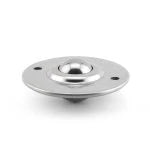


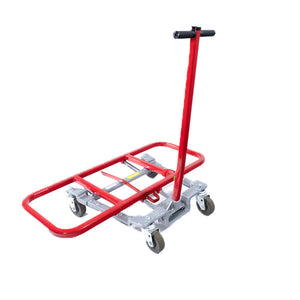



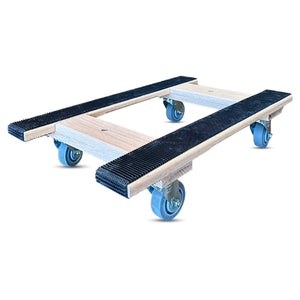
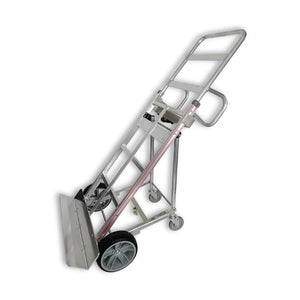
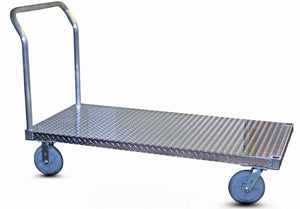


A caster bearing types is a wheel-and-mount unit bolted to equipment so it can roll, swivel, and brake.
- Match capacity per caster to your total load divided by 3 (one caster may be airborne)
- Polyurethane and rubber wheels favor floor protection; phenolic and steel favor heavy capacity
- Top-plate or stem mount is dictated by the equipment, not preference
- CasterHQ stocks Albion, Hamilton, P&H, Colson, Faultless, and Durastar from Mansfield, Texas
- Call 844-439-4335 for fitment help on any non-standard caster
Caster bearing types: which bearing handles your load and duty cycle?
Caster bearings control load capacity, rolling resistance, and service life. The five bearings you'll encounter are plain (zerk), delrin, annular ball, roller (caged needle or taper), and precision sealed ball. Match the bearing to axial and radial load, RPM, wash-down exposure, and lubrication interval, not just wheel diameter.
In this guide
The five caster bearing types, at a glance
The bearing is the part of the wheel that rotates around the axle. Every other spec, swivel action, wheel material, load rating, matters less if the bearing cannot handle the duty cycle. Five bearing families cover roughly 98% of industrial casters CasterHQ ships from Mansfield: plain, delrin (self-lubricating polymer), annular ball, roller (caged needle or tapered), and precision sealed ball.
| Bearing | Typical load (per wheel) | Rolling resistance | Best for |
|---|---|---|---|
| Plain (zerk) | Up to 1,200 lb | High | Infrequent-move, heavy static loads, floor trucks |
| Delrin | Up to 900 lb | Medium | Washdown food, medical, clean environments |
| Annular ball | Up to 1,500 lb | Low | General industrial, frequent starts/stops |
| Roller (needle/taper) | Up to 3,500 lb | Medium-low | Heavy duty, shock loads, towlines |
| Precision sealed | Up to 2,200 lb | Lowest | Long runs, powered equipment, AGVs |
Field note from Mansfield: We see bearing mis-spec more often than wheel mis-spec. A 1,000-lb die cart with plain bearings and an operator pushing it 200 feet per cycle wears the axle out in under 90 days. The wheel isn't the problem, the bearing is.
Plain bearings: the baseline for static and near-static loads
Plain bearings are a machined steel bore riding directly on the axle, usually with a grease zerk through the hub. They carry big loads for their cost but require lubrication and generate high rolling resistance. Plain bearings are the correct choice when equipment sits far more often than it rolls, floor trucks, machinery skids, foundry transfer carts, and equipment staged in a shop for days between moves.
- Load range: 300 lb through 1,200 lb per wheel depending on axle diameter (1/2" through 1").
- Rolling resistance: roughly 2-3x a ball bearing at the same load and wheel diameter.
- Lubrication interval: grease every 30-90 days under normal duty, weekly under heavy towing.
- Cost: lowest of the five families, typically under $8 per wheel at OEM volumes.
- Failure mode: axle scoring from missed grease cycles, then wheel wobble and noise.
Avoid plain bearings when: the cart travels more than 300 feet per shift, the operator is female or under 170 lb (push-force fatigue issue), or the environment is wash-down where grease washes out.
Delrin bearings: polymer self-lubricating for clean environments
Delrin (polyoxymethylene, or POM) is a machined thermoplastic bearing that needs no grease. It shrugs off water, most cleaning chemicals, and wash-down wands. Delrin wheels ship often into food processing, pharmaceutical, hospital cart, and electronic assembly plants where grease contamination is forbidden.
- Load range: 200-900 lb per wheel. Above 900 lb the polymer deflects under sustained load.
- Temperature range: roughly -20F to 180F sustained. Avoid delrin in freezer aisles.
- Rolling resistance: slightly higher than annular ball but no break-in period.
- Chemical compatibility: resists most acids, bases, solvents, and bleach at typical wash-down concentrations.
- Quiet: delrin is markedly quieter than steel-bore bearings on hard floors.
Annular ball bearings: the industrial default
Annular (or radial) ball bearings sit in two concentric races with caged balls between them. They are the bearing you find inside 60-70% of general-duty industrial casters. Load rating, rolling resistance, and service life all fall in the sensible middle. One or two shielded bearings press-fit into a steel hub covers most warehouse, tool cart, and MRO applications.
- Load range: 300-1,500 lb per wheel depending on bearing size and axle.
- Rolling resistance: low. Roughly 40% of the effort of a plain bearing at the same load.
- Cycle life: typical ABEC 1 bearing holds up for 2-4 million revolutions under rated load.
- Lubrication: shielded or sealed units are lubricated for life; open units take standard bearing grease.
- Good choice when: operator pushes the load more than 50 feet per cycle multiple times per shift.
Engineer tip: Two annular ball bearings in a single hub double the axial load rating and greatly improve side-load tolerance. Ask for "double ball" or "two precision ball" when spec'ing anything that will be tugged, not just pushed.
Roller bearings: needle and tapered for heavy shock loads
When a wheel must carry 2,000 lb plus and survive shock impacts, a die cart rolling off a dock plate, a tow line bumping a load-lock pin, a scissor-lift platform taking an uneven step, use a roller bearing. Caged needle rollers or tapered cone rollers distribute contact over a line instead of a point, which dramatically improves shock resistance and cycle life at high radial load.
| Roller type | Load per wheel | Duty | Common use |
|---|---|---|---|
| Single-row needle | 1,500-2,500 lb | Heavy | Die carts, tow tugger trailers |
| Double-row needle | 2,500-3,500 lb | Severe | Spring carts, towline carts, foundry |
| Tapered roller | 2,000-4,000 lb | Heavy + axial | Airline baggage carts, industrial dollies |
Roller bearings take standard bearing grease through a zerk. Lubrication interval shortens as load increases, every 30-45 days at rated load is typical for CasterHQ's foundry accounts.
Precision sealed ball bearings: for AGVs and powered equipment
Precision sealed ball bearings are higher-tolerance (ABEC 3 or ABEC 5) annular units with integral elastomer seals on both sides. They are the correct bearing for automated guided vehicles, autonomous mobile robots, powered tuggers, and any caster that rolls continuously during a shift. Sealed construction keeps grease in and contaminants out for the life of the bearing.
- Rolling resistance: lowest of any caster bearing, critical for battery range on AGV/AMR fleets.
- Cycle life: 10-30 million revolutions under rated load in CasterHQ field data.
- Wash-down compatible: double lip seals hold up through typical IP65 exposure.
- Not serviceable: bearings are replaced, not re-greased.
- Cost: 3-5x an equivalent annular ball bearing, amortized over dramatically longer service life.
Engineer tip: If you are specifying casters for an AGV or AMR, also look at dynamic load rating (continuous rolling) separately from static load. A caster that holds 1,800 lb static may only be rated 700 lb dynamic at 4 mph. Sealed precision bearings hold the gap tighter than any other family.
Load capacity by bearing type: side-by-side comparison
Two wheels with identical polyurethane treads can have wildly different load ratings depending on the bearing inside. Here is the rule-of-thumb load uplift (or derate) we use at CasterHQ when a customer sends over a cart design and asks for a bearing upgrade.
| Bearing change | Load capacity change | Push force change |
|---|---|---|
| Plain to delrin | -10 to -25% | Slightly lower |
| Plain to annular ball | +10% | -40% push effort |
| Annular to double ball | +30 to +50% | Same |
| Annular to roller | +50 to +100% | Slightly higher |
| Annular to precision sealed | Same | -10 to -15% push effort |
Push force is a real cost. OSHA has no push force limit, but its Materials Handling eTool advises keeping push force under about 50 lb, and the Liberty Mutual manual materials handling tables set lower limits for many tasks and operators. A bearing upgrade that drops rolling resistance 30-40% often moves a borderline cart from "needs two operators" to "one operator can move it safely."
Lubrication and maintenance: a 12-month service checklist
A bearing's service life is almost always gated by lubrication discipline. CasterHQ sends a short quarterly checklist with every OEM caster order that calls for serviceable bearings. The list:
- Every 30 days: visual check for missing dust caps, weeping grease, or audible bearing noise. Spin each wheel by hand, wobble or grit means it is on its way out.
- Every 90 days: add 2-3 pumps of NLGI 2 lithium grease through the zerk on plain and roller bearings. Wipe the axle clean first.
- Every 6 months: pop swivel caps and re-grease the swivel raceway. This is the second most-missed service point behind the wheel bearing.
- Annually: pull one wheel per cart, pack bearings by hand, inspect the axle for scoring. Replace wheels with flat spots, chipped treads, or visible bearing play.
- On wash-down carts: never steam directly into the hub. Use a 30-degree offset angle so water sheds instead of driving past the seal.
Common failure we see: customer upgrades to precision sealed bearings then has the new wheels hot-pressure-washed 3x per shift. Even sealed bearings fail under direct high-pressure water at the seal. Angle the wand.
Key takeaways
- Match bearing to duty cycle first, wheel material second. Bearing mis-spec wears casters out faster than any other factor.
- Plain bearings are fine for heavy, infrequent moves. Annular ball is the default for anything an operator pushes regularly.
- Roller bearings (needle or tapered) are the correct choice above 1,500 lb per wheel or with shock loads.
- Precision sealed ball is the AGV and AMR default, lowest rolling resistance, longest service life, no grease cycle.
- Upgrading from plain to ball drops push force roughly 40%. That is often the difference between one operator and two.
Frequently asked questions
What is the best caster bearing for heavy loads?
For loads over 1,500 lb per wheel, use a roller bearing (caged needle or tapered cone) or a double-row ball bearing. Roller bearings also resist shock loads better than any ball bearing when a cart crosses dock plates or uneven floors.
How often should I grease caster bearings?
Plain and roller bearings with grease zerks need lubrication every 30-90 days in normal industrial duty, weekly under heavy towing. Sealed ball and delrin bearings are lubricated for life and never take external grease.
Are sealed bearings worth the extra cost?
For AGVs, AMRs, and any caster that rolls continuously during a shift, yes. Sealed precision bearings cut rolling resistance 10-15% versus standard annular ball and extend service life by 5-10x when operators cannot or will not follow a grease schedule.
Can I swap a plain bearing caster for a ball bearing caster?
Yes, assuming the axle diameter and hub width match. Push force drops roughly 40% at the same load, which usually means one operator can move a cart that previously needed two. Load rating stays flat or goes up slightly.
Do delrin bearings hold up in a freezer?
Below zero Fahrenheit, delrin gets brittle and starts to crack under impact. For freezer aisles and cold storage below -20F, spec a stainless annular ball bearing with low-temperature grease. Delrin is fine for cooler and wash-down food plant use down to roughly 20F.
What bearing comes standard on most CasterHQ casters?
The default on medium-duty casters (500-1,200 lb) is a single shielded annular ball bearing. On heavy-duty (1,500 lb+) it is a roller bearing. On precision and powered equipment it is a sealed ABEC 3 ball bearing. All three are upgradeable through the product options or by calling 844-439-4335.
Not Sure Which Bearing to Spec?
CasterHQ stocks all five bearing families in Mansfield, TX. Call 844-439-4335 and an application engineer will match the bearing to your load, push distance, and maintenance routine. Same-day shipping on stock SKUs.
References & Standards Cited
- ABMA (American Bearing Manufacturers Association) load rating standards.
- ISO 281 Rolling bearings, Dynamic load ratings and rating life.
- OSHA Materials Handling eTool: Pushing (advises staying under about 50 lb; OSHA sets no push force limit).
- Liberty Mutual manual materials handling tables, based on Snook and Ciriello, Ergonomics 34(9), 1991.
- Internal CasterHQ field data, 2020-2026, Mansfield TX distribution center.
- ANSI/ICWM Performance Standard for Casters & Wheels (Institute of Caster and Wheel Manufacturers)
- ISO 22883 — Castors and wheels: requirements for applications up to 1,1 m/s
Was this guide helpful?
Need help spec'ing the right caster?
Our engineering team handles fitments, custom builds, and capacity upgrades. Same-day RFQ response, Texas warehouse, fast shipping on standard sizes.
Shop All CastersCall 844-439-4335Jordan Wilson
Founder of CasterHQ.com. Works directly with engineers, MRO buyers, and procurement teams across material handling, healthcare, food service, aerospace, and OEM. CasterHQ stocks Albion, Hamilton, P&H, Colson, Faultless, and the in-house Durastar series from a Texas warehouse and retrofits OEM fitments from dimensional drawings when brands discontinue parts.