Back to Casters

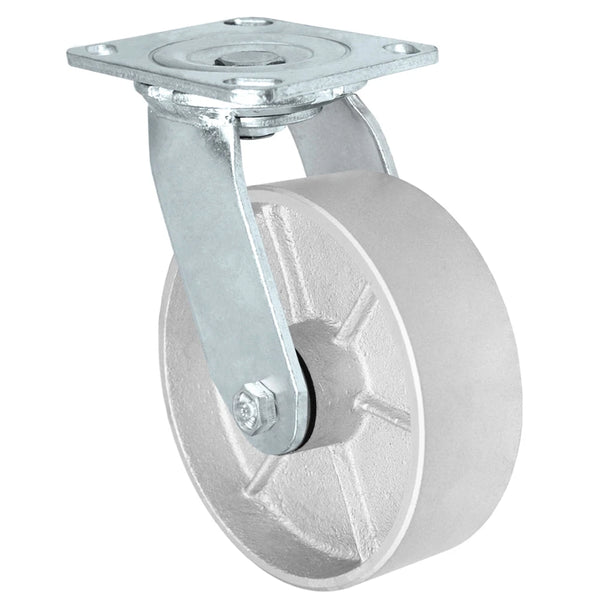
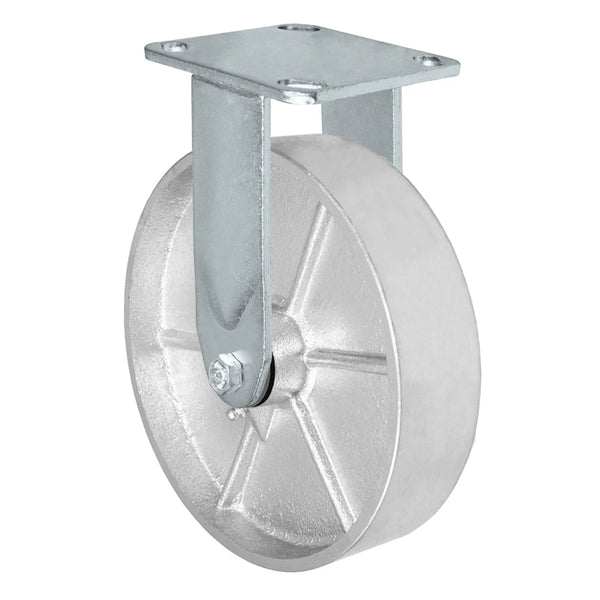
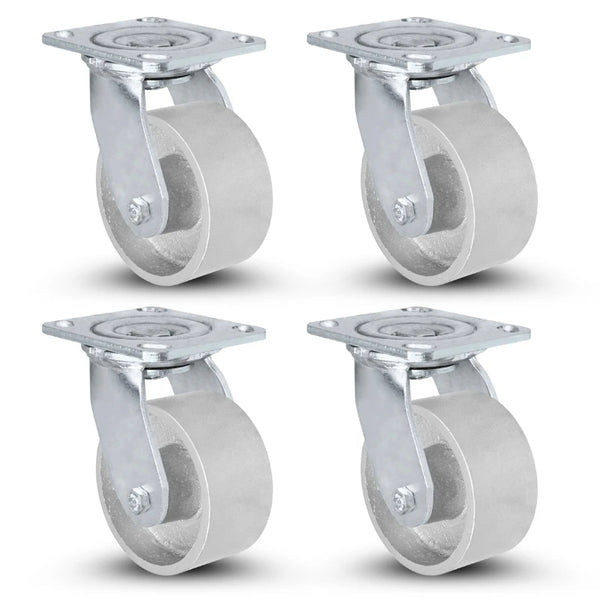
Semi-Steel (Gray Iron) Casters — Foundry & Heavy Industrial, 9 Styles

Gray metal wheels — specifically semi-steel and gray cast iron tread — are the heaviest-duty industrial wheel material before you step up to forged steel. The 9 products on this page are all semi-steel (gray iron) casters at 5″ / 6″ / 8″ wheel sizes with 1,000-1,250 lb capacity per caster. Used where polyurethane and phenolic don’t survive — foundry-adjacent floors, hot-metal manufacturing, steel mill transport, and outdoor industrial pads where the tread sees abrasive contamination.

  • 5″ / 6″ / 8″ wheel sizes
  • 1,000-1,250 lb per caster
  • 4″ x 4-1/2″ plate standard
  • Swivel + rigid configs

Semi-steel (gray iron) vs. forged steel — the heavy-metal wheel decision

Semi-Steel / Gray Iron (this page)

Capacity: 1,000-1,250 lb per caster at 5″-8″ sizes.

Floor: Marks light tile under load. Fine on concrete, foundry floors, steel-mill aisles.

Cost: Mid-tier — less than polyurethane on iron, more than polyolefin.

Use: Foundry-adjacent, hot-metal handling, steel mill transport, outdoor pads.

Forged Steel

Capacity: 4,000-20,000+ lb per caster at 6″-12″ sizes.

Floor: Marks tile, concrete crushing under prolonged static load. Strictly rough-floor application.

Cost: Premium — 2-4x the semi-steel equivalent.

Use: Steel mill furnace charging, military, aircraft GSE, foundry direct.

Why semi-steel (gray iron) is the spec for foundry-adjacent applications

The tread material that fails first near a foundry, steel mill, or hot-metal manufacturing line is polyurethane — it softens past 150°F and permanently deforms. Phenolic does better (up to 300°F) but chips when the wheel encounters slag, sand, or weld spatter on the floor. Semi-steel (gray cast iron with a moderate carbon content) handles BOTH the temperature (no softening up to 250°F continuous) AND the surface contamination — the iron tread isn’t damaged by abrasive debris the way a polymer tread would be. The trade-off is the iron tread marks light-colored tile and isn’t quiet.

Common questions on semi-steel casters

Is semi-steel the same as cast iron?

Semi-steel is a specific grade of gray cast iron with slightly higher tensile strength than basic cast iron — achieved by adding a controlled amount of steel scrap to the iron melt. It rolls and behaves similarly to cast iron but holds up better under impact loads. For most caster specifications, semi-steel and cast iron are used interchangeably.

Will a semi-steel wheel damage concrete floors?

Smooth concrete: no. The wheel rolls fine without leaving marks. Sealed concrete with light-colored finish: faint dark streaks under heavy load are possible. Polished concrete in commercial spaces: not recommended — specify polyurethane or phenolic instead. Foundry and industrial concrete: ideal application.

Why is the capacity capped at 1,250 lb when forged steel hits 20,000 lb?

Wheel construction. Semi-steel is a thinner cast structure intended for general industrial use. Forged steel is a much thicker forging designed for super-heavy applications. The 5″-8″ semi-steel range tops at 1,250 lb because that’s where the wheel-to-bearing assembly transitions to the heavier forged-steel construction.

How do these handle outdoor conditions?

Semi-steel wheels rust if left in standing water but handle outdoor humidity, rain, and snow fine. The cast iron tread doesn’t care about UV exposure or temperature variation. For continuous outdoor or marine use, specify the stainless steel yoke option (special order) to prevent yoke corrosion.

What plate dimensions do these use?

4″ x 4-1/2″ standard medium-heavy industrial mount. Same plate as the equivalent 5″ and 6″ polyurethane and phenolic casters — allowing direct material substitution without changing the equipment mount.

Step up or pivot to a different tread

Search