Heavy Duty Casters
Quick Specs — Heavy Duty Casters
JW
Jordan Wilson
Founder, CasterHQ | 15+ years specifying industrial casters
Application engineers on staff · Same-day shipping · Trusted by businesses nationwide
| Load Range |
1,200 lbs to 16,000 lbs per caster |
| Wheel Diameters |
4″ to 16″ |
| Wheel Materials |
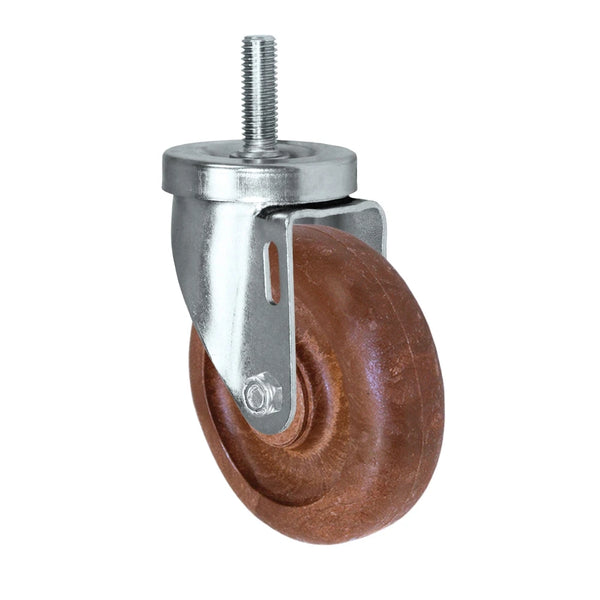
Polyurethane, Phenolic, Nylon, Cast Iron, Rubber, Steel |
| Mount Types |
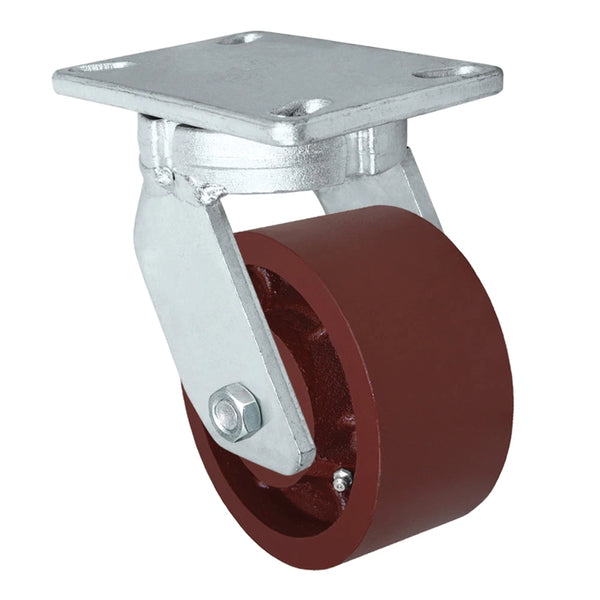
Top Plate (bolt-on) & Rigid or Swivel configurations |
| Bearing Types |
Precision Ball, Tapered Roller, Kingpinless |
| Best For |
Tow lines, heavy machinery, aerospace dollies, industrial carts over 2,000 lbs |
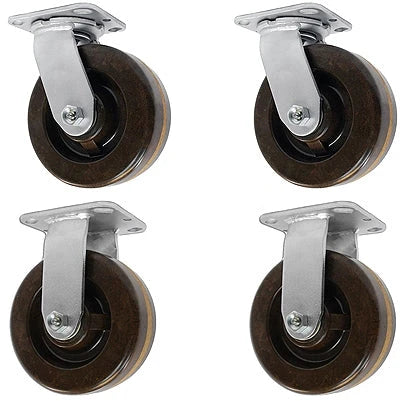
Heavy duty casters are engineered for extreme industrial loads, harsh environments, and continuous duty cycles where lighter designs fail. This category includes heavy duty caster configurations supporting loads up to 16,000 lbs per caster, depending on series and application.
Use this page to select the correct heavy duty caster configuration by plate size, performance design (kingpinless, low profile, AGV-rated), or operating environment (high heat).
Choose a Heavy Duty Caster Configuration
What Are Heavy Duty Casters and When Should You Use Them?
Heavy duty casters are load-rated wheel assemblies built to carry 1,000 lb or more per caster, using forged-steel or ductile-iron rigs, hardened raceways, and tapered-roller or kingpinless swivels that survive shock, tow speeds, and continuous duty where standard casters fail.
Specify heavy duty casters when any of these apply:
- Total load across the cart or machine base exceeds roughly 4,000 lb
- The equipment is towed, power-driven, or moved by an AGV rather than pushed by hand
- Floors carry debris, weld slag, expansion joints, or dock-plate impact
- The line runs hot — bakery ovens, heat-treat, or paint booths into the 450°F+ range
If load per caster stays under 1,000 lb on smooth concrete, a medium-duty rig usually costs less and rolls easier. Heavy duty earns its price once shock, tow force, or heat enter the picture.
How Much Weight Can a Heavy Duty Caster Hold?
CasterHQ heavy duty casters run from about 1,200 lb to 16,000 lb per caster, depending on rig, wheel, and bearing. Low-profile HD reaches 16,000 lb, AGV-rated 24/7 rigs 15,400 lb, 6-1/2″ × 7-1/2″ plate casters 10,000 lb, and kingpinless rigs 7,200 lb.
Size by load per caster, not total. Rated capacity is per-caster at ideal conditions. For carts and dollies, apply a 33% safety derate to account for uneven floors — on four wheels, only three reliably share the load at any moment.
Per-Caster Load Formula
Required rating = (Total load ÷ number of casters) ÷ 0.67. Example: 8,000 lb on 4 casters → (8,000 ÷ 4) ÷ 0.67 = 2,985 lb minimum per caster. Round up to the next rated size.
What Are the Best Heavy Duty Casters for Towing and Machinery Moving?
For tow lines and powered trains, kingpinless casters are the right call. A standard kingpin swivel wears 3–5× faster under tow loads and side thrust; kingpinless rigs carry to 7,200 lb and hold swivel geometry through repeated cornering.
For die carts, machine bases, and point loads that sit still, forged-steel rigid casters or dual-wheel setups spread the load and keep deck height low. Match the plate to the equipment's existing bolt pattern — 4-1/2″ × 6-1/4″ up to 2,500 lb, 6-1/2″ × 7-1/2″ up to 10,000 lb.
Which Heavy Duty Caster Wheel Material Is Best for My Application?
Polyurethane-on-iron is the default for heavy loads on concrete — it protects the floor, rolls quiet, and carries to 8,000 lb. Switch materials when the environment demands it:
-
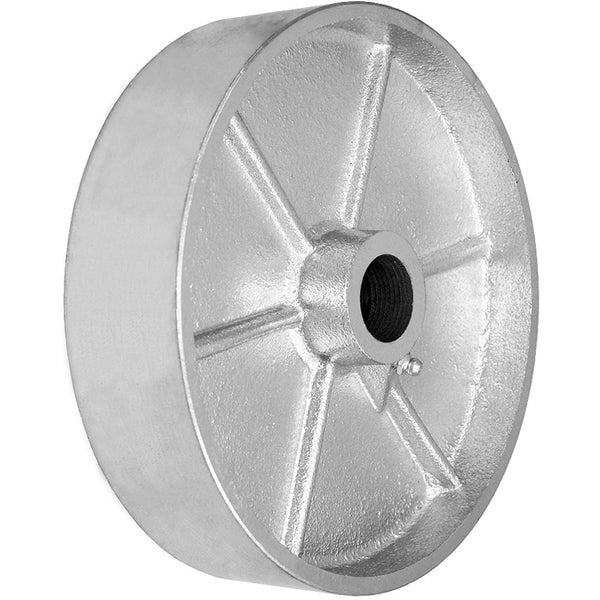
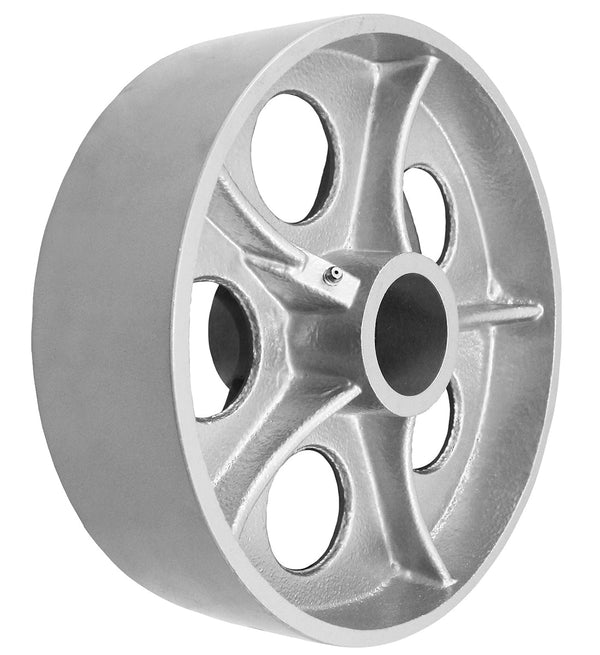
Forged steel / cast iron — highest capacity and the pick for hot, wet, or contaminated floors; noisy and hard on the slab
-
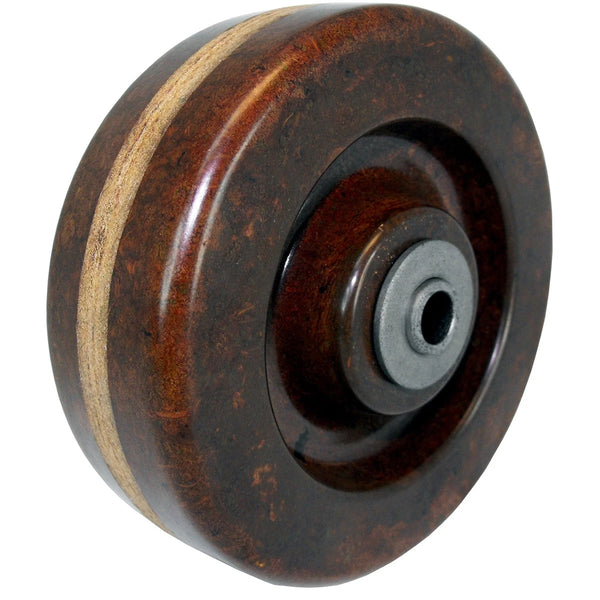
Phenolic — low rolling resistance and heat tolerance to about 450°F, best on debris-heavy shop floors
-
Glass-filled nylon — bakery ovens and heat-treat lines, continuous heat well past what polyurethane survives
-
Polyurethane — quiet and floor-friendly on smooth concrete; not for sustained high heat
What Size Heavy Duty Caster Do I Need?
Bigger wheels roll easier and carry more — heavy duty wheels run 4″ to 16″ in diameter. A larger diameter clears expansion joints and debris with less push force and less tread wear. As a rule, step up one wheel size for every 3/8″ of floor gap or joint you cross.
Then match plate and bolt pattern to the equipment. Not sure of the pattern? Send a photo and the old caster's plate dimensions and our engineers will cross it.
Selection tip: For loads above 10,000 lbs, floor condition, wheel material, and swivel construction are critical. Kingpinless and low-profile designs often prevent premature failure under extreme duty.
From Our Engineers: What We See in the Field
Our team specifies heavy duty casters for manufacturing, aerospace, and distribution facilities every day. Here is what most buyers get wrong:
-
Undersizing load capacity — Always calculate per-caster load with a 30% safety factor. A 4-caster cart carrying 4,000 lbs needs casters rated for at least 1,300 lbs each, not 1,000.
-
Ignoring floor conditions — Polyurethane outperforms phenolic on smooth concrete, but phenolic is the better choice for debris-heavy shop floors and high-heat environments up to 450°F.
-
Skipping kingpinless on tow applications — Standard kingpin swivels fail 3–5× faster in towed configurations. We recommend kingpinless casters for any tow line exceeding 2,000 lbs total.
-
Wrong bearing selection — Tapered roller bearings handle heavier shock loads than ball bearings. For loads over 3,000 lbs per caster with frequent impacts, always go tapered roller.
Based on CasterHQ application-engineering experience.
Heavy Duty Casters FAQ
What are heavy duty casters used for?
Heavy duty casters are used on extremely heavy equipment, industrial carts, AGVs, and machinery where load, impact, and continuous duty exceed standard caster limits.
How much weight can heavy duty casters support?
Depending on configuration, heavy duty casters can support from 2,500 lbs up to 16,000 lbs per caster under appropriate operating conditions.
When should I choose low profile heavy duty casters?
Low profile casters are ideal when overall height is limited but extremely high load capacity is required.
Can you help select or match a heavy duty caster?
Yes. Provide plate size, bolt pattern, wheel size, load, floor condition, and photos. Our team will recommend the correct heavy duty solution.
Shop Heavy Duty Casters by Capacity Tier
Capacity per caster sets the series before wheel material or plate ever matters. The Hamilton Vanguard 4,000 lb range is the general-purpose industrial workhorse for dollies, racks, fixtures, and plant transport. Extra heavy duty casters from 4,000 to 7,000 lb move to Champion, SEC kingpinless, and EHD2 dual-wheel rigs for 24/7 and defense duty. Extreme capacity casters to 40,000 lb run forged steel, cast iron, or UltraGlide polyurethane, sized to the worst-case load with one caster off the floor. If you want the configuration picked for you, start from our curated heavy duty caster sets.