Certified Where It Matters | Exceeds ICWM Standards • ANSI Tested • NSF Certified • RoHS Compliant

The Most Trusted Source for Industrial Casters | 100,000+ Orders Fulfilled for OEMs & MRO Teams

Products Manufactured in ISO 9001:2015-Certified Facilities | Trusted by OEMs & MRO Teams

In Stock. Ready to Ship. Trusted by Industry Pros.

Caster Specialists Ready to Help | Get Fast Guidance for OEM & MRO Applications

Guaranteed Lowest Pricing on Bulk Orders | Automatic Discounts Applied Instantly at Checkout

Back


Casters

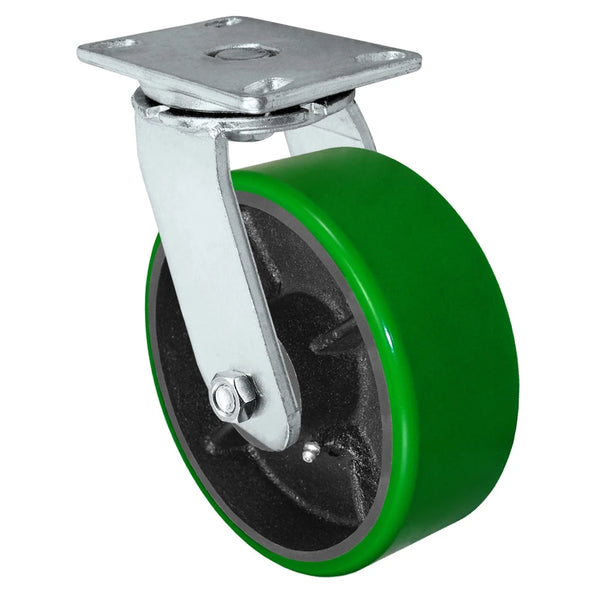
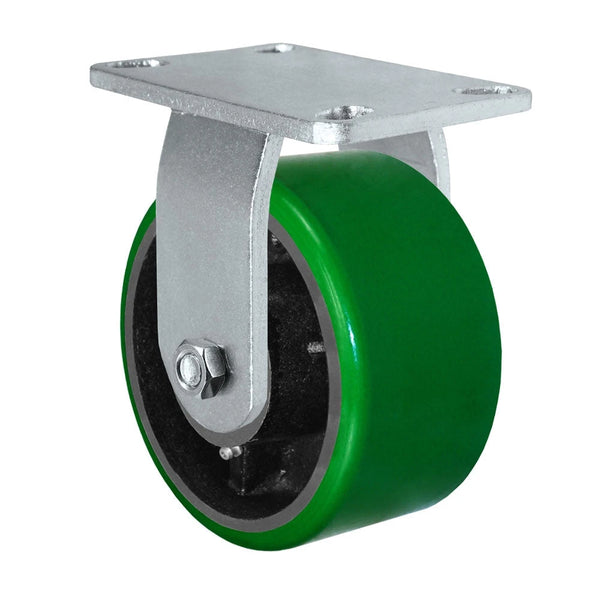
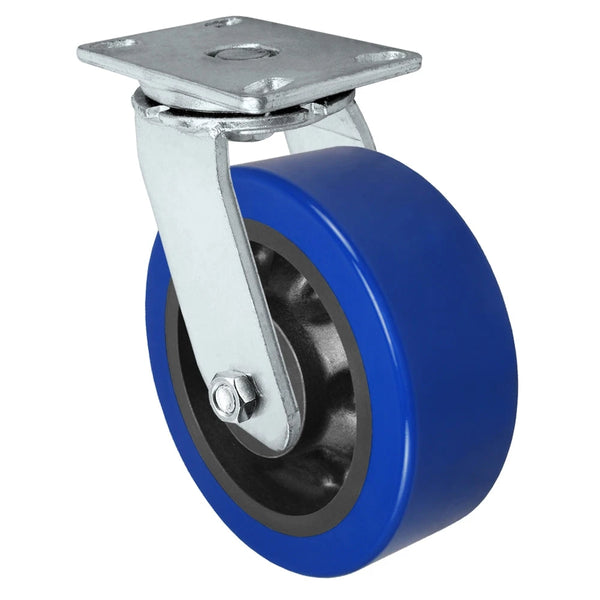
Casters are wheel assemblies (wheel + mounting + swivel/rigid frame, often with brakes) designed to add controlled mobility to carts, equipment, machinery, and industrial systems. This page is the master hub for choosing the right casters by type, mount, capacity, and application.


Shop casters by mount: plate casters, stem casters, threaded stem casters.
Shop casters by design: dual wheel casters, low profile casters, specialty casters.
Shop casters by duty: light duty to xtreme heavy duty casters (up to 6,000 lb classes).
Engineer-first: match wheel material + bearings + brakes/locks to your floor and duty cycle.
Quick sizing: (Total load ÷ number of casters) × 1.3 safety factor = minimum rating per caster.
Example: 800 lb cart on 4 casters → (800/4)×1.3 = 260 lb per caster (minimum).

Practical note: caster ratings are typically per caster under ideal conditions. Real performance depends on floor condition, impacts, speed, temperature/chemicals, and whether the load is evenly shared.

Types of casters

Most “casters” searches include swivel vs rigid, brake needs, and form factor constraints. Use the expandables below to choose the correct caster type.

Swivel casters vs rigid castersControl

Swivel casters pivot for tight turning. Rigid casters track straight and improve control under heavy load.

  • Common setup: 2 swivel + 2 rigid for stable tracking and manageable turning.
  • All swivel: maximum maneuverability; can “wander” under heavy load without locks.
Brakes, total locks, and directional locksSafety

Use brakes/locks when you must hold position during loading, on slopes, or when safety requires immobilization.

  • Brake: stops wheel rotation.
  • Total lock: helps stop wheel + swivel (design-dependent).
  • Directional lock: sets a swivel caster to track straight for long runs.
Dual wheel castersStability

Dual wheel casters distribute load and can improve stability on certain carts and equipment.

Shop dual wheel casters
Low profile castersClearance

Low profile casters are designed for tight overall height requirements where standard casters won’t fit.

Shop low profile casters
Specialty castersEnvironment

Specialty casters address unique conditions: washdown, corrosion, temperature extremes, non-marking, or specialized mounts/locks.

Shop specialty casters

Caster mounts

Mount type is one of the fastest ways to filter the right casters.

Plate castersTop plate

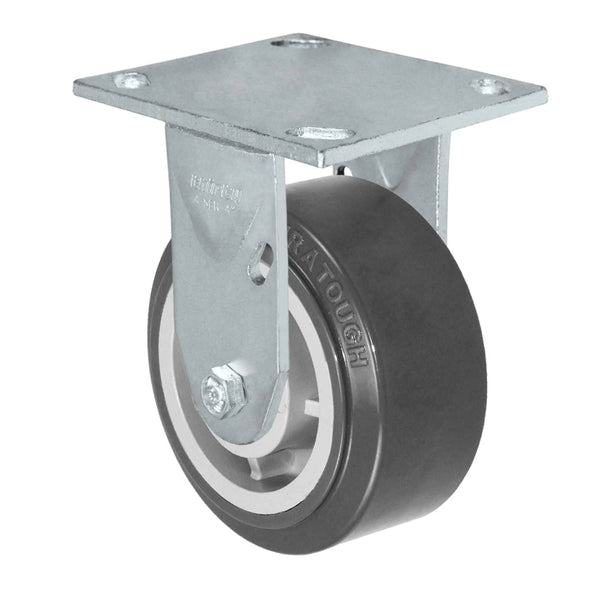
Plate casters mount via a top plate bolt pattern. Best for carts, racks, and equipment bases.

Shop plate casters
Stem castersStem

Stem casters mount into a socket or receptacle. Common for light equipment, stands, and certain frames.

Shop stem casters
Threaded stem castersThreaded

Threaded stem casters install via a threaded stud and nut. Useful when adjustability or specific threaded mounts are required.

Shop threaded stem casters

Casters by load capacity

Choose a capacity band, then match wheel material + bearings + brakes/locks for your environment.

Light duty castersUp to 145 lb

Light duty casters are best for low-load carts and smooth-floor applications where easy rolling is the priority.

Shop light/general duty casters
Light-medium duty castersUp to 400 lb

A flexible class for workstations, kitting, and general material handling.

Shop light-medium duty casters
Medium-heavy duty castersUp to 1,500 lb

For industrial environments with higher loads, floor transitions, and sustained rolling demands.

Shop medium-heavy duty casters
Heavy duty castersUp to 2,500 lb

Engineered for demanding industrial duty cycles where load, impact, and durability are critical.

Shop heavy duty casters
Xtreme heavy duty castersUp to 6,000 lb

For extreme loads and harsh conditions where failure is expensive. Confirm floors, impacts, and safety factors.

Shop xtreme heavy duty casters
Chair & furniture castersFurniture

Casters designed for chairs and furniture, typically optimizing for floor protection and smoother rolling on indoor surfaces.

Shop chair & furniture casters

Common caster applications

  • Industrial casters: carts, racks, production fixtures, equipment bases, warehouses, manufacturing.
  • Commercial casters: service carts, displays, back-of-house mobility.
  • OEM / custom builds: match mount + height + wheel material to engineered requirements.
  • Special environments: washdown, corrosion, heat, chemical exposure → use specialty casters.
If your load hits thresholds, debris, joints, or ramps, stepping up duty class and wheel diameter often prevents premature caster failure.

Caster selection guide

1) Load per caster: total load ÷ number of casters × safety factor (start at 1.3).
2) Floor & debris: rough floors need larger wheels and tougher treads.
3) Duty cycle: continuous rolling, impacts, and speed require heavier designs.
4) Environment: washdown/chemicals/heat drive wheel material + hardware choices.
5) Mount & height: confirm plate pattern or stem type and overall height clearance.
6) Brakes/locks: add when safety or loading requires controlled immobilization.

Need help? Use the contact page and send load, floor type, and a photo of your existing caster/mount.

Talk to a caster specialist

Casters FAQ

What are casters used for?Basics

Casters add mobility to carts, racks, equipment, and machinery so loads can be moved safely and efficiently.

How do I choose the right casters?Selection

Choose casters by load per caster, floor condition, duty cycle, mount type, wheel material, bearings, and brake/lock needs.

Are caster load ratings per caster?Capacity

Typically yes. Real-world capacity depends on floor condition, impacts, speed, environment, and load distribution.

Should I use 4 casters or 6 casters?Design

Use 4 casters for most carts. Use 6 casters when loads are very high, platforms are long, or floor conditions create uneven load sharing.

Can you match a replacement caster?Replacement

Yes. Provide mounting pattern or stem type, overall height, wheel diameter/width, load, floor type, and photos.

Caster Engineering Tools

These calculators apply to any caster application—even if you’re browsing a different category. Use them to estimate load rating per caster, select wheel material, and estimate push/pull force. Expand any tool for full analysis + a share-ready spec line.

CasterSpec Load Calculator
Fast estimate. Expand for safety factor + uneven floor + spec output.
Expand full calculator
Load
Copied.
Base per caster
Worst-case per caster
Recommended rating
Spec output (auto-generated)
Tip: paste into RFQs / threads. Expand tool for advanced inputs.
WheelMatch Material Selector
Fast recommendation. Expand for noise, duty cycle, floor protection.
Expand full selector
Wheel
Copied.
Primary recommendation
Good alternate
When to avoid
Spec output (auto-generated)
Engineers share tools that output a clean “why” line.
PushForce Push/Pull Calculator
Estimate effort fast. Expand for operators, materials, bumps, startup mode.
Expand full push/pull
Push
Copied.
Estimated total force
Per operator
Pass / target
Spec output (auto-generated)
If effort is high: bigger wheels + better material + smoother path wins.
More engineering tools
Customers
Stars Trusted by 100,000+ Industrial and Commercial Buyers | 98.7% on-time shipment rate

Industrial and Commercial Engineered Casters

Designed for engineers, manufacturers, and material handling professionals

Search