 Specialty Casters
Gate Casters
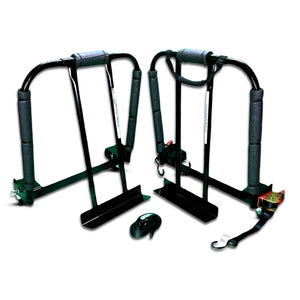
BBQ Pit & Smoker Casters
Keyed Drive Wheels
Drywall Cart Casters
Skid Wheels & Casters for RVs
Leveling Casters
Shopping Cart Wheels & Casters
Band Equipment Casters & Wheels
Low Profile Casters
Cart Wheels & Casters
Toolbox Caster Sets
Bakery Oven Rack Casters
Kitchen Prep Table Caster Sets
Wire Shelving Casters
Silent Glide Casters
Specialty Casters
Gate Casters
BBQ Pit & Smoker Casters
Keyed Drive Wheels
Drywall Cart Casters
Skid Wheels & Casters for RVs
Leveling Casters
Shopping Cart Wheels & Casters
Band Equipment Casters & Wheels
Low Profile Casters
Cart Wheels & Casters
Toolbox Caster Sets
Bakery Oven Rack Casters
Kitchen Prep Table Caster Sets
Wire Shelving Casters
Silent Glide Casters


Capacity shown is per caster (per wheel for wheels). Compare materials →


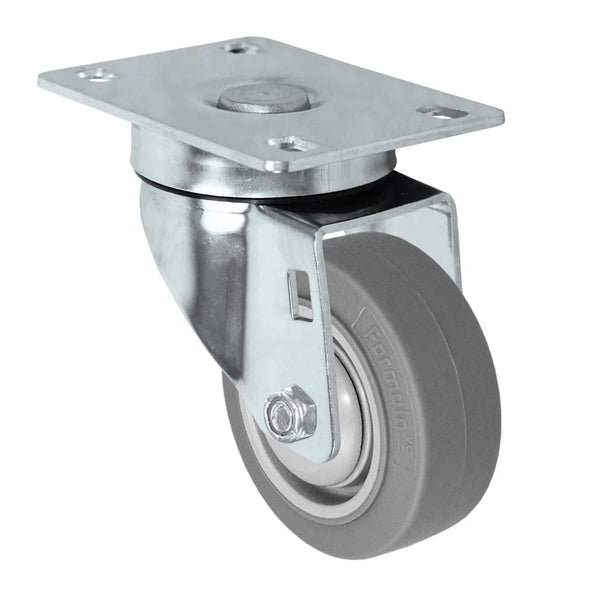
Thermoplastic rubber (TPR) casters give you the quiet, cushioned, non-marking roll of rubber with the cleanliness and consistency of a molded thermoplastic. They're the standard for environments where noise and floor protection matter as much as the load — healthcare, retail, hospitality, food service, and light industrial carts. Gray TPR and FX Formula XS compounds, 2.5″ through 8″ diameters.
TPR (thermoplastic rubber) casters are non-marking gray rubber-tread casters with a soft thermoplastic-rubber compound bonded to a polyolefin or steel core. They roll quietly on hard floors, support 75 to 1,250 lbs per caster, operate from -20°F to +180°F, and resist water, dilute oils, and most household chemicals — making them the standard choice for healthcare, hospitality, libraries, schools, retail display, and noise-sensitive industrial workplaces.
TPR casters support 75 to 1,250 lbs per caster, with most stocked models in the 75–700 lb range. Light-duty Durastar 01/06 series tops at 130 lbs. Medium-heavy 30 series runs 350–600 lbs. Hamilton VersaTech S-528-TE caps the TPR range at 1,250 lbs per caster (8" x 2" wheel). For loads over 1,250 lbs per caster, switch to polyurethane on iron or cast-iron wheels.
Use the N−1 method to size: take total cart weight, divide by (number of casters − 1), multiply by 1.15 safety factor. A 2,000 lb 4-caster cart needs casters rated 766 lbs minimum each — Hamilton VersaTech (1,250 lb) handles it; a single Durastar 30 series (600 lb) does not.
Yes — TPR is the preferred caster compound for hardwood, tile, polished concrete, and epoxy-coated hospital floors. The soft 65–75A durometer rubber compresses against the floor without scratching, and the quiet roll (55–62 dB) meets HIPAA-quiet patient room requirements. Healthcare facilities, libraries, schools, museums, and luxury retail are the four most common TPR specifications at CasterHQ.
Avoid hard nylon, phenolic, or steel wheels on hardwood — they scratch and roll loudly. TPR is non-marking and floor-friendly. For permanent outdoor use, switch to polyurethane (UV degrades TPR over months).
No — TPR resists flat-spotting through engineered compound flex, even under sustained load for 30+ days. This is TPR's biggest advantage over natural rubber, which permanently compresses at the contact point after about a month parked. Spec TPR for seasonal storage carts, overnight equipment lockers, hospital gurneys, and any application where the caster sits unloaded for extended periods.
For most institutional use, a 4" or 5" TPR caster covers 95% of carts under 600 lb total weight. Smaller carts (under 200 lb total) use 2" or 3" light-duty TPR. Heavy industrial carts (1,000–4,000 lb total) use 6"–8" wheels in the 30/34/35 Durastar series or Hamilton VersaTech.
Wheel diameter rules of thumb: small wheels (2"–3") roll easier on smooth floors but choke on door thresholds. Larger wheels (6"–8") clear floor transitions and roll over cables, but require more clearance under the cart deck. Match wheel diameter to the worst floor transition the cart will cross.
| Property | TPR (Gray Rubber) | Polyurethane | Soft Natural Rubber |
|---|---|---|---|
| Per-caster capacity | 75–1,250 lbs | 300–8,000+ lbs | 75–500 lbs |
| Noise level | 55–62 dB (quietest) | 62–68 dB | 55–60 dB |
| Floor marking | Non-marking on all hard floors | Non-marking | Non-marking |
| Flat-spotting under load | Resists (engineered flex) | Resists | Flat-spots after 30+ days |
| Chemical / oil resistance | Good (mild solvents OK) | Excellent | Poor (degrades in oil) |
| Temperature range | -20°F to +180°F | -40°F to +180°F | -20°F to +180°F |
| Shock absorption | Excellent | Moderate | Excellent |
| Best for | Healthcare · libraries · cold storage · institutional quiet | Heavy industrial · ergonomic carts · chemical exposure | Hardwood retail · light-load quiet rolling |


Standard TPR is not FDA-rated. For food-contact zones, specify FDA-grade compound — submit RFQ. CasterHQ stocks FDA-grade TPR variants for direct-food-contact applications.
Yes — TPR maintains flexibility down to -20°F, ideal for refrigerated facilities, walk-in coolers, and cold storage. Below -20°F, switch to a polyurethane compound rated for low-temp service.
Brief outdoor use is fine. Sustained UV degrades TPR over months — TPR is not for permanent outdoor service. Specify polyurethane on iron for permanent outdoor installations.
Hamilton VersaTech Standard Duty Series tops at 1,250 lbs per caster (8" x 2" wheel). Most TPR casters fall in the 75–700 lb range. For loads over 1,250 lbs per caster, switch to polyurethane on iron or cast iron wheels.