 Specialty Casters
Gate Casters
BBQ Pit & Smoker Casters
Keyed Drive Wheels
Drywall Cart Casters
Skid Wheels & Casters for RVs
Leveling Casters
Shopping Cart Wheels & Casters
Band Equipment Casters & Wheels
Low Profile Casters
Cart Wheels & Casters
Toolbox Caster Sets
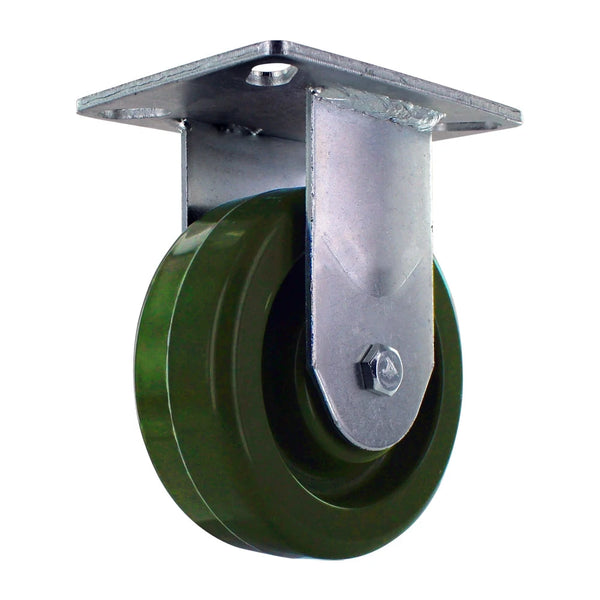
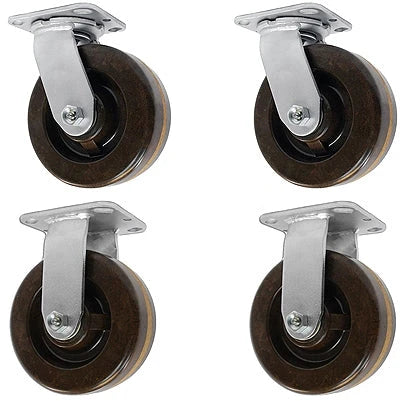
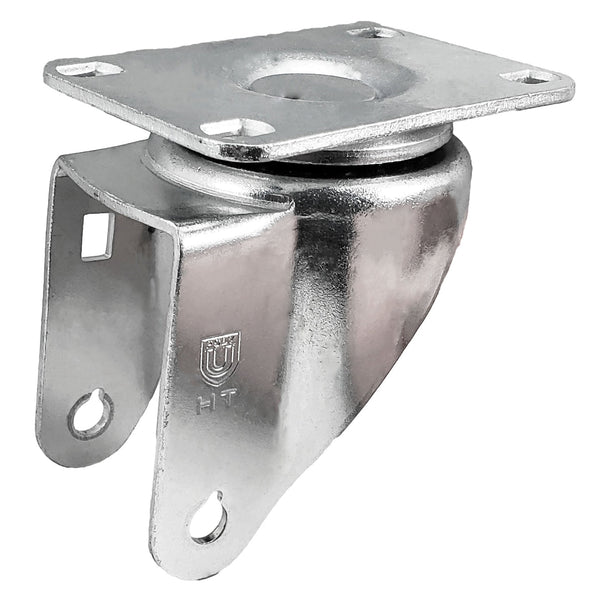
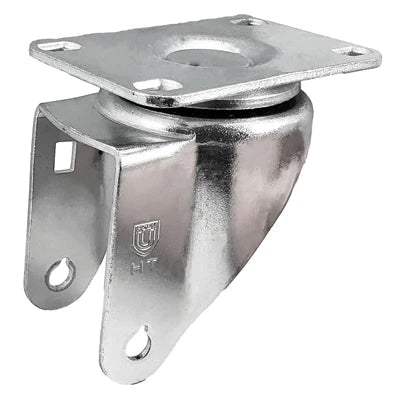
Bakery & High Temperature Casters
Kitchen Prep Table Caster Sets
Wire Shelving Casters
Silent Glide Casters
Specialty Casters
Gate Casters
BBQ Pit & Smoker Casters
Keyed Drive Wheels
Drywall Cart Casters
Skid Wheels & Casters for RVs
Leveling Casters
Shopping Cart Wheels & Casters
Band Equipment Casters & Wheels
Low Profile Casters
Cart Wheels & Casters
Toolbox Caster Sets
Bakery & High Temperature Casters
Kitchen Prep Table Caster Sets
Wire Shelving Casters
Silent Glide Casters


High-temperature casters at CasterHQ split into three operating envelopes: oven rack casters for the small 3-1/8″ x 4-1/8″ plate that fits Baxter, Hobart, and BKI commercial rack ovens; heavy-duty high-temp plate casters for industrial proofers, autoclaves, paint booths, and foundry-adjacent equipment on the 4″ x 4-1/2″ plate; and pan dolly casters for sheet-pan and bun-pan rolling racks. All three sub-collections cover 475°F continuous duty with phenolic, glass-filled nylon, and epoxy resin wheel materials engineered to resist the bearing-grease cook-off and tread soft-creep that kills standard casters near heat.


The dominant high-temp caster application by volume. Rotating rack ovens, double-rack convection ovens, proofer carts, and bun-pan rolling racks all run at 350-475°F continuous and 530-550°F intermittent. The standard mount is the 3-1/8″ x 4-1/8″ oven-rack plate. Materials: green epoxy resin for the heaviest dry-heat applications (500 lb per caster); glass-filled nylon for proofers that cycle through steam (475°F continuous, 350 lb, autoclave-safe); Colson Heatwave for medium-duty rack ovens (300 lb). Cross-references to Baxter OV-200, Hobart HB6, BKI VGG series and similar are supported — email info@casterhq.com with your equipment model.
Medical and laboratory autoclaves run 250-273°F at 18-30 PSI steam pressure for sterilization cycles. The caster needs to survive both the temperature AND the wet-steam cycle without grease loss or material swelling. Glass-filled nylon is the go-to spec — the 30% glass reinforcement gives dimensional stability through wet-dry transitions and the material is non-absorbent. Capacity in this class typically runs 300-600 lb per caster on a 4″ x 4-1/2″ plate. Phenolic also works for dry-cycle sterilizers but absorbs moisture in wet-steam applications.
Paint and powder-coating ovens run 250-450°F depending on the cure schedule. The carts that roll product in and out of the oven need high-temp casters that won’t off-gas, soften, or contaminate the cure environment. Phenolic is the dominant spec here — it’s rated to 475°F continuous, doesn’t off-gas at typical cure temperatures, and the harder tread resists pickup of overspray. Capacity for paint booth cart casters runs 400-2,400 lb depending on rack weight. The 4″ x 2″ phenolic at 600 lb each (2,400 lb per 4-caster cart) is a common pick.
Foundry, forge, and heat-treatment carts don’t roll INTO the furnace — they handle hot castings AS THEY EXIT. Even ambient air near a foundry runs 150-250°F, which is enough to soften standard polyurethane and ruin a regular caster within months. High-temp phenolic at 4″-8″ wheel sizes handles this environment up to 3,600 lb per caster. The 6″ x 2″ phenolic on a 4″ x 4-1/2″ plate (3,600 lb) is the heaviest single-caster spec for this application class in our catalog.
Standard polyurethane: 150°F continuous threshold. Above that, the tread softens and permanently deforms within weeks. Standard rubber: 180-200°F continuous. Standard polyolefin: 180°F. Anything above 200°F continuous duty requires phenolic, glass-filled nylon, or epoxy resin wheels. Standard bearing grease also runs out at 200-250°F — high-temp grease (red lithium-complex or synthetic) is part of the spec on every product on this page.
This page focuses specifically on the bakery + 475°F continuous duty range. For higher temperatures (600°F+, used in industrial kilns, glass annealing, and certain foundry applications), see our broader High Temperature Casters collection which includes ceramic and steel-wheel options rated above 600°F.
Yes — high-temp materials don’t have a lower temperature limit that matters for indoor use. Phenolic, glass-filled nylon, and epoxy resin all run normally from -20°F up through their continuous temperature rating. The trade-off is cost (typically 2-3x the price of standard polyurethane) and rolling resistance (phenolic rolls slightly louder on smooth concrete). Spec high-temp only when the application requires it.
Yes. The Colson Heatwave SSHS40P series uses a stainless-steel yoke with the heat-stabilized polymer wheel — rated 475°F continuous, 300 lb, washdown-safe. For the heavy phenolic series (4″-6″ wheels), stainless yoke options are available on request — email info@casterhq.com for a stainless cross-reference.
Glass-filled nylon and high-temp phenolic wheel materials carry NSF food-grade certifications. For full NSF documentation on a specific product, email info@casterhq.com with the part number — we’ll send the manufacturer cert.
Stock high-temp casters ship same day from Mansfield, TX before 3 pm Central. The heavier 6″ x 2″ phenolic and 8″ phenolic units ship LTL freight for fleet orders. Cross-reference for OEM bakery and autoclave equipment fitments: one business day response.