 Specialty Casters
Gate Casters
BBQ Pit & Smoker Casters
Keyed Drive Wheels
Drywall Cart Casters
Skid Wheels & Casters for RVs
Leveling Casters
Shopping Cart Wheels & Casters
Band Equipment Casters & Wheels
Low Profile Casters
Cart Wheels & Casters
Toolbox Caster Sets
Bakery Oven Rack Casters
Kitchen Prep Table Caster Sets
Wire Shelving Casters
Silent Glide Casters
Specialty Casters
Gate Casters
BBQ Pit & Smoker Casters
Keyed Drive Wheels
Drywall Cart Casters
Skid Wheels & Casters for RVs
Leveling Casters
Shopping Cart Wheels & Casters
Band Equipment Casters & Wheels
Low Profile Casters
Cart Wheels & Casters
Toolbox Caster Sets
Bakery Oven Rack Casters
Kitchen Prep Table Caster Sets
Wire Shelving Casters
Silent Glide Casters


Capacity shown is per caster (per wheel for wheels). How to measure →


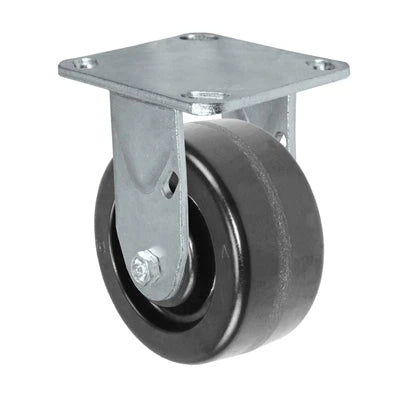
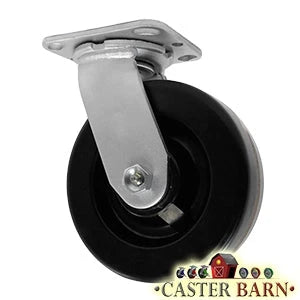
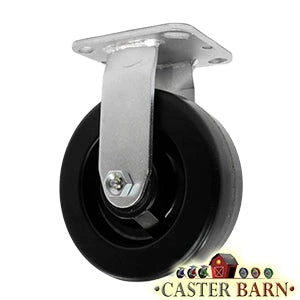
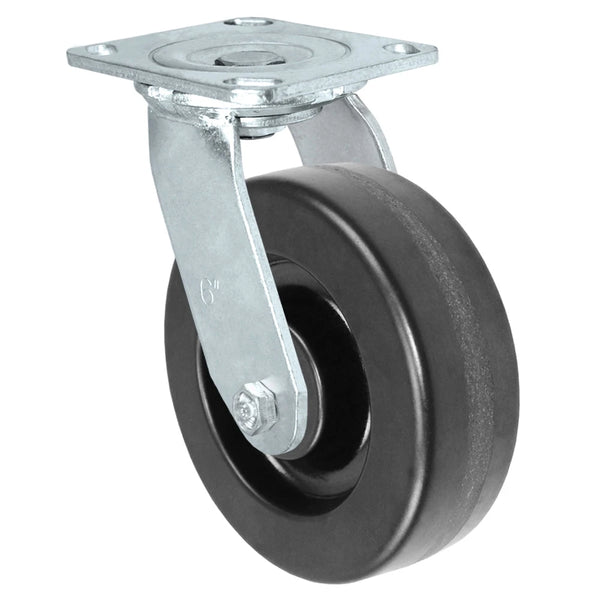
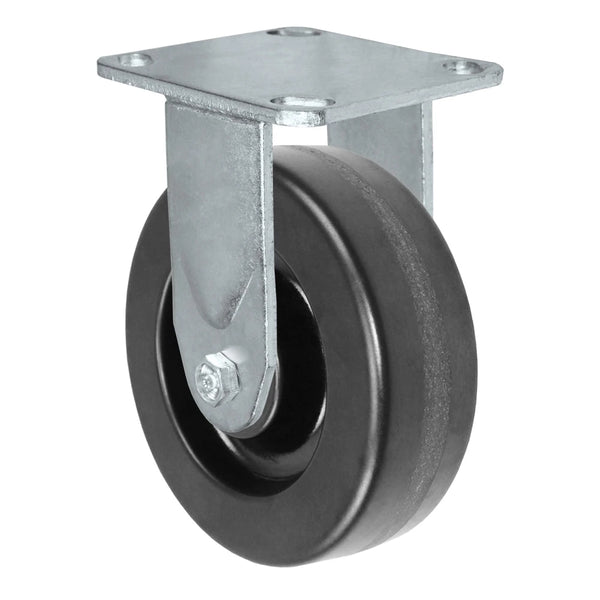
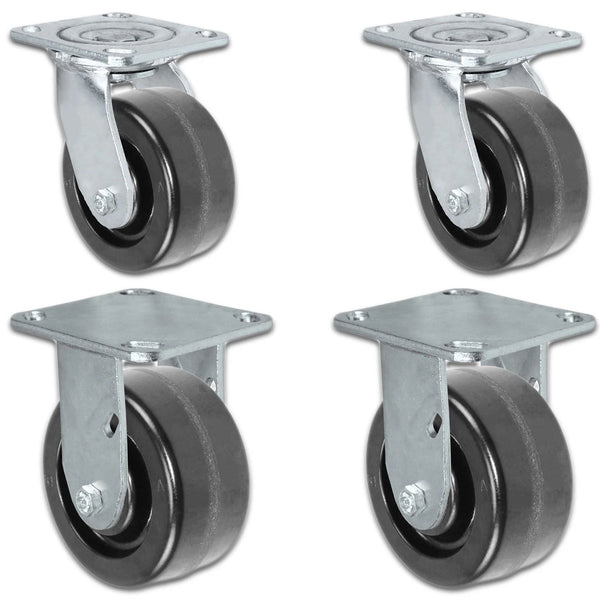
Phenolic plate casters with the standard 4″ x 4-1/2″ top plate — the heat-resistant alternative to polyurethane for paint booths, oven-adjacent equipment, bakery proofers, and dry industrial environments where temperatures push past 200°F. The 48 styles on this page span 4″ / 5″ / 6″ wheel sizes at 700-1,250 lb per caster, with brake variants and 4-pack sets reaching 3,200 lb cart capacity. Phenolic resin reinforced with macerated cotton canvas — harder than polyurethane (90D durometer), heat-resistant to 450°F continuous.
| Wheel Size | Single Caster Capacity | 4-Pack Cart Capacity | Configurations Stocked |
|---|---|---|---|
| 4″ x 2″ | 800 lb | 3,200 lb (4 swivel) | Swivel, rigid, brake, 4-pack set |
| 5″ x 2″ | 1,000 lb | 4,000 lb (4 swivel) | Swivel, rigid, brake, 4-pack set |
| 6″ x 2″ | 1,200-1,250 lb | 4,800-5,000 lb (4 swivel) | Swivel, rigid, brake, 4-pack set, replacement wheel |
Phenolic earns its premium in heat — below 150°F continuous duty, polyurethane is the smarter pick (longer service life, non-marking, lower rolling resistance). Above 200°F continuous: phenolic is the spec. Above 475°F continuous: phenolic flat-spots under load, step up to glass-filled nylon or epoxy resin.
4″ at 800 lb each for medium-heavy paint booth carts. 5″ at 1,000 lb each for standard oven-adjacent industrial. 6″ at 1,200-1,250 lb for the heaviest phenolic applications including foundry-adjacent transport.
Phenolic with side-lock brake stocked in all three wheel sizes. For paint booth carts and bakery-adjacent equipment that park during cure or proof cycles, brake variant is essential.
Standard 4-bolt-hole pattern. Most medium-heavy industrial equipment uses this plate — same as polyurethane and semi-steel equivalents. If you’re replacing polyurethane with phenolic for a heat-rated upgrade, plate dimensions usually match without modification.
450°F continuous duty, 550°F brief intermittent. Below 450°F: full rated capacity. In the 450-550°F intermittent range: derate by 25-30%. Above 550°F: phenolic softens and permanently deforms — step up to glass-filled nylon or epoxy resin (see Bakery & High-Temperature Casters).
Phenolic typically runs 20-30% less than equivalent polyurethane at the same wheel size and capacity. The cost savings come from simpler manufacturing (compressed resin mold vs. polyurethane casting with bonding). For applications where heat resistance isn’t needed, polyurethane’s longer service life and floor protection justify its premium.
Yes — phenolic is inherently non-marking on tile, sealed concrete, and epoxy. The brown/tan color of phenolic comes from the cotton-canvas reinforcement; it doesn’t transfer to floors under normal use.
Not recommended for continuous outdoor exposure. Phenolic absorbs moisture over time and can swell, throwing wheel-to-floor clearance off. For outdoor or wet-cycle applications at elevated temperatures, specify glass-filled nylon (autoclave-safe, dimensionally stable) instead.