 Specialty Casters
Gate Casters
BBQ Pit & Smoker Casters
Keyed Drive Wheels
Drywall Cart Casters
Skid Wheels & Casters for RVs
Leveling Casters
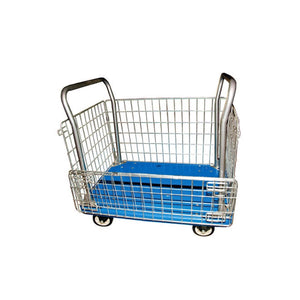
Shopping Cart Wheels & Casters
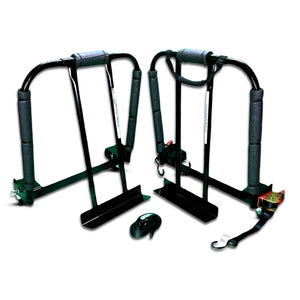
Band Equipment Casters & Wheels
Low Profile Casters
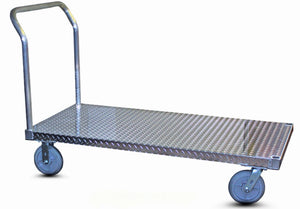
Cart Wheels & Casters
Toolbox Caster Sets
Bakery Oven Rack Casters
Kitchen Prep Table Caster Sets
Wire Shelving Casters
Silent Glide Casters
Specialty Casters
Gate Casters
BBQ Pit & Smoker Casters
Keyed Drive Wheels
Drywall Cart Casters
Skid Wheels & Casters for RVs
Leveling Casters
Shopping Cart Wheels & Casters
Band Equipment Casters & Wheels
Low Profile Casters
Cart Wheels & Casters
Toolbox Caster Sets
Bakery Oven Rack Casters
Kitchen Prep Table Caster Sets
Wire Shelving Casters
Silent Glide Casters


CasterHQ Caster Finder
1,297 industrial casters and 2,361 replacement wheels, filtered by the specs that matter. Real prices, live counts, free CAD.
Or pick specs below. Every number updates as you go.
Our team matches casters every day, including discontinued and OEM parts.
Filter cascades through your live catalog. Each selection narrows the available options.
If your spec falls outside the 1,305-product catalog — custom durometer, custom plate size, oversized capacity, specialty compounds — submit your spec for engineering review. Same-day response on standard configurations.
Reviewed by Bob Camp, Director of Caster Sales, 45+ years in the caster industry. Updated June 14, 2026.
Start with four variables in this order: mount type (how the caster attaches to your cart), wheel diameter (drives roll-over and push force), wheel material (drives floor compatibility and capacity), and load per caster (drives the safety margin you need). Once you have those four, special needs like ergonomic compliance, washdown, or high temperature narrow you to a specific premium tier. The finder above walks you through this sequence in under a minute.
Wheel diameter sizing follows three rules. First, capacity scales linearly with diameter at the same compound — a 6 inch wheel rates roughly 1,200 lbs while an 8 inch rates 1,800 lbs in standard polyurethane. Second, the 4x obstacle rule: wheel diameter must be at least 4 times the largest floor crack, joint, or dock plate height. Third, AGV and continuous-duty applications require 8 inch minimum for ergonomic push force. Use the wheel diameter calculator for a precise spec.
Required capacity per caster is calculated using the N-1 method: divide loaded cart weight by (caster count − 1), then multiply by a safety factor (1.25 for indoor concrete, 1.35 for dock plates, 1.5 for towed, 1.75 for outdoor). N-1 accounts for one caster lifting off uneven floors. For 8+ caster carts use N-2 (two lift-offs). The load calculator handles the math automatically.
Swivel casters rotate 360° to allow steering and tight turns. Rigid casters fixed in one direction provide straight-line tracking and stability. Most carts combine both: 2 swivel front + 2 rigid rear is the standard towed configuration; 4 swivel is the standard for tight aisles. Long carts (60 inch+) use a diamond pattern — swivel corners + rigid centers — to handle deck deflection while keeping maneuverability.
Polyurethane wins on almost every metric except quietness. Poly carries 60-100% more load at the same diameter, lasts 10x longer in continuous service, resists oil and most chemicals, and doesn't mark floors. Rubber is quieter and absorbs more shock, making it the right choice for institutional carts (hospitals, libraries) and very light loads. For 80% of industrial applications, polyurethane is the answer. See full materials guide.
For sensitive floors, use polyurethane or hard rubber wheels — both are non-marking and won't crack tile or indent vinyl. Avoid forged steel, phenolic, and cast iron, which all damage soft floors. For hardwood and polished epoxy specifically, soft polyurethane (Shore A 85-95) gives the best floor protection while still carrying meaningful load. The wheel selector filters compatible compounds for any floor type.
A kingpinless caster eliminates the central kingpin (the most common failure point in heavy-duty service) by using a precision raceway that distributes load across a wider bearing surface. Kingpinless construction handles 40% more cyclic load and lasts 3-5x longer than traditional kingpin casters. Required for any application above 1,500 lbs per caster, or any cart with frequent direction changes. Full comparison guide.
Plate casters bolt to a flat deck through 4 mounting holes — strongest, most common, easiest to replace. Threaded stem screws into a tapped hole in the cart leg — common on equipment bases and chairs. Grip ring stem inserts into a tubular leg with a snap ring — fast install, common on stockroom carts. Expanding stem inserts into hollow tubular legs and clamps via internal expansion — used when the leg is hollow and can't be drilled. Full mounting guide.
Five levers reduce push force in order of impact: (1) Switch to a low-rolling-resistance wheel compound — premium ergonomic urethane cuts force 40-60% versus standard. (2) Step up wheel diameter — each step (4→6→8 inch) drops force ~12%. (3) Switch from cast iron hub to aluminum hub — saves 12-15%. (4) Upgrade roller bearings to maintenance-free precision sealed bearings — saves 25%. (5) Use crown tread instead of flat — saves ~8%. Run the push force calculator for a 3-column comparison.
Wheel brake (face brake) stops the wheel from rolling but the swivel still rotates — the cart can spin in place. Total lock stops both wheel rotation AND swivel rotation — fully parked. Side lock allows wheel rotation in one direction but locks swivel to a tracking position — used for trailing/towed applications. For carts that need to be securely parked, total lock on at least 2 corners is required to prevent unintended pivot.
Most premature failures trace to one of four root causes: (1) Undersized for actual load — the spec was based on empty cart weight or static rating instead of dynamic loaded weight with safety factor. (2) Wrong wheel material for the floor — soft rubber on rough concrete, or steel on epoxy. (3) Kingpin construction under heavy cyclic load — kingpinless lasts 3-5x longer for carts that turn often. (4) Continuous duty without maintenance-free bearings — roller bearings need re-greasing every 90 days; missed cycles cause heat-induced failure. The failure diagnosis tool walks through symptoms.
Measure four dimensions: (1) Wheel diameter — measure across the widest point of the wheel. (2) Wheel width — measure the tread face. (3) Mount: for plate casters, measure top plate length × width AND bolt-hole pattern (distance between bolt centers, both directions); for stems, measure stem diameter and length plus thread spec. (4) Overall mount height — bottom of plate to floor when assembled. With those four numbers the finder will return an exact-fit match in under a minute.
Escalate for: applications above 5,000 lbs per caster, custom durometer urethane (60-95 Shore A), FDA-grade contact wheels, conductive ESD specs, oil-resistant nitrile compounds, applications above 250°F, custom plate sizes (5"×7", 6"×8"), or any aerospace, nuclear, or pharma compliance spec. Our engineering team handles 40+ specialty compounds and OEM builds. Submit RFQ — same-day response on standard configurations.