Certified Where It Matters | Exceeds ICWM Standards • ANSI Tested • NSF Certified • RoHS Compliant

The Most Trusted Source for Industrial Casters | 100,000+ Orders Fulfilled for OEMs & MRO Teams

Products Manufactured in ISO 9001:2015-Certified Facilities | Trusted by OEMs & MRO Teams

In Stock. Ready to Ship. Trusted by Industry Pros.

Caster Specialists Ready to Help | Get Fast Guidance for OEM & MRO Applications

Guaranteed Lowest Pricing on Bulk Orders | Automatic Discounts Applied Instantly at Checkout

Back

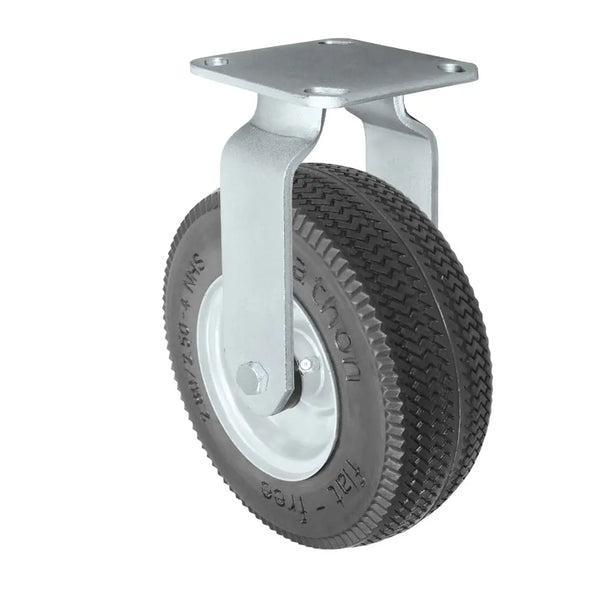
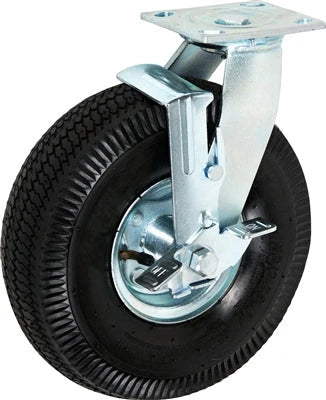
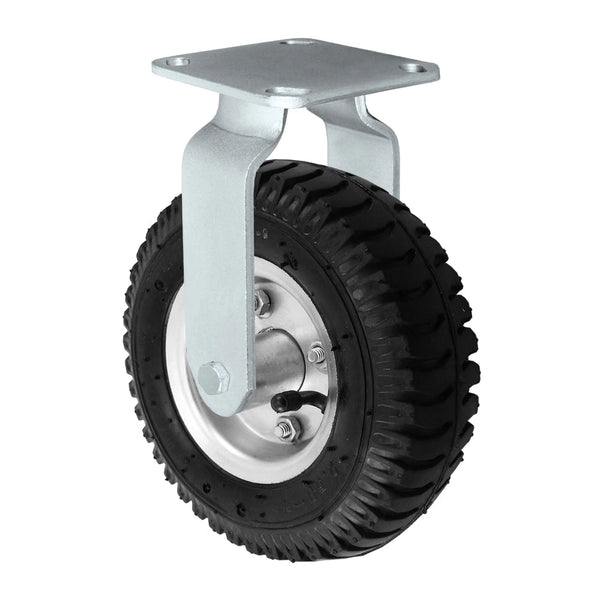
Pneumatic Casters (Air-Filled & Foam-Filled) for Rough Terrain

Pneumatic casters are built for gravel, dirt, grass, asphalt, and cracked concrete where shock, vibration, and control matter. Choose air-filled for the smoothest ride and lowest rolling resistance, or foam-filled for a pneumatic feel with puncture resistance and no air checks.

Quick Pick / Shop Pneumatic Casters

Start here. Pick your duty class first, then dial in diameter and mounting.

Fast fitment

Quick rule: air-filled = maximum cushion + easiest rolling; foam-filled = fewer flats + no air checks (slightly firmer feel).

Spec / Fitment Checklist

Reduce returns
  • Load per caster: (total load ÷ number of casters) × 1.25–1.33 safety factor for impacts and uneven terrain.
  • Wheel diameter: larger rolls easier over cracks, gravel, and thresholds; confirm overall height/clearance.
  • Tread width: wider = more float on soft ground; check turning clearance.
  • Mounting: plate hole pattern/plate size, or stem diameter/length/type (grip ring/threaded/expander).
  • Bearing/hub: match hub style and axle ID for wheel-only replacements.
  • Brake/lock: wheel brake vs total lock based on parking safety and control on slopes.

Comparison Guidance

Air-filled vs foam-filled (fast decision)
  • Air-filled: smoothest ride + best rolling efficiency on rough terrain; requires occasional air pressure checks.
  • Foam-filled: pneumatic feel with puncture resistance and no air checks; typically a bit firmer and may show more flat-spot behavior under long static loads.
  • Puncture risk environments: foam-filled is usually the safer uptime choice.
Terrain-based picks
  • Gravel / dirt / grass: prioritize air-filled and/or wider treads for control and float.
  • Debris / scrap / puncture risk: foam-filled reduces downtime.
  • Cracked concrete / thresholds: larger diameters reduce stall force and push effort.
Capacity basics (what buyers get wrong)
  • Ratings are per caster, not per set. Use a safety factor for impacts on rough terrain.
  • Undersizing increases push force, tread deformation, and early bearing wear.
  • For high loads or harsh yards, move up to heavy duty or dual wheel for stability and load distribution.

Shortcuts

Decision aids
Common mistakes (and how to avoid them)
  • Sizing to “max rating”: rough terrain adds impacts—build margin (25–33%) or you’ll get flat-spotting and wear.
  • Buying too small a diameter: stalls on gravel/cracks and spikes push force; go bigger if you cross thresholds.
  • Ignoring mounting: plate patterns and stem types must match exactly; “close” usually fails.
  • Wrong duty class: heavy duty exists for a reason—don’t force standard duty into yard work with high loads.
  • Brake mismatch: wheel brake doesn’t stop swivel rotation; use total lock when you need a true stop.
Who it’s for
  • Outdoor carts, dollies, yard equipment, plant/warehouse moves across rough surfaces.
  • OEM/MRO buyers optimizing for control, vibration reduction, and fewer jolts to the payload.
  • Applications where floor quality is inconsistent and hard wheels become unsafe or inefficient.
Not ideal for
  • High-speed towing without a tracking plan (consider rigids/directional locks and verified ratings).
  • Long-term static parking at max load (increase capacity margin and consider foam-filled or higher-duty designs).
  • Environments needing verified chemical/heat compatibility beyond standard rubber compounds.
Why CasterHQ (EEAT)
  • Spec-first selection: capacity, geometry, and mounting verification to reduce misorders.
  • Industrial focus: built for OEM/MRO and material handling realities, not consumer assumptions.
  • Upgrade guidance: clear paths from standard to heavy duty / dual wheel when terrain or load demands it.
  • Consistency: repeatable fitment logic so reorders match performance.

Products

Scroll → select

Filter by diameter, duty class, and mounting. If replacing an existing caster, match mounting and overall height first.

Pneumatic Casters FAQ

Google + AI
What are pneumatic casters best for?
Pneumatic casters are best for uneven ground and outdoor movement—gravel, dirt, grass, asphalt, and cracked concrete—where impacts and vibration matter. The tire compresses over obstacles, improving control and reducing jolts compared with hard wheels on rough terrain.
Air-filled vs foam-filled: which should I choose?
Choose air-filled when you want the smoothest ride and easiest rolling across rough terrain. Choose foam-filled when puncture risk or downtime matters more than maximum cushion, and you want a pneumatic feel without air checks. For long static parking at high load, size up to reduce flat-spot risk.
Do pneumatic casters reduce push/pull effort?
On rough surfaces they usually reduce push/pull effort because the tire deforms over gravel, cracks, and seams instead of bouncing and stalling. The bigger the diameter and the better the load margin, the more noticeable the improvement. On smooth floors, harder wheels can sometimes roll easier.
How do I choose wheel diameter for rough terrain?
Larger diameters roll easier over debris, cracks, and thresholds and reduce stall force. If you’re crossing yard terrain, dock plates, expansion joints, or gravel, sizing up is typically the fastest performance win. Confirm overall height and clearance so the cart or equipment still fits your workflow.
How do I calculate capacity for pneumatic casters?
Start with load per caster: (total loaded weight ÷ number of casters) × 1.25–1.33 for uneven terrain and dynamic impacts. Then choose a caster rating above that number. If the load shifts or the cart hits bumps, a “no margin” setup fails early—especially with softer treads.
When should I go heavy duty or dual wheel?
Go heavy duty when loads are higher, terrain is harsher, or you need more durability under impact. Choose dual wheel when you want improved stability and better load distribution while keeping pneumatic cushioning. Dual wheels can also help on softer ground by spreading contact area.
What’s the difference between a wheel-only replacement and a full caster?
Wheel-only replacements are ideal when the fork and swivel assembly are still tight and you just need new tread. A full caster replacement includes the wheel, fork, and swivel, and is better when the swivel has play, bearings feel rough, or you’re upgrading duty class, braking, or overall performance.
Stem vs plate mounting: what should I verify?
Plate mount: confirm plate size and exact bolt-hole spacing. Stem mount: confirm stem diameter, length, and stem type (grip ring, threaded, or expander). Most misorders happen because “similar” stems aren’t interchangeable. If you’re unsure, measure the existing caster before selecting.
How do I reduce flat-spotting?
Flat-spotting happens when wheels sit under high static load and the tread deforms. Reduce risk by sizing up capacity, avoiding “max rating” setups, and choosing the right tread for your parking pattern. If equipment sits for long periods, build more reserve capacity and consider foam-filled or higher-duty options.
Are pneumatic casters good for indoor use?
They can be, especially if you need vibration isolation, quiet rolling, or you frequently cross thresholds. The tradeoff is that pneumatic tires can feel less precise on smooth floors and may roll with slightly more “give.” If you’re mostly indoors on smooth concrete, compare against polyurethane for efficiency.
What maintenance do pneumatic casters need?
Air-filled tires need occasional pressure checks to maintain ride and rolling performance. Foam-filled reduces that step but still benefits from debris cleaning, fastener checks, and periodic inspection of bearings and swivels. If push force rises or tracking worsens, it’s often a sign of overload, damage, or bearing wear.
What’s the best upgrade path if my current wheels struggle outdoors?
Upgrade in this order: (1) increase capacity margin, (2) increase diameter, (3) choose air-filled vs foam-filled based on puncture risk, (4) step up to heavy duty or dual wheel for stability and durability. This sequence fixes geometry and load first, then optimizes comfort and uptime.

Caster Engineering Tools

These calculators apply to any caster application—even if you’re browsing a different category. Use them to estimate load rating per caster, select wheel material, and estimate push/pull force. Expand any tool for full analysis + a share-ready spec line.

CasterSpec Load Calculator
Fast estimate. Expand for safety factor + uneven floor + spec output.
Expand full calculator
Load
Copied.
Base per caster
Worst-case per caster
Recommended rating
Spec output (auto-generated)
Tip: paste into RFQs / threads. Expand tool for advanced inputs.
WheelMatch Material Selector
Fast recommendation. Expand for noise, duty cycle, floor protection.
Expand full selector
Wheel
Copied.
Primary recommendation
Good alternate
When to avoid
Spec output (auto-generated)
Engineers share tools that output a clean “why” line.
PushForce Push/Pull Calculator
Estimate effort fast. Expand for operators, materials, bumps, startup mode.
Expand full push/pull
Push
Copied.
Estimated total force
Per operator
Pass / target
Spec output (auto-generated)
If effort is high: bigger wheels + better material + smoother path wins.
More engineering tools
Customers
Stars Trusted by 100,000+ Industrial and Commercial Buyers | 98.7% on-time shipment rate

Industrial and Commercial Engineered Casters

Designed for engineers, manufacturers, and material handling professionals

Search