 Specialty Casters
Gate Casters
BBQ Pit & Smoker Casters
Keyed Drive Wheels
Drywall Cart Casters
Skid Wheels & Casters for RVs
Leveling Casters
Shopping Cart Wheels & Casters
Band Equipment Casters & Wheels
Low Profile Casters
Cart Wheels & Casters
Toolbox Caster Sets
Bakery Oven Rack Casters
Kitchen Prep Table Caster Sets
Wire Shelving Casters
Silent Glide Casters


Rubber and polyurethane favor floor protection; phenolic and steel favor heavy capacity. Compare materials →

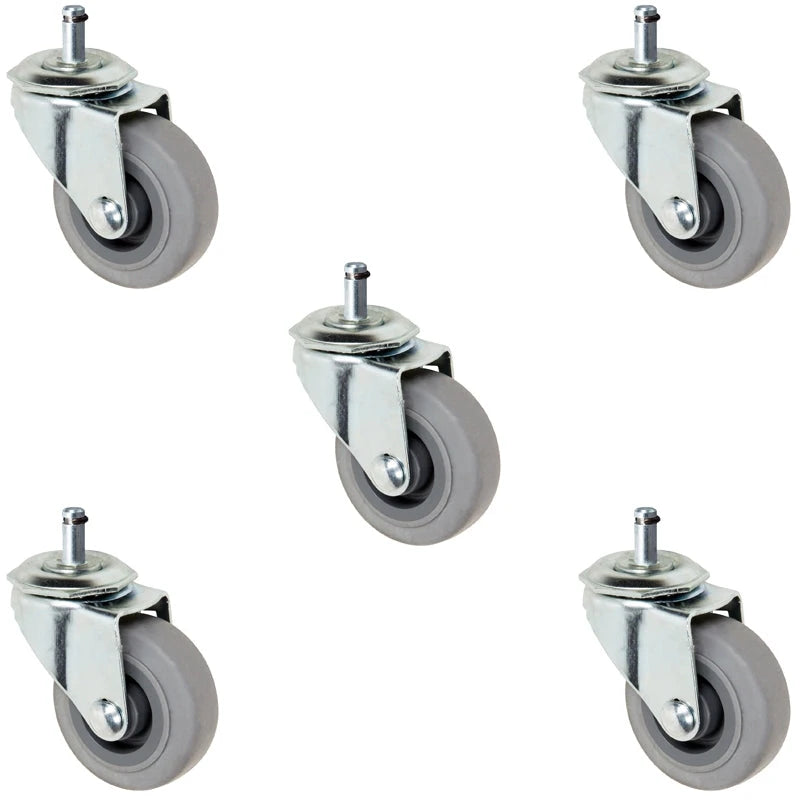
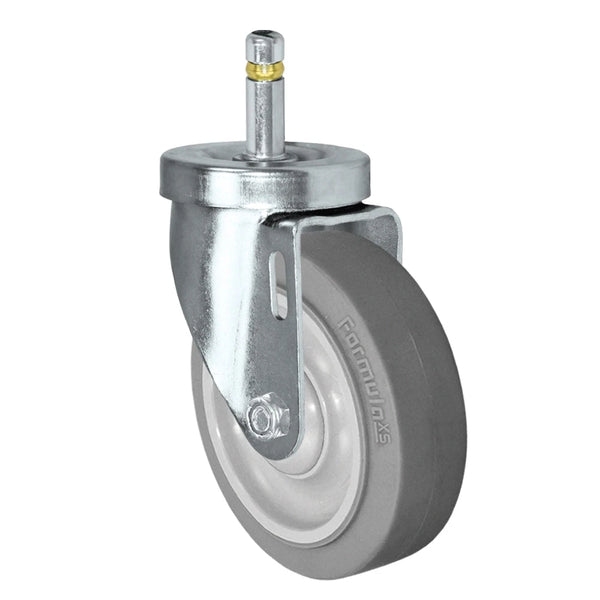
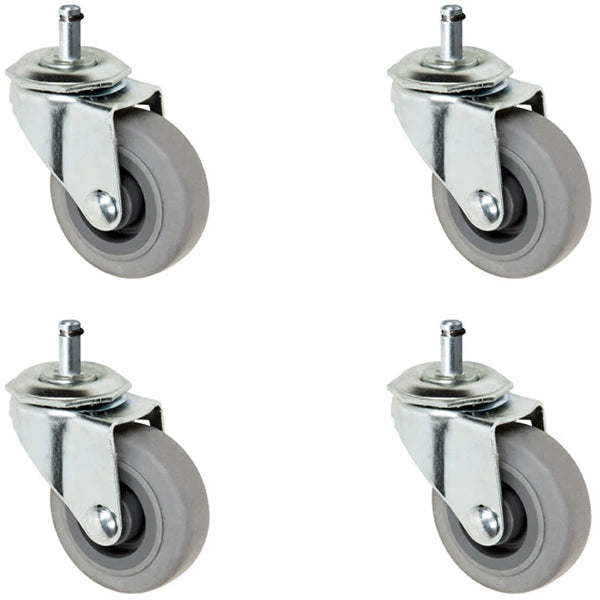
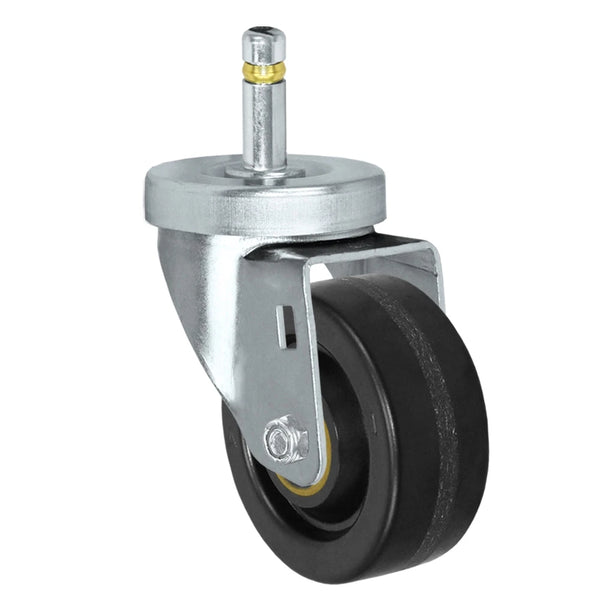
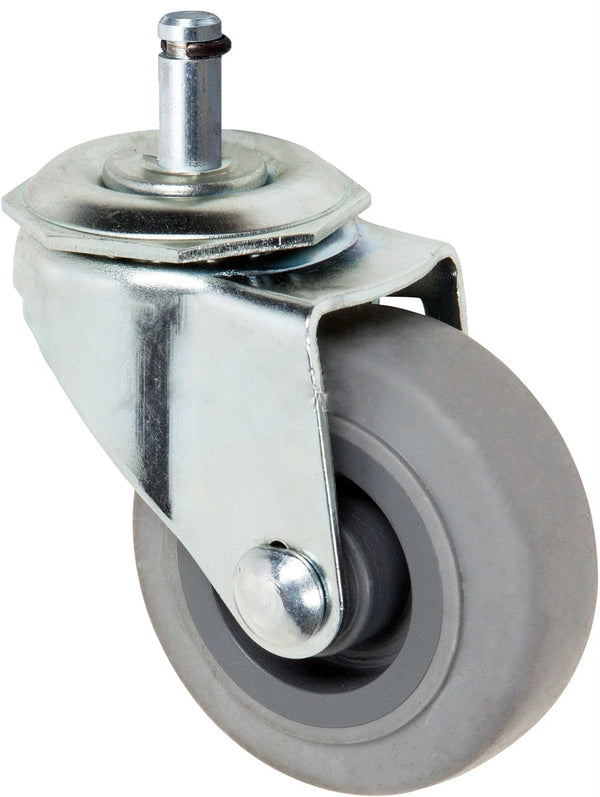
The stem is a smooth 7/16 in pin with a split steel ring near the top. Pushed into a snug hole or socket, the ring compresses and grips. It holds well in wood and in a matching socket, but it can work loose in an oversized or worn hole [S1].
| Wheel | Floor fit |
|---|---|
| Gray rubber and thermo rubber | Quiet on tile, wood and sealed concrete |
| Polyurethane and solid polyurethane | Quiet, carries more, good wear |
| Nylon and phenolic | Hard, easy rolling on smooth floors; louder |
Ratings run 80 to 350 lb per caster [S1].
Related: grip ring stem casters and grip neck stem casters.
No. It is a smooth pin with a spring ring that presses into a 7/16 in hole or socket.
Most are 7/16 x 1-3/8 in. A few are 7/16 x 7/8 in.
80 to 350 lb each, depending on wheel size and material.