 Specialty Casters
Gate Casters
BBQ Pit & Smoker Casters
Keyed Drive Wheels
Drywall Cart Casters
Skid Wheels & Casters for RVs
Leveling Casters
Shopping Cart Wheels & Casters
Band Equipment Casters & Wheels
Low Profile Casters
Cart Wheels & Casters
Toolbox Caster Sets
Bakery Oven Rack Casters
Kitchen Prep Table Caster Sets
Wire Shelving Casters
Silent Glide Casters
Specialty Casters
Gate Casters
BBQ Pit & Smoker Casters
Keyed Drive Wheels
Drywall Cart Casters
Skid Wheels & Casters for RVs
Leveling Casters
Shopping Cart Wheels & Casters
Band Equipment Casters & Wheels
Low Profile Casters
Cart Wheels & Casters
Toolbox Caster Sets
Bakery Oven Rack Casters
Kitchen Prep Table Caster Sets
Wire Shelving Casters
Silent Glide Casters


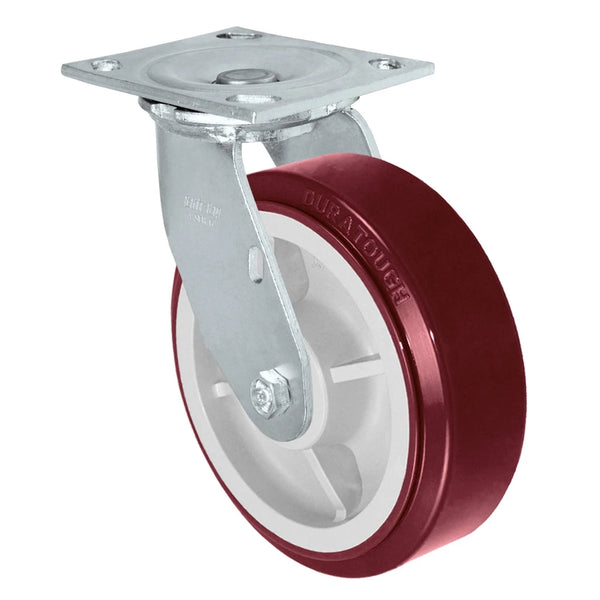
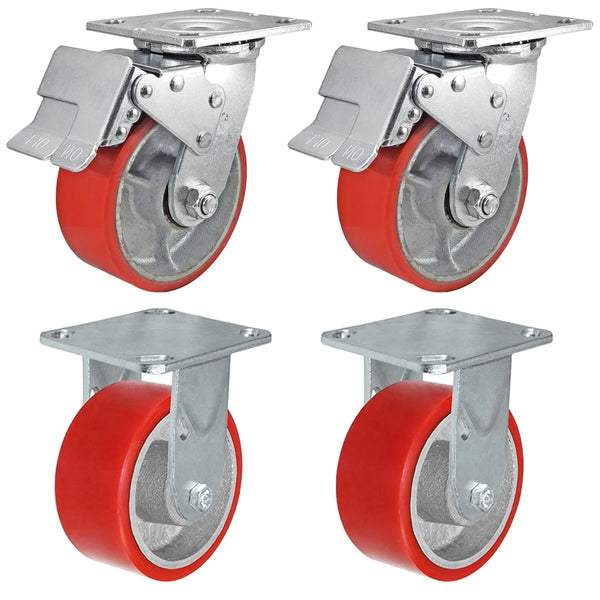
This collection is filtered to 4" × 4-1/2" plate mount casters with polyurethane wheels. Polyurethane is the “default spec” for many OEM and MRO teams because it delivers a strong balance of capacity, floor protection, abrasion resistance, and service life.
If you’re optimizing for ergonomics (lower push/pull force) and debris rejection, the best step-up we offer is typically polyurethane on aluminum core. This tread is commonly softer durometer than polyurethane on iron, which helps it “give” over small debris and seams. Many configurations also use large 6203 sealed precision bearings (model dependent) to keep rolling resistance low under load.
Upgrade: Polyurethane on Aluminum (Orange)
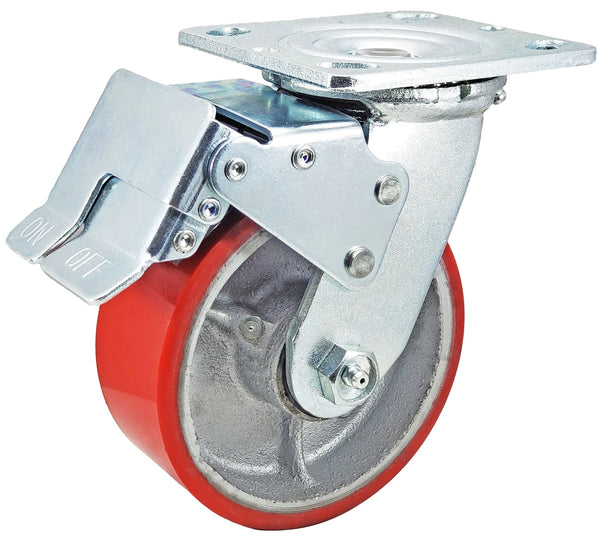
If you need a proven industrial standard with excellent weight capacity while keeping cost controlled, polyurethane on iron is the go-to value choice.
Value: Polyurethane on Iron (Red)
Note: exact tread hardness and bearing type vary by series/SKU—send your load and floor/route and we’ll match the best wheel.