ISO 9001:2015 Quality Manufacturing · ANSI ICWM Performance Tested

98.7% On-Time Ship Rate Across All Orders

200,000+ Orders Fulfilled for OEM & MRO Teams Nationwide

100+ Years of Combined Caster Industry Experience

Automatic Bulk Pricing | OEM & MRO Volume Discounts Applied at Checkout

Back

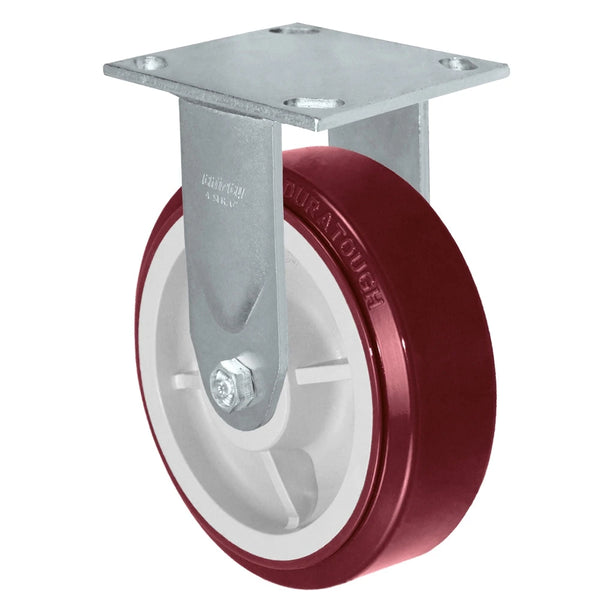
Polyurethane Casters — 4" × 4-1/2" Plate

FLOOR-FRIENDLY • HIGH CAPACITY • LONG LIFE

This collection is filtered to 4" × 4-1/2" plate mount casters with polyurethane wheels. Polyurethane is the “default spec” for many OEM and MRO teams because it delivers a strong balance of capacity, floor protection, abrasion resistance, and service life.

Standard Performance Envelope

Polyurethane casters with 4 x 4-1/2 inch top plate mount. Common wheel diameters are 4, 5, 6, and 8 inches. Polyurethane provides high load capacity, floor protection, abrasion resistance, and long service life.

  • Mounting Plate: 4" × 4-1/2"
  • Wheel Diameters: 4"–8" (by sub-collection)
  • Primary Benefits: High capacity • floor protection • abrasion resistance
  • Typical Floors: Concrete, sealed concrete, epoxy, tile, shop floors
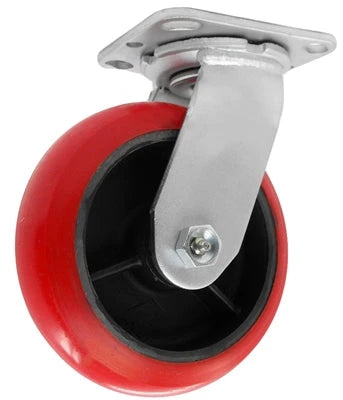
  • Common Builds: Polyurethane tread bonded/cast on a metal or polymer core (varies by series)
  • Capacity: Up to ~1,250 lb per caster (series dependent)
Selection tip: If the route has debris, seams, or thresholds, wheel diameter usually matters more than tread hardness. Upsizing from 4" → 6" or 8" often drops push force and improves roll-over.

Engineering & Purchasing Guidance

Polyurethane hardness (softer vs harder): what changes?
  • Softer polyurethane: better compliance over minor debris/imperfections, quieter feel, better floor forgiveness.
  • Harder polyurethane: lower rolling resistance on clean smooth concrete, more precise steering under load.
Core choice matters: aluminum vs iron (push/pull + debris + value)

If you’re optimizing for ergonomics (lower push/pull force) and debris rejection, the best step-up we offer is typically polyurethane on aluminum core. This tread is commonly softer durometer than polyurethane on iron, which helps it “give” over small debris and seams. Many configurations also use large 6203 sealed precision bearings (model dependent) to keep rolling resistance low under load.

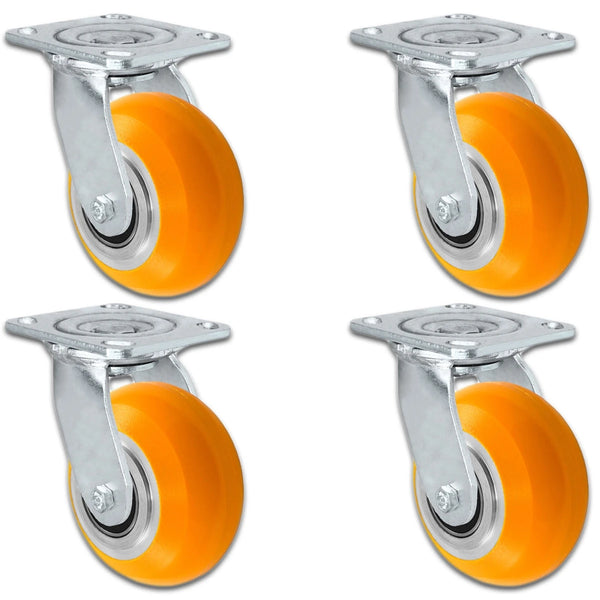
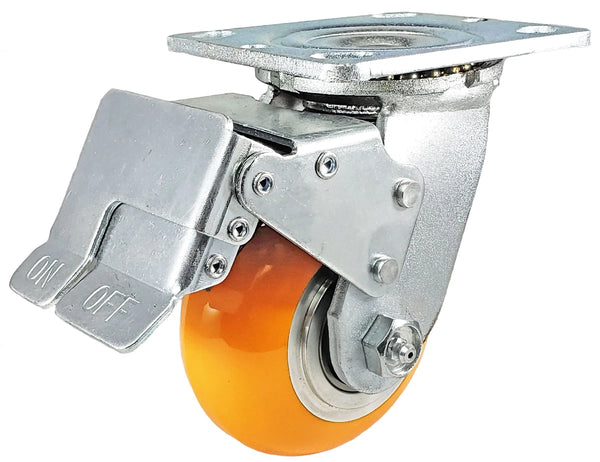
Upgrade: Polyurethane on Aluminum (Orange)

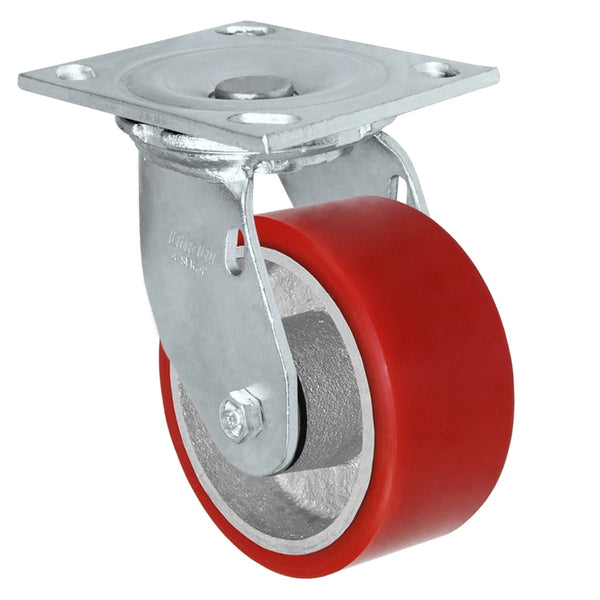
If you need a proven industrial standard with excellent weight capacity while keeping cost controlled, polyurethane on iron is the go-to value choice.

Value: Polyurethane on Iron (Red)

Note: exact tread hardness and bearing type vary by series/SKU—send your load and floor/route and we’ll match the best wheel.

When polyurethane is not the best choice
  • High heat: use high-temp wheels/casters (phenolic/nylon/high-temp series).
  • Wet wash-down with aggressive chemicals: verify compound compatibility; consider stainless systems where needed.
  • Extreme debris/impact: size up wheel diameter and/or move to heavier duty constructions.
FAQs
  • Is polyurethane floor safe? Generally yes—polyurethane is commonly chosen to protect floors compared to metal wheels.
  • Which size should I pick? Bigger wheels roll easier over seams/debris; choose the largest diameter that fits your height and swivel clearance.
  • Can you match a replacement? Yes—share plate size, bolt pattern, wheel diameter/width, overall height, and photos.
Last updated: February 2026  •  Author: CasterHQ Content Team  •  Reviewed by: CasterHQ Engineering & Operations

Caster Engineering Tools

These calculators apply to any caster application—even if you’re browsing a different category. Use them to estimate load rating per caster, select wheel material, and estimate push/pull force. Expand any tool for full analysis + a share-ready spec line.

CasterSpec Load Calculator
Fast estimate. Expand for safety factor + uneven floor + spec output.
Expand full calculator
Load
Copied.
Base per caster
Worst-case per caster
Recommended rating
Spec output (auto-generated)
Tip: paste into RFQs / threads. Expand tool for advanced inputs.
WheelMatch Material Selector
Fast recommendation. Expand for noise, duty cycle, floor protection.
Expand full selector
Wheel
Copied.
Primary recommendation
Good alternate
When to avoid
Spec output (auto-generated)
Engineers share tools that output a clean “why” line.
PushForce Push/Pull Calculator
Estimate effort fast. Expand for operators, materials, bumps, startup mode.
Expand full push/pull
Push
Copied.
Estimated total force
Per operator
Pass / target
Spec output (auto-generated)
If effort is high: bigger wheels + better material + smoother path wins.
More engineering tools

Available Configurations

Customers
Stars Trusted by 100,000+ Industrial and Commercial Buyers | 98.7% on-time shipment rate

Industrial and Commercial Engineered Casters

Designed for engineers, manufacturers, and material handling professionals

Search