

















On this page
- Floor Damage Prevention with Casters: Wheel Compound, Diameter, and PSI Math
- How Casters Damage Floors
- PSI Math for Point Loads
- Wheel Compound by Floor Type
- Floor-by-Floor Safe Spec
- Streak and Dent Diagnosis
- Retrofit Path for Existing Damage
- Six Floor-Damage Mistakes
- Frequently asked questions
- Related Engineering Tools & Guides
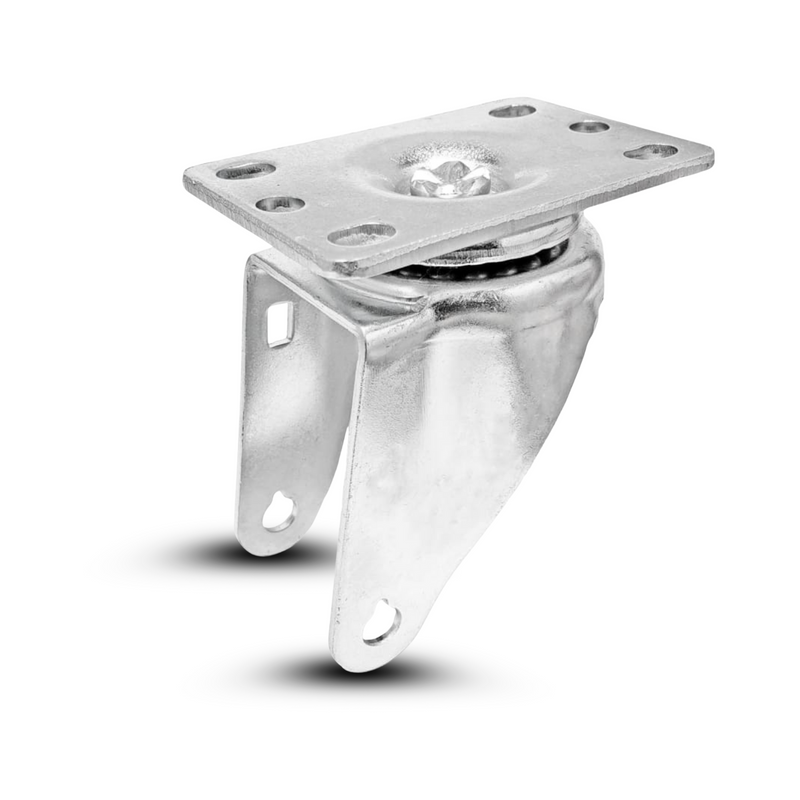
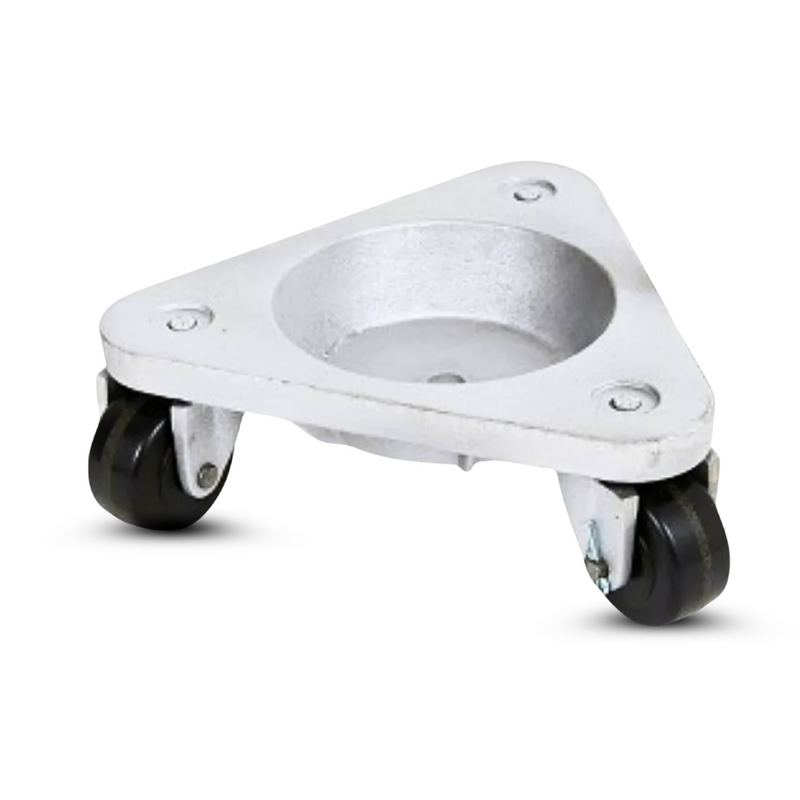
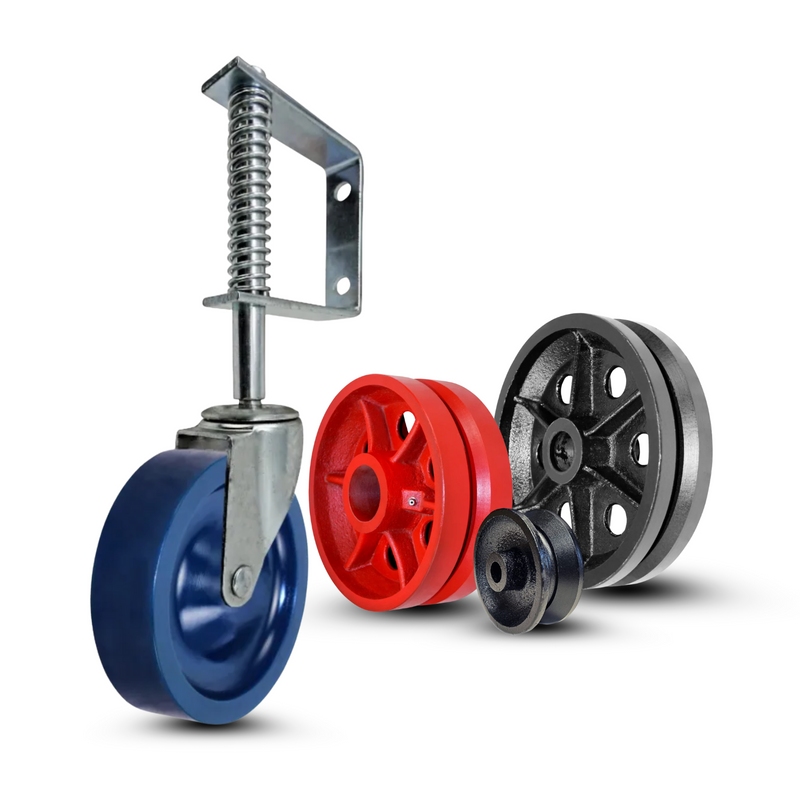
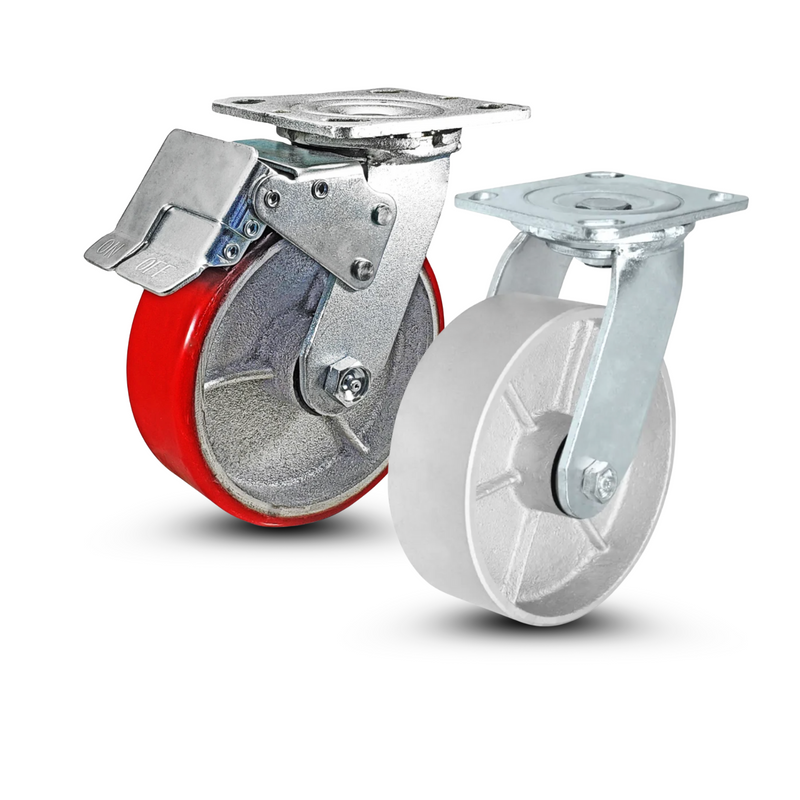
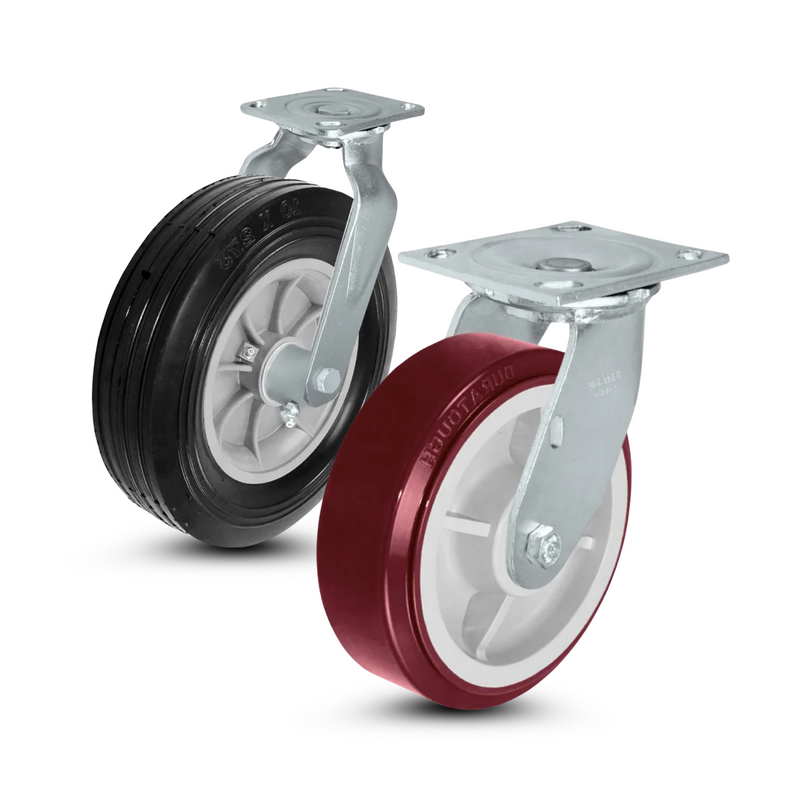
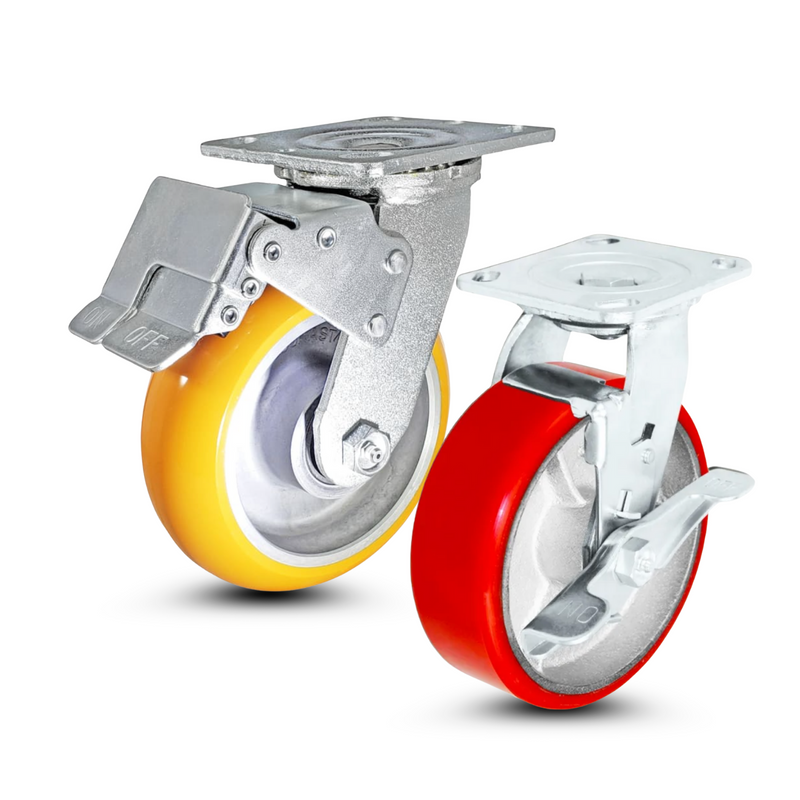
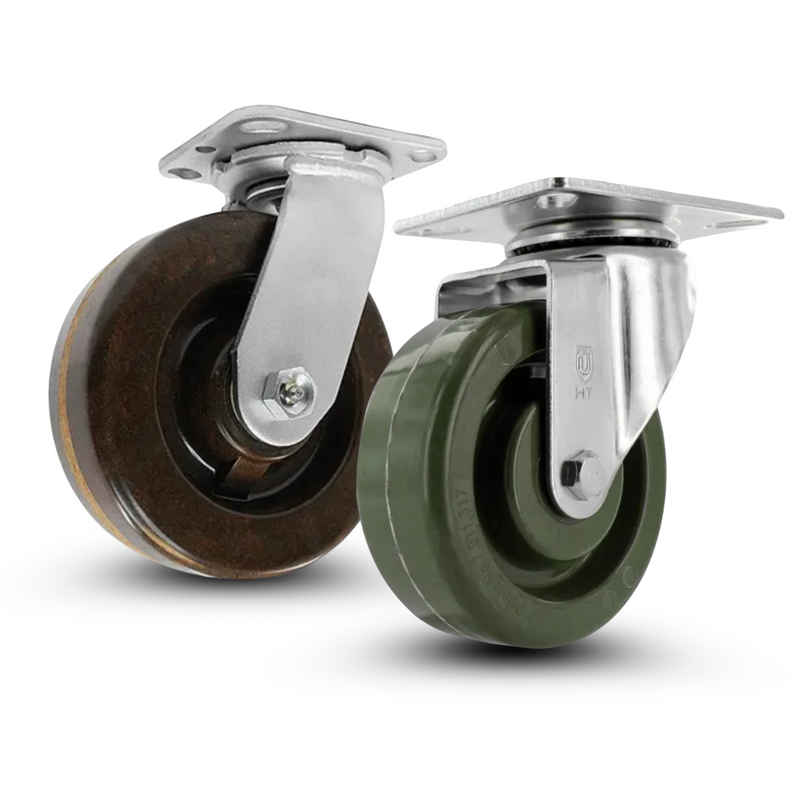
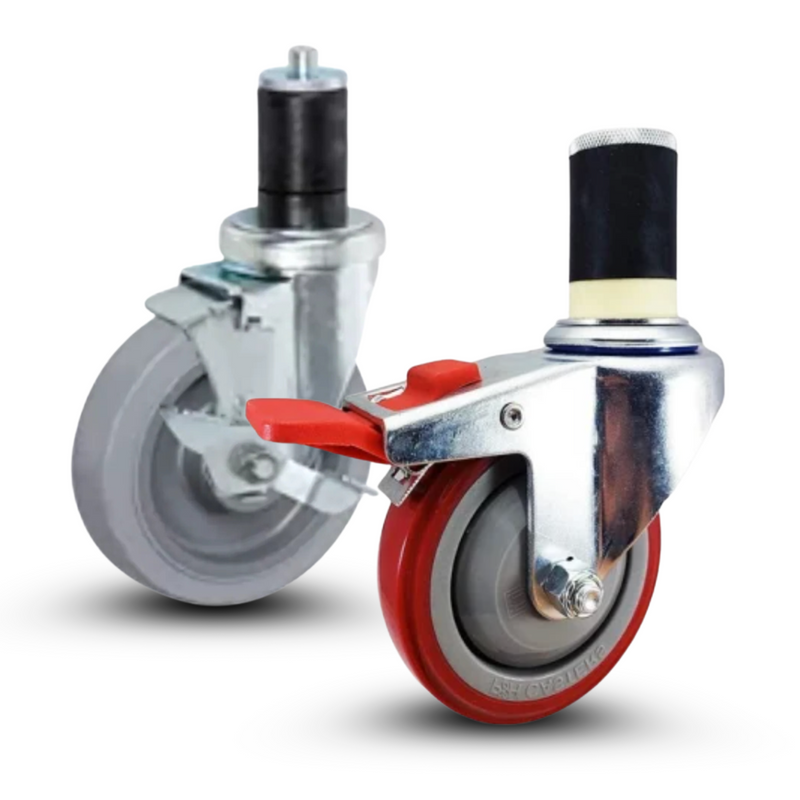
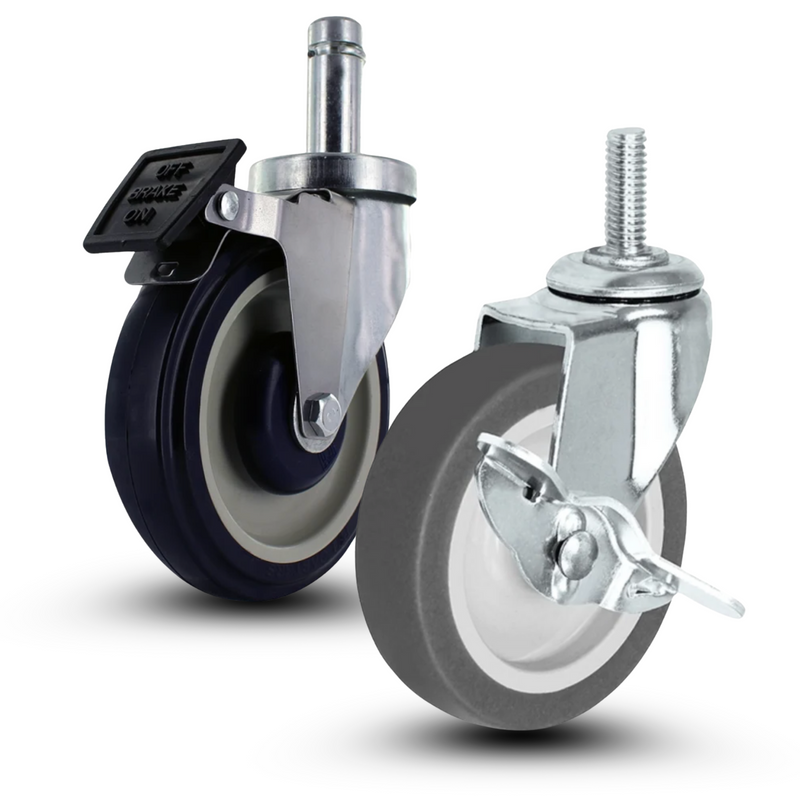
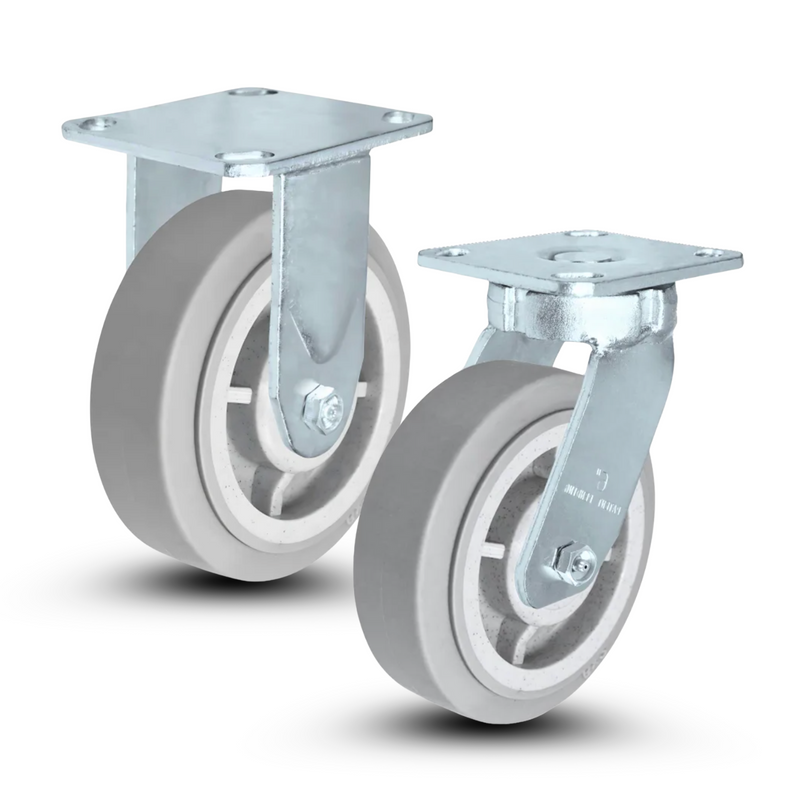
A floor damage prevention & surface protection with casters is a wheel-and-mount unit bolted to equipment so it can roll, swivel, and brake.
- Match capacity per caster to your total load divided by 3 (one caster may be airborne)
- Polyurethane and rubber wheels favor floor protection; phenolic and steel favor heavy capacity
- Top-plate or stem mount is dictated by the equipment, not preference
- CasterHQ stocks Albion, Hamilton, P&H, Colson, Faultless, and Durastar from Mansfield, Texas
- Call 844-439-4335 for fitment help on any non-standard caster
Floor Damage Prevention with Casters: Wheel Compound, Diameter, and PSI Math
Casters damage floors through three mechanisms: point-load PSI that exceeds floor surface strength, soft compounds that transfer pigment as streaks, and hard compounds that transmit impact to the substrate. Epoxy and VCT are the most vulnerable surfaces; sealed concrete is the most forgiving. The prevention path uses 95A polyurethane on iron core as the default safe spec, 6-inch minimum diameter over 2,500 lb per caster, and load-spreading plates over epoxy or wood floors. This guide covers the damage modes, floor-by-floor spec, PSI math, and the retrofit path when existing casters are already marking the floor.
In this guide
How Casters Damage Floors
Casters damage floors through four mechanisms. Each has a different fix; mis-diagnosing the mechanism leads to the wrong wheel spec.
- Point-load crushing: heavy static load on a small contact patch exceeds floor surface strength. Concrete cracks, epoxy chips, wood compresses permanently.
- Pigment transfer (streaking): soft rubber and thermoplastic wheels transfer pigment onto polished floors. Black marks from carbon-filled rubber are the classic case.
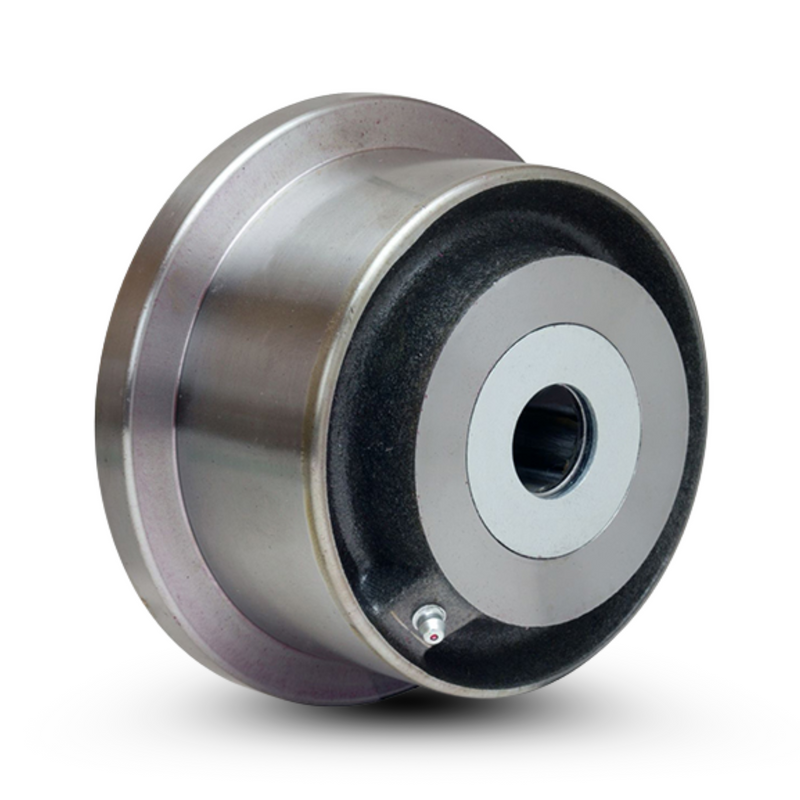
- Hard-wheel impact: forged steel and phenolic wheels transmit shock to the substrate. Concrete cracks along construction joints; VCT loosens at seams.
- Debris pickup and grind: wheels pick up grit and metal chips, then grind those into the floor as the cart moves. Look for scratch patterns that match the wheel tread.
- Chemical attack: rubber and EPDM compounds can react with oil, solvents, and floor sealants. Wheel leaches compound into the floor as a soft, staining residue.
- Thermal deformation: static heavy loads near heat sources soften polyurethane; wheel cold-flows into the floor finish and leaves a permanent depression.
PSI Math for Point Loads
Floor pressure equals load divided by contact patch. The math shows why small wheels damage floors that large wheels do not.
- Contact patch math: a 4-inch wheel with a 2-inch face at 1,000 lb generates a contact patch about 0.5 square inches. That is 2,000 psi at the floor.
- Diameter effect: doubling the wheel diameter from 4 inch to 8 inch at same load drops the contact patch PSI by about 40%. The patch grows because the wheel deforms less sharply on hard floors.
- Face-width effect: doubling face width from 2 inch to 4 inch halves the PSI at same load. Width is the cheapest floor-protection lever on the caster itself.
- Compound effect: Shore 95A polyurethane deforms 0.005 inch under a 1,000 lb load; Shore 70A rubber deforms 0.020 inch. Softer compound spreads the patch and drops PSI but transfers pigment and cold-flows.
- Concrete surface strength: ACI 360 standard 3,000 psi concrete has a surface (top 1/8 inch) strength of 2,100 to 2,400 psi typical. Damaged or contaminated concrete drops to 1,200 to 1,800 psi.
- Epoxy floor strength: standard 10 mil industrial epoxy survives about 1,500 psi continuous. High-build industrial epoxy (60+ mil) survives 5,000 psi. Most warehouse epoxy is in between.
Wheel Compound by Floor Type
Wheel compound is the primary lever for floor protection. Match compound to floor, then size diameter to load.
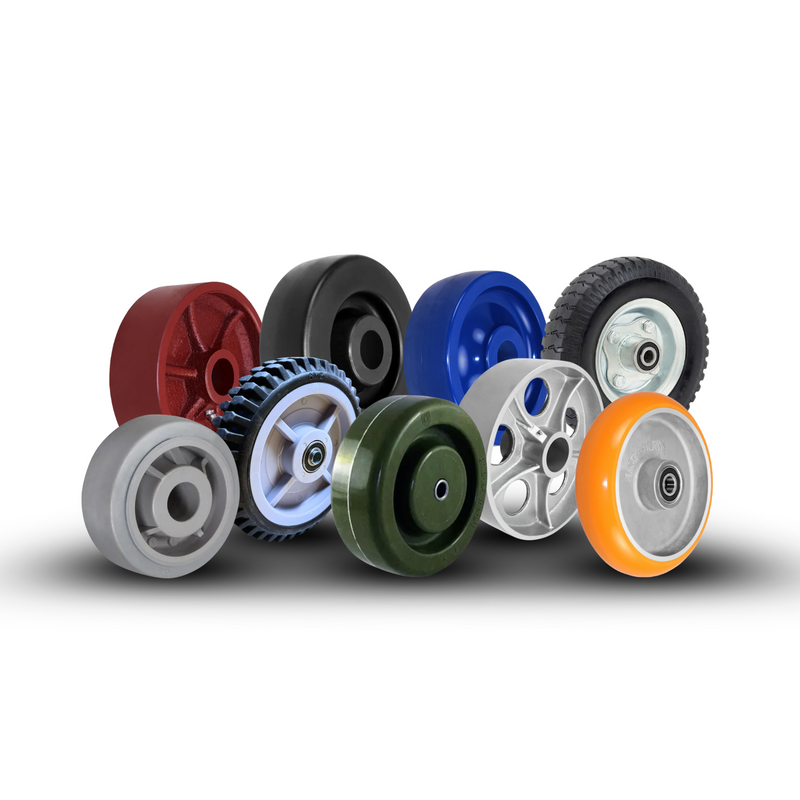
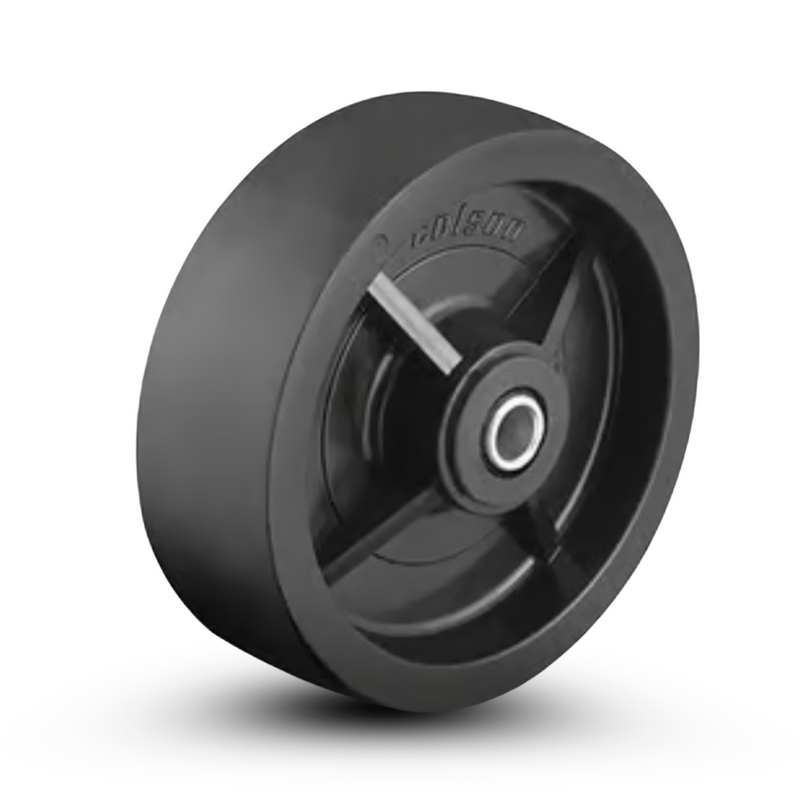
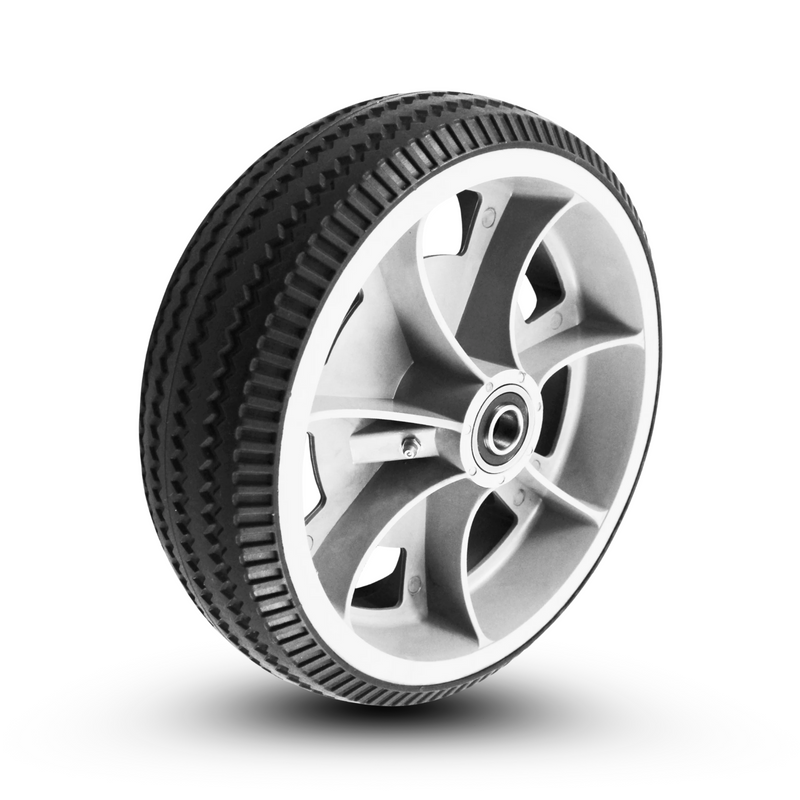
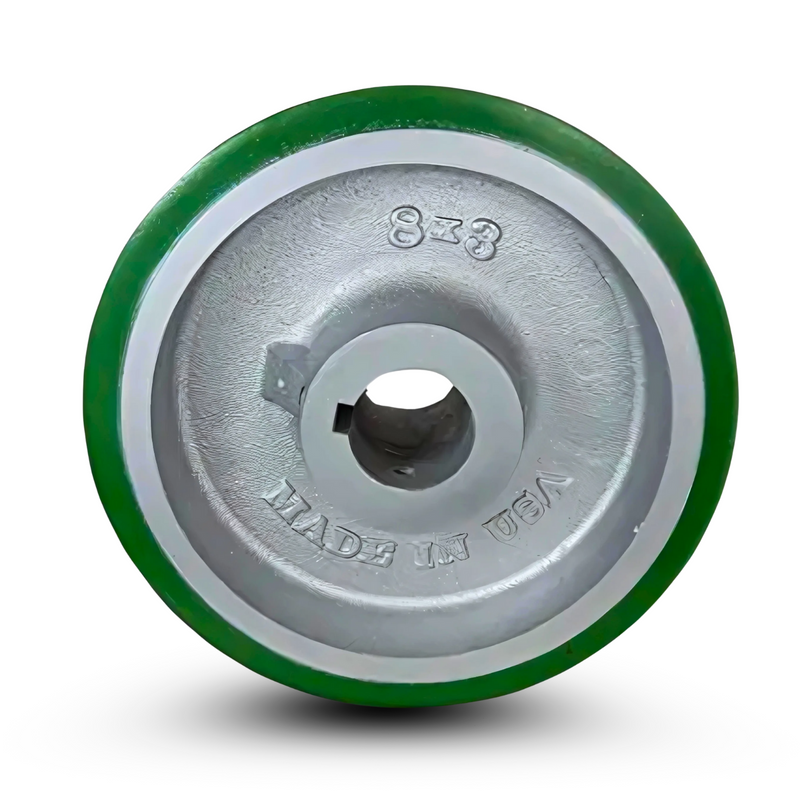
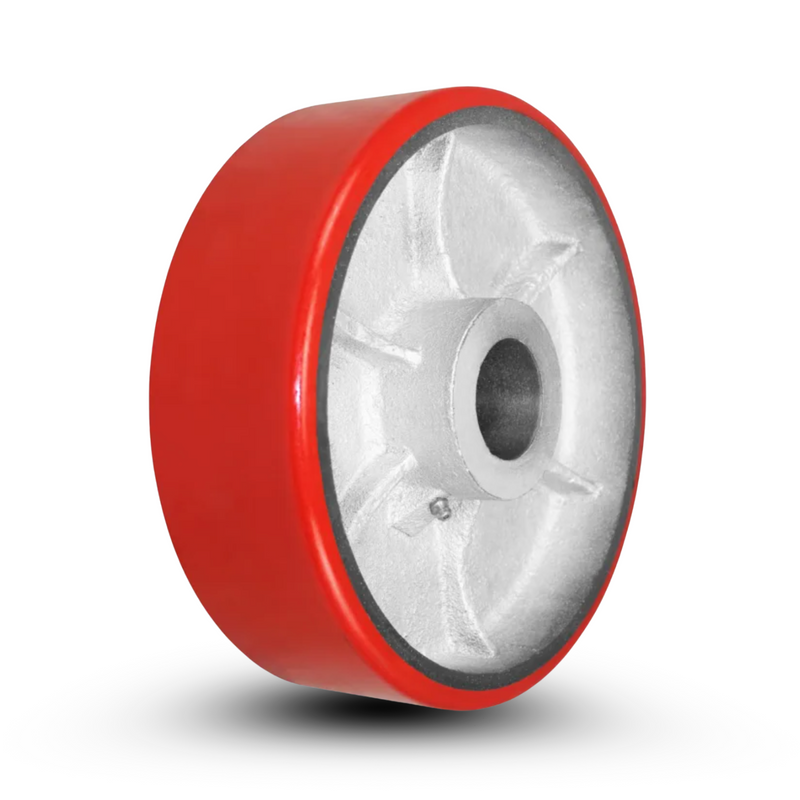
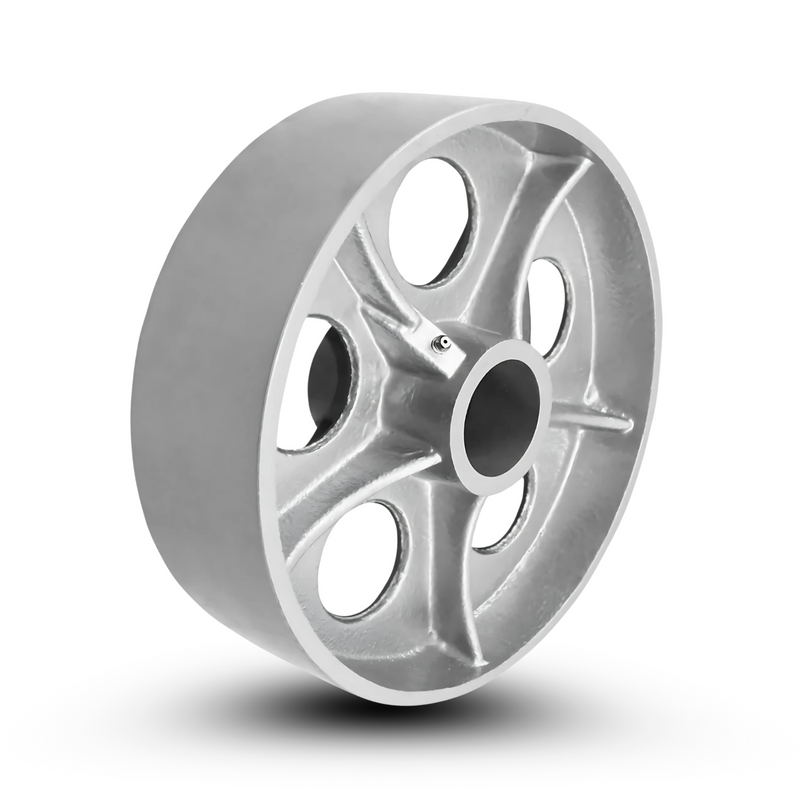
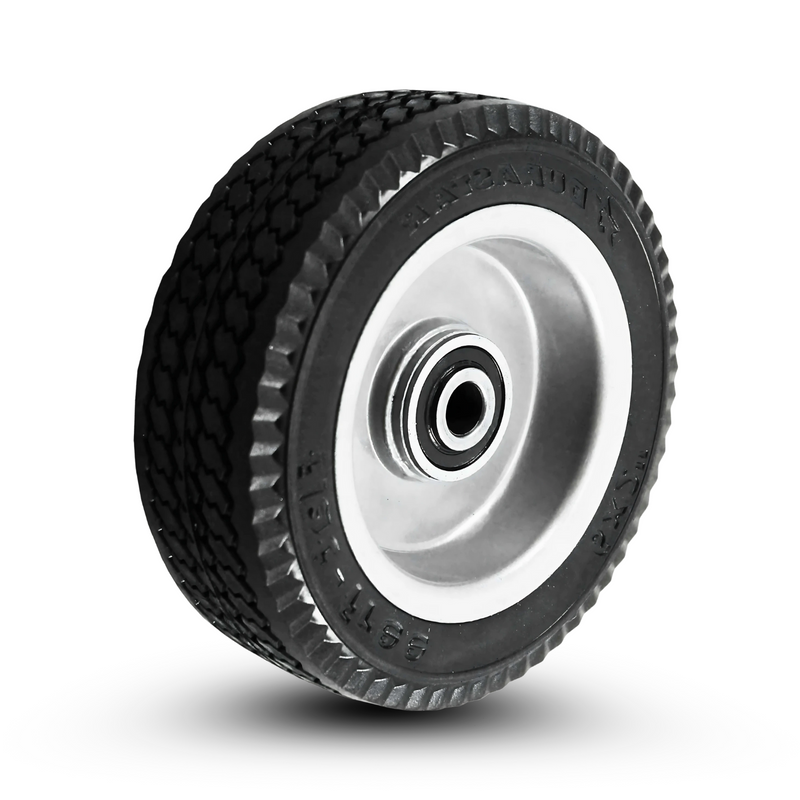
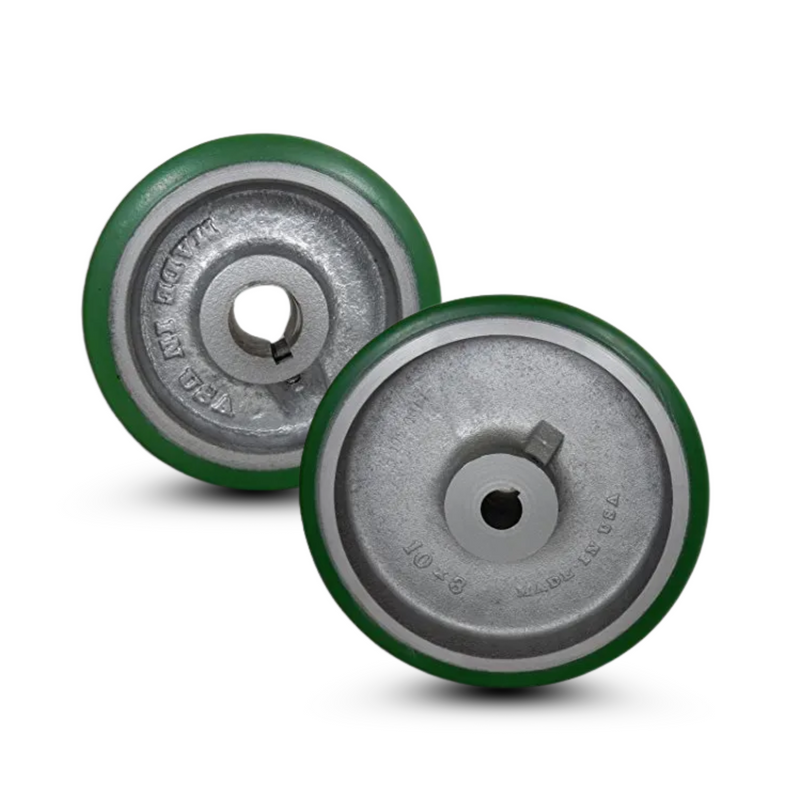
- Shore 95A polyurethane on iron: the universal floor-safe default. Non-marking, non-staining, holds 2,000 lb per caster without floor damage on healthy concrete or industrial epoxy.
- Shore 85A polyurethane: softer ride, better floor conformance on bumpy floors, but transmits more pigment and cold-flows on static loads. Use only when shock absorption matters more than static hold.
- Thermoplastic (TPR): economical non-marking for light duty (under 500 lb per caster). Not rated for continuous heavy service.
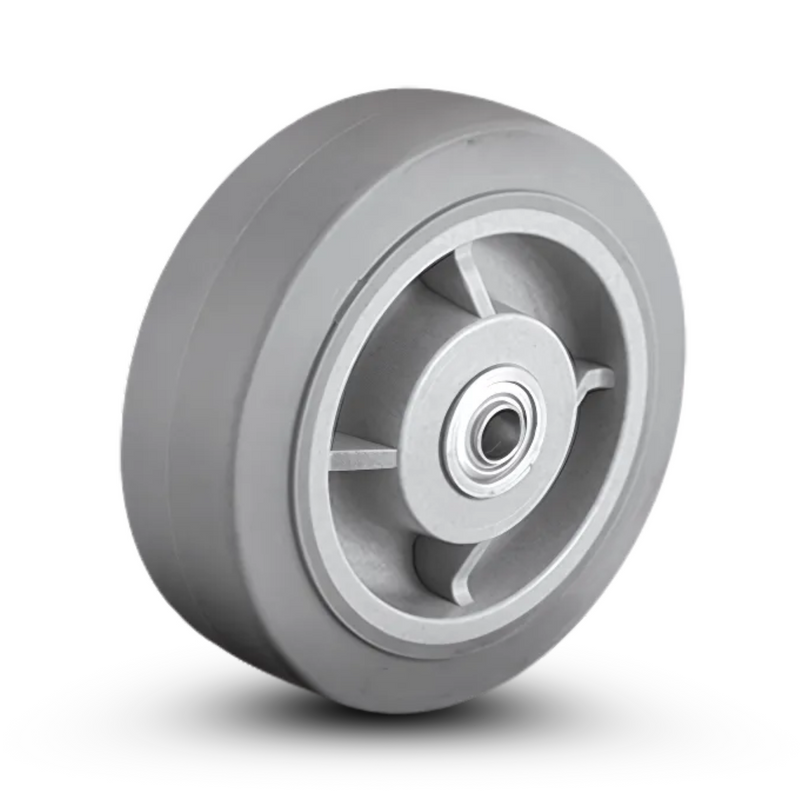
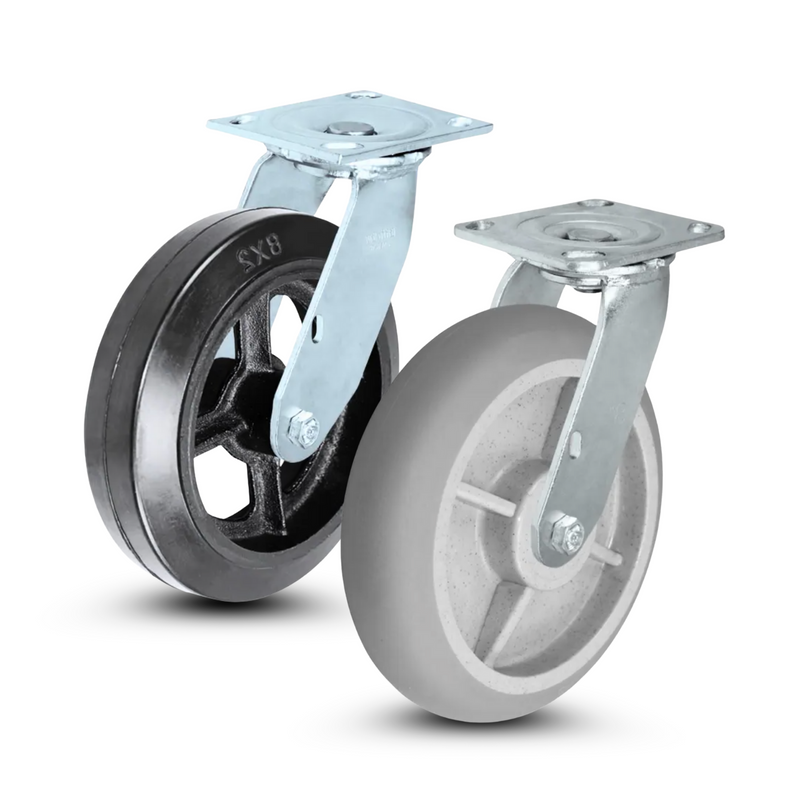
- Neoprene rubber: non-marking variant of rubber for light-to-medium duty. Holds about 800 lb per caster. Does not mark polished floors but can leave faint rolling tracks that polish out.
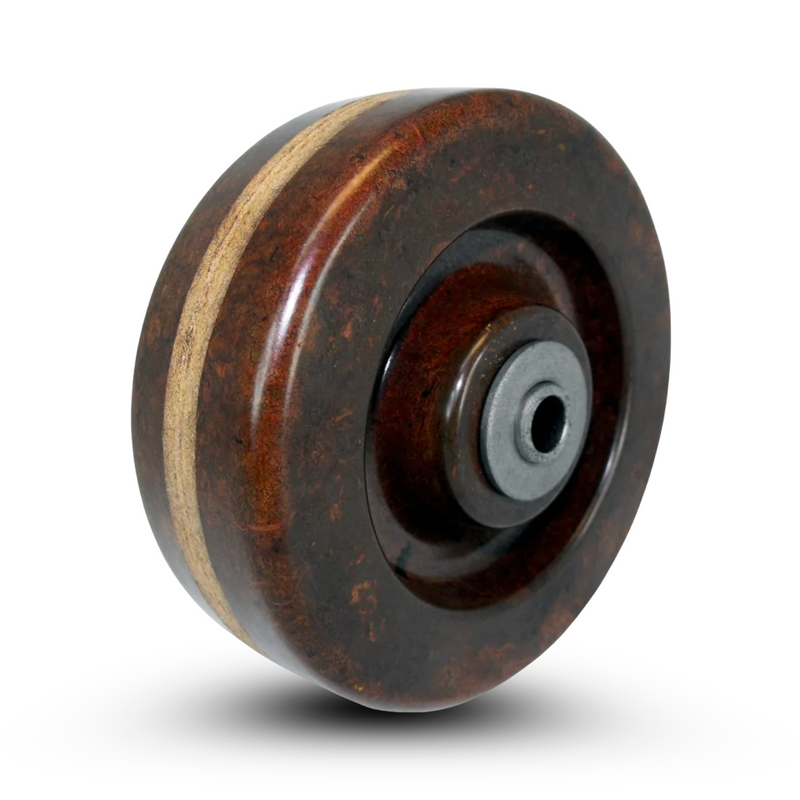
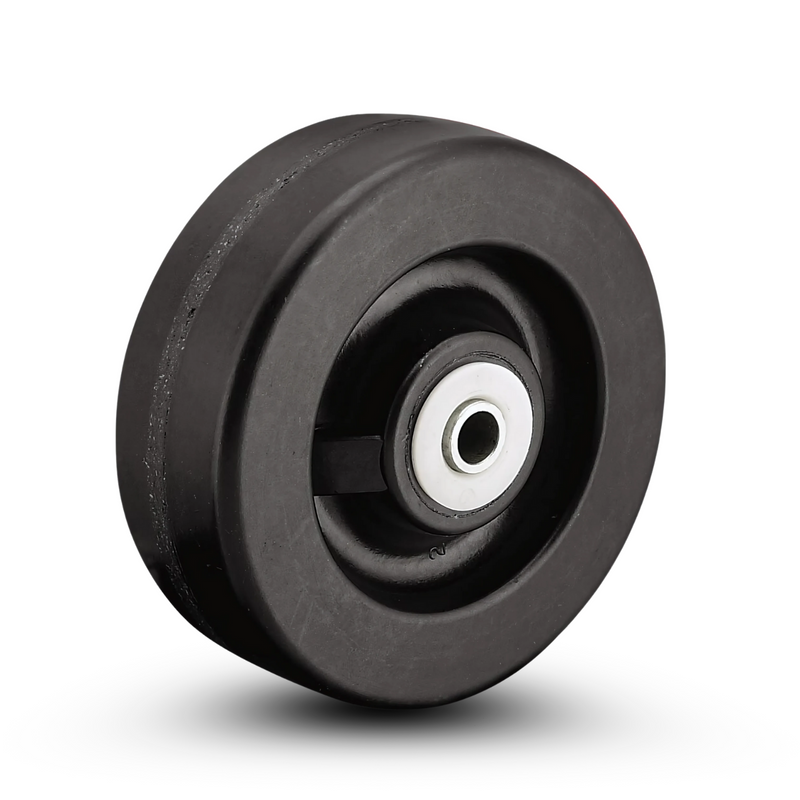
- Phenolic resin: hard, non-marking, holds 2,500 lb per caster. Transmits shock; not for VCT or thin epoxy. Standard for hospital and clean-room static service.
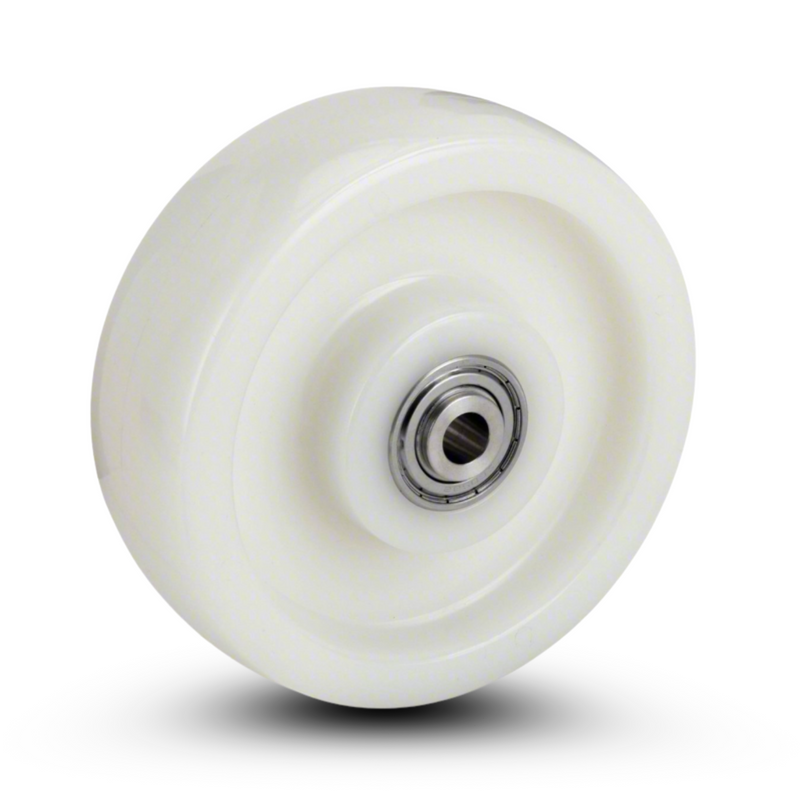
- Nylon and glass-filled nylon: hardest non-marking compound; holds 4,000 lb-plus per caster. Transmits shock aggressively; not for polished or coated floors.
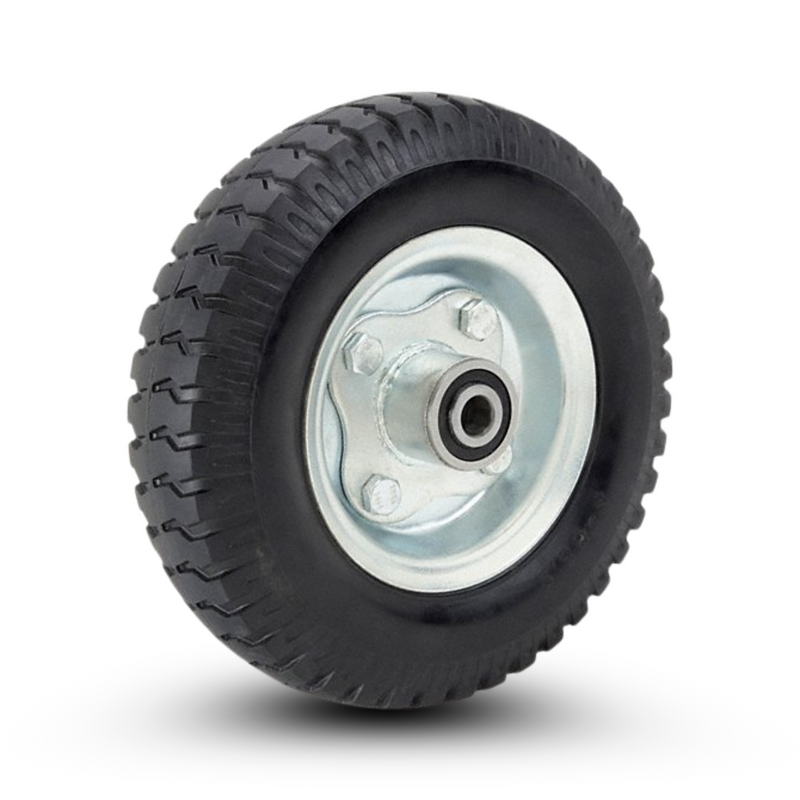
- Avoid on coated floors: black rubber (carbon-filled), soft TPR with pigmented surface, any compound labeled "high-traction" without a "non-marking" certification.
| Floor Type | Safe Compound | Max Load per Caster | Diameter Min | Fail Mode if Wrong |
|---|---|---|---|---|
| Sealed concrete (healthy) | Any non-marking | 4,000 lb | 4 inch | None typical |
| Epoxy (10 mil, standard) | 95A PU on iron | 1,500 lb | 6 inch | Chips at contact patch |
| Epoxy (60 mil, industrial) | 95A PU or phenolic | 3,500 lb | 6 inch | None typical |
| VCT (vinyl composite tile) | 95A PU, 6 inch min | 800 lb | 6 inch | Gouges, seam lift |
| Hardwood (3/4 inch T&G) | 95A PU on load plate | 600 lb | 6 inch | Compresses, dents |
| Polished concrete (diamond-ground) | 95A PU, no steel | 2,500 lb | 6 inch | Scratches, haze |
| Quarry tile | 95A PU or phenolic | 2,000 lb | 5 inch | Seam damage |
Floor-by-Floor Safe Spec
Each floor type has a preferred caster class. These picks are the default safe spec for each surface.
- Sealed concrete: 6-inch 95A polyurethane on iron, plate mount with SAE Grade 5 bolts. Healthy concrete is the most forgiving floor; most failures are PSI-related, not compound-related.
- Industrial epoxy: 6-inch or 8-inch 95A polyurethane on iron. Verify epoxy is high-build industrial if loads exceed 1,500 lb per caster. Add load-spreading plates over 2,500 lb.
- VCT: 6-inch 95A polyurethane, sealed precision bearings for low rolling force. VCT cannot take steel or phenolic wheels. Maximum 800 lb per caster even with load plates.
- Hardwood: 6-inch 95A polyurethane on iron with 12-inch square load-spreading plates. Maximum 600 lb per caster; use additional plates over 400 lb.
- Polished concrete: 6-inch 95A polyurethane on iron core (not aluminum). Polished concrete scratches from cart transit line; rotate cart routes weekly to spread wear.
- Painted concrete: same spec as sealed concrete; paint is cosmetic and offers no floor protection. Plan on repaint on a 3 to 5 year cycle for heavy-traffic areas.
Streak and Dent Diagnosis
Floor damage patterns tell you which wheel is the culprit and what to upgrade to. Diagnose before replacing.
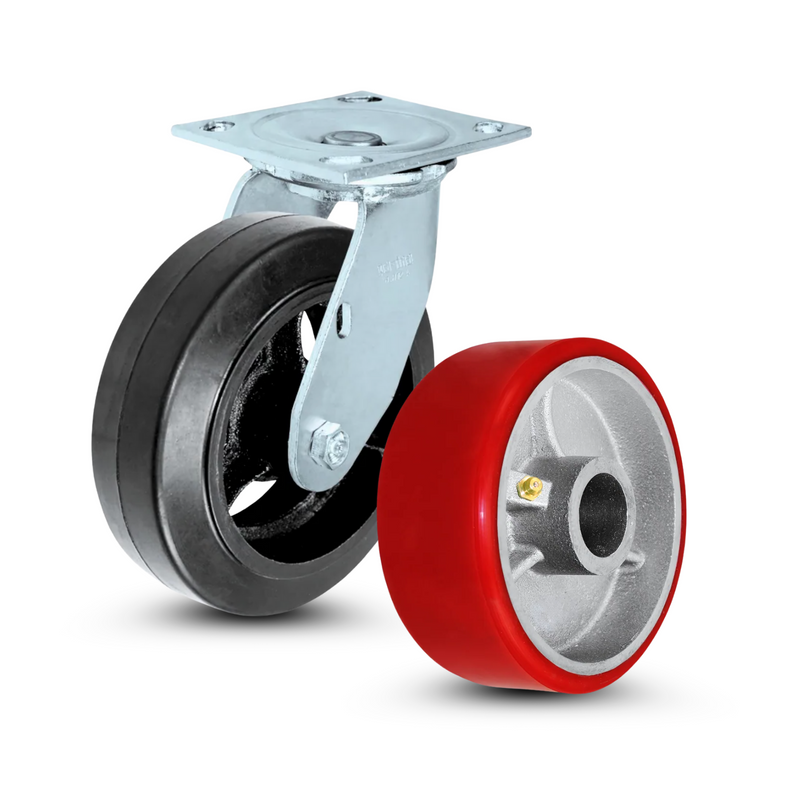
- Black streaks on polished floor: carbon-filled rubber or TPR wheel. Replace with 95A polyurethane. Clean existing marks with non-abrasive degreaser; most come up.
- Ridge or furrow pattern: wheel tread runout above 0.005 inch; wheel rocks instead of rolling smoothly. Replace with precision-ground tread wheel.
- Point dents or compression: wheel face too narrow or diameter too small for load. Upgrade to 8-inch diameter, 3-inch face minimum.
- Scratch pattern matching tread: debris pickup. Inspect wheels for embedded metal chips, glass, or gravel; clean or replace wheels and address floor sweeping schedule.
- Staining or yellow discoloration: chemical reaction between wheel compound and floor finish. Identify compound (label or burn test); swap to inert 95A polyurethane.
- Edge cracking on epoxy at cart transit lines: PSI exceeds epoxy surface strength. Add load-spreading plates or upgrade wheel diameter; consider epoxy re-topcoat for existing damage.
- Seam lift on VCT or sheet vinyl: wheel diameter too small; wheel drops into seams and lifts the edge. 6-inch minimum on vinyl floors with any seam.
Retrofit Path for Existing Damage
Retrofit in three phases. Fix root cause before cosmetic floor repair.
- Phase 1 (immediate): identify the damage pattern, remove the offending casters from service, replace with 95A polyurethane 6-inch minimum. Tag replaced carts so they are not mixed back with old-spec carts.
- Phase 2 (30 days): inspect every cart in the fleet for compound, diameter, and tread condition. Build a standards spec and require procurement to buy to the standard. Audit the PM inspection to catch wheel contamination before it damages floors.
- Phase 3 (90 days): repair or resurface damaged floor sections. Prioritize high-traffic transit lines and visible areas (offices, customer-facing zones). Plan epoxy top-coat on a 3 to 5 year cycle for continuous-traffic zones.
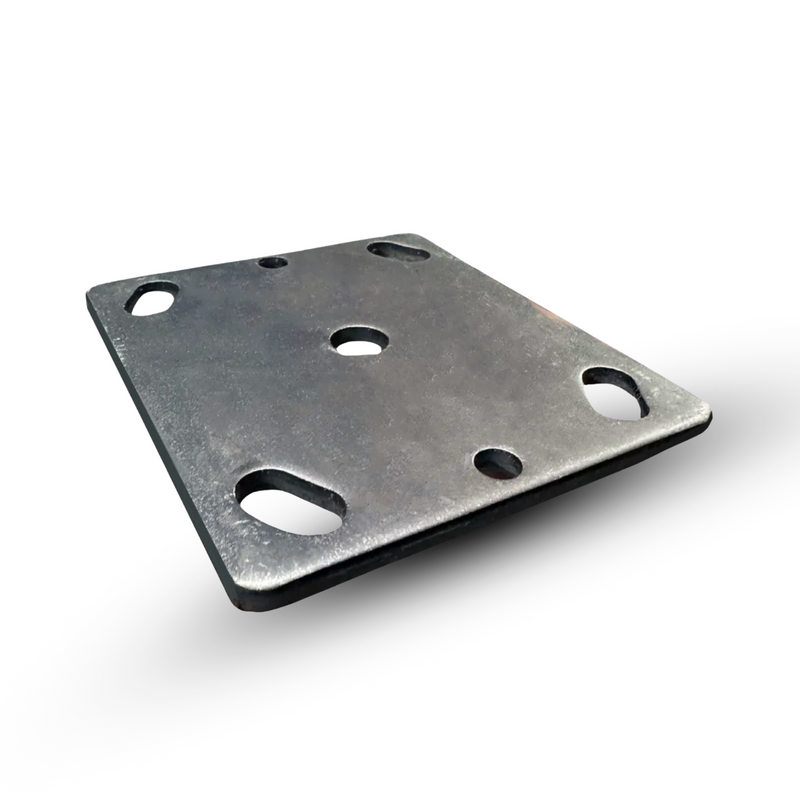
- Load-spreading plates: on polished concrete, epoxy, VCT, and wood, install 12-inch square 1/4-inch steel plates under permanent static equipment. Halves floor PSI at 30x; less than $30 per plate.
- Cart-route rotation: rotate primary cart transit lines every 30 to 90 days to spread wear. Concrete, epoxy, and VCT all benefit from distributed rolling wear instead of concentrated tracks.
- Floor cleaning: daily sweep removes grit that wheels grind into the floor. The cheapest floor-protection investment after correct caster spec.
Six Floor-Damage Mistakes
Six common mistakes defeat floor-protection programs. Avoid all six or damage continues despite new casters.
| Mistake | Why It Fails | Correction |
|---|---|---|
| Buying "non-marking" without checking compound | Many TPR wheels are non-marking but cold-flow under static load | Spec Shore 95A polyurethane on iron core; verify compound and core material on spec sheet |
| Matching diameter to cart size, not load | 4-inch wheels under heavy carts exceed floor PSI regardless of compound | Size diameter to load per caster, not cart footprint; 6-inch minimum over 1,500 lb per caster |
| Mixing old and new wheels on same cart | Different diameters cause cart to rock; concentrated load on high wheels damages floor | Replace all 4 casters per cart; do not mix diameters or compounds |
| Ignoring tread runout | Eccentric wheel rocks and creates ridge/furrow pattern on any floor | Specify tread runout under 0.005 inch; precision-ground tread on 95A PU wheels |
| Skipping load-spreading plates on polished or wood floors | Point-load PSI exceeds floor surface strength even with correct compound | 12-inch x 12-inch x 1/4-inch steel plates standard under permanent static equipment |
| Leaving debris on floor | Wheels embed grit and grind it into the floor, cutting scratch patterns | Daily sweep; inspect wheels for embedded debris at PM |
Key takeaways
- 95A polyurethane on iron is the universal floor-safe default; hold 2,000 lb per caster without damage on healthy floors.
- Wheel diameter is the cheapest floor-protection lever; 6-inch minimum over 1,500 lb per caster.
- VCT, wood, and polished concrete need load-spreading plates over 500 to 800 lb per caster.
- Black streaks come from carbon-filled rubber; swap to 95A polyurethane to eliminate.
- Epoxy surface strength is 1,500 to 5,000 psi depending on build; exceed this and the floor chips at contact patches.
- Never mix wheel diameters or compounds on the same cart; replace all 4 at once.
- Daily floor sweeping prevents 20 to 40% of scratch damage attributed to casters.
Frequently asked questions
What wheel compound is safest for most floors?
Shore 95A polyurethane on a cast iron core. This is the universal safe default: non-marking, non-staining, holds 2,000 lb per caster without damaging healthy concrete or industrial epoxy, and does not cold-flow under typical static loads. It is the spec floor for all interior factory, warehouse, hospital, and clean-room applications unless a specific reason drives a different choice (ESD requirements, chemical exposure, high-impact outdoor service).
What causes black streaks on polished floors?
Carbon-filled rubber and soft TPR wheels transfer pigment to the floor at the contact patch. The rubber wears microscopic amounts of material onto the floor; the pigment accumulates as visible streaks. Fix: replace with 95A polyurethane on iron core. Clean existing streaks with non-abrasive degreaser (Simple Green, mild citrus cleaner); most come up without floor damage if addressed within 30 days. Heavy accumulation may need floor machine buffing.
Do I need load-spreading plates under heavy equipment?
Yes, on any floor that is polished concrete, epoxy, VCT, wood, or questionable concrete. A 12-inch x 12-inch x 1/4-inch steel plate drops floor pressure 25 to 40x at the same load. Use under permanent static equipment (machine tools, CMMs, heavy fixtures) over 2,500 lb per caster. Plates run $15 to $40 each; floor repair runs $30 to $80 per square foot. Cheap insurance.
Can I use phenolic or nylon wheels on epoxy floors?
Only on high-build industrial epoxy (60 mil plus, rated 5,000 psi compressive). Standard 10-mil warehouse epoxy is too thin and too soft for phenolic; the hard wheel transmits shock to the concrete substrate and chips the epoxy from the underside. On standard epoxy, stick with 95A polyurethane on iron. Phenolic is appropriate for bare sealed concrete, quarry tile, and industrial polished concrete.
Why do my new non-marking wheels still damage the floor?
Non-marking describes pigment transfer (no visible streaks), not floor damage. A non-marking wheel can still gouge VCT, dent wood, or chip epoxy if the diameter is too small for the load or the face is too narrow. Check PSI at contact patch: load per caster divided by face area. If PSI exceeds floor surface strength, the wheel damages regardless of color. Upgrade diameter, face width, or add a load-spreading plate.
How often should I rotate cart routes to spread wear?
Every 30 to 90 days in high-traffic zones. Concrete, epoxy, and VCT all show wear as cart transit lines become visible ruts or discoloration. Rotating routes prevents concentrated wear and extends the floor finish life 30 to 50%. Map existing transit lines, identify alternative routes, and shift cart paths on a regular cycle. Daily floor sweeping to remove grit is the other half of the prevention program.
Stop Damaging Floors with the Wrong Caster Spec
CasterHQ application engineering audits your fleet against your floor types, identifies the casters causing floor damage, and delivers a standards spec with matching wheels, rigs, and load-spreading hardware. Typical audit turnaround 2 to 3 business days. Customers who standardize to the recommended spec see 40 to 60% reduction in floor repair cost within 24 months.
References & Standards Cited
- ACI 360 Design of Slabs-on-Ground, 2022
- ASTM F2130 Wheel Hardness Test, 2020
- ASTM D2240 Shore Hardness Test, 2015
- ICWM Caster Testing Standard, 2022
- CasterHQ Application Engineering incident log, 2021-2024, 28 industrial accounts
- Flooring Contractors Association floor-strength reference data, 2022
Was this guide helpful?
Need help spec'ing the right caster?
Our engineering team handles fitments, custom builds, and capacity upgrades. Same-day RFQ response, Texas warehouse, fast shipping on standard sizes.
Shop All CastersCall 844-439-4335Jordan Wilson
Founder of CasterHQ.com. Works directly with engineers, MRO buyers, and procurement teams across material handling, healthcare, food service, aerospace, and OEM. CasterHQ stocks Albion, Hamilton, P&H, Colson, Faultless, and the in-house Durastar series from a Texas warehouse and retrofits OEM fitments from dimensional drawings when brands discontinue parts.