














Curb and walk ramps span the height differences that interrupt a hand-truck route: dock curbs, threshold drops, sidewalk transitions, freight elevator gaps. We carry B&P aluminum (light, no-rust, route-portable) and steel (industrial, permanent placement) for every common span height from 4″ up to 8″.

Most loading docks have a 4–6″ curb between the trailer floor and the dock surface. A 27″ or 30″ aluminum curb ramp spans this drop with a manageable slope for hand-truck routes up to 600 lb. Punched deck for wet routes; tread plate for dry/high-capacity.
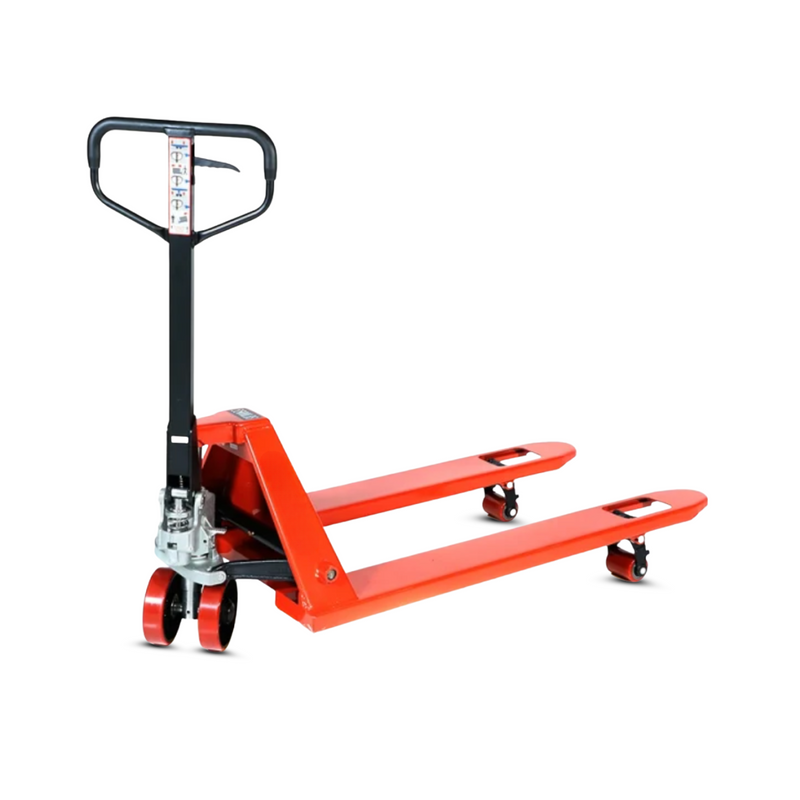
If both hand trucks and pallet jacks cross the same ramp, tread plate is mandatory — pallet jack wheels concentrate load on a small contact patch that pierces or distorts punched-deck holes. The 30″ tread plate at 750 lb is the standard.
Office-to-warehouse, walk-in cooler entry, freight elevator threshold. A shorter ramp (often called a threshold plate) handles 1″–3″ rises. Lower profile but still aluminum diamond plate for traction. Place permanently or pull aside when not in use.
Same 1″–3″ threshold profile but rated for cold conditions. Aluminum holds dimension at −20°F; steel can frost-bind at the door seal. Aluminum is the default for cold-storage transitions.
When the height drop exceeds what a single curb ramp can handle at safe slope, walk ramps with longer deck and reinforced underframe take over. These are heavier (typically 60–120 lb) and meant for semi-permanent placement, not daily portage.
Step 1 — measure the rise (height difference). Step 2 — decide indoor/outdoor (drives punched vs tread plate). Step 3 — pick width to match your hand truck wheel base (26″ for standard, 30″ for wider stance). Step 4 — confirm capacity rating exceeds your loaded hand truck weight by 25%+.


