
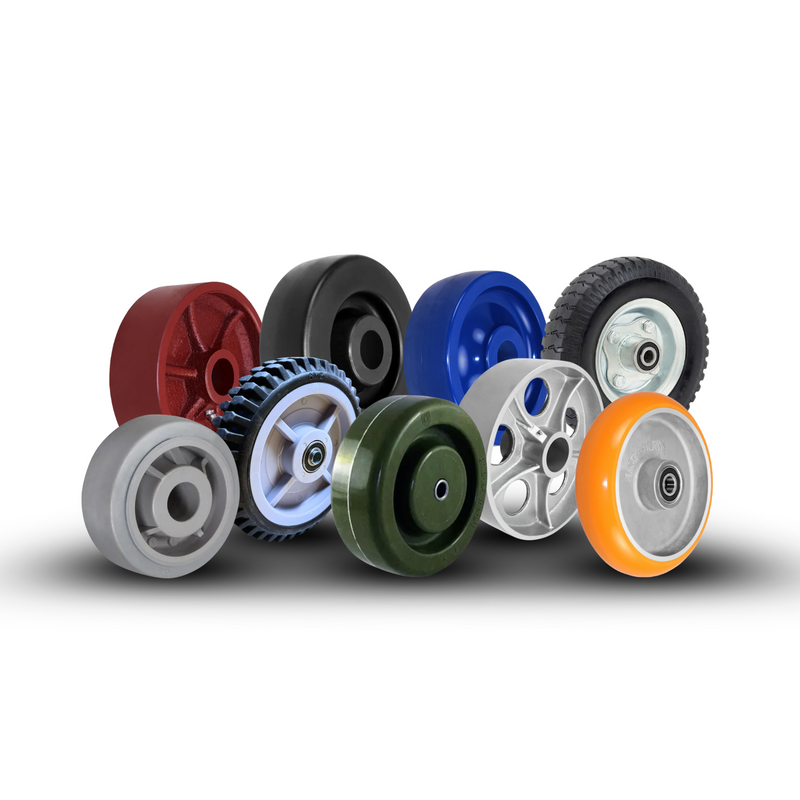
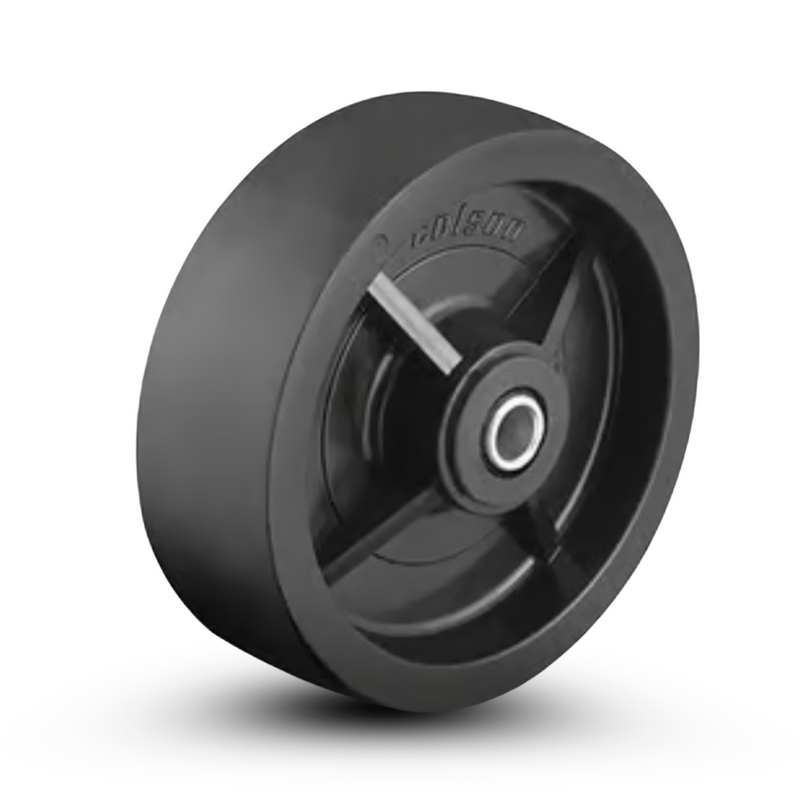
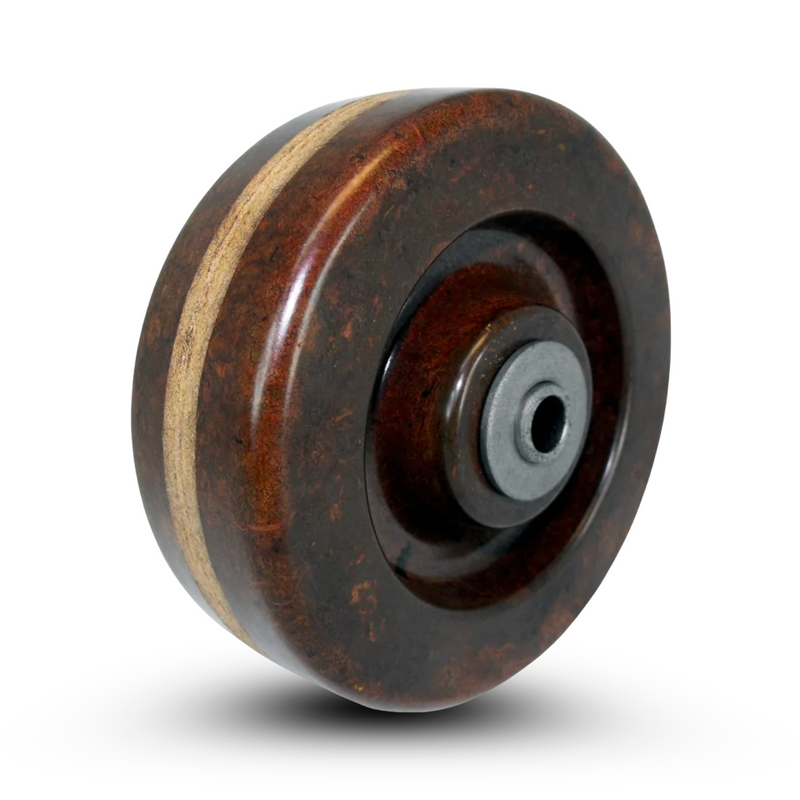
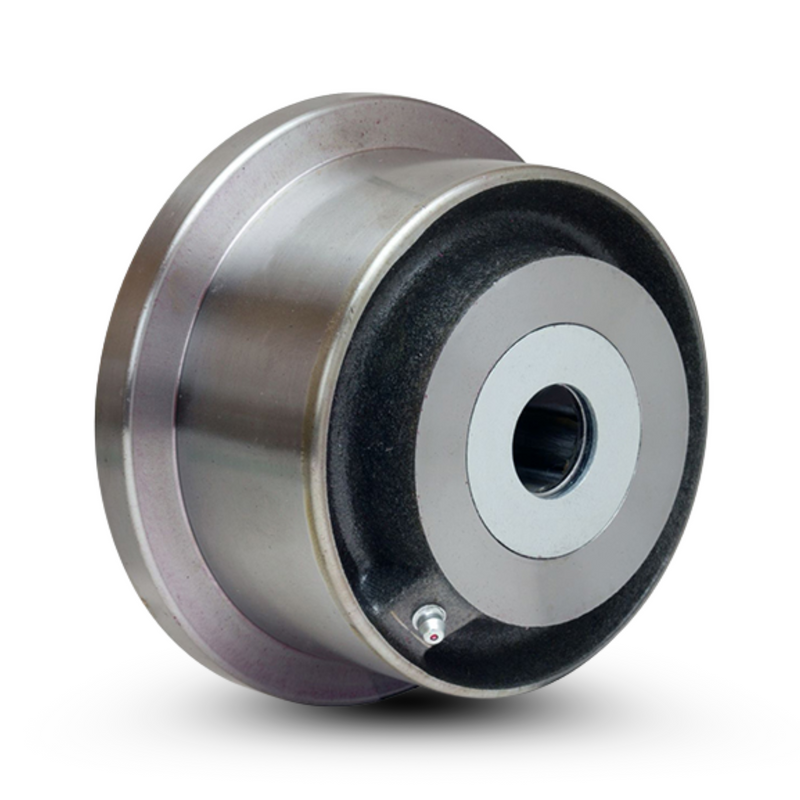
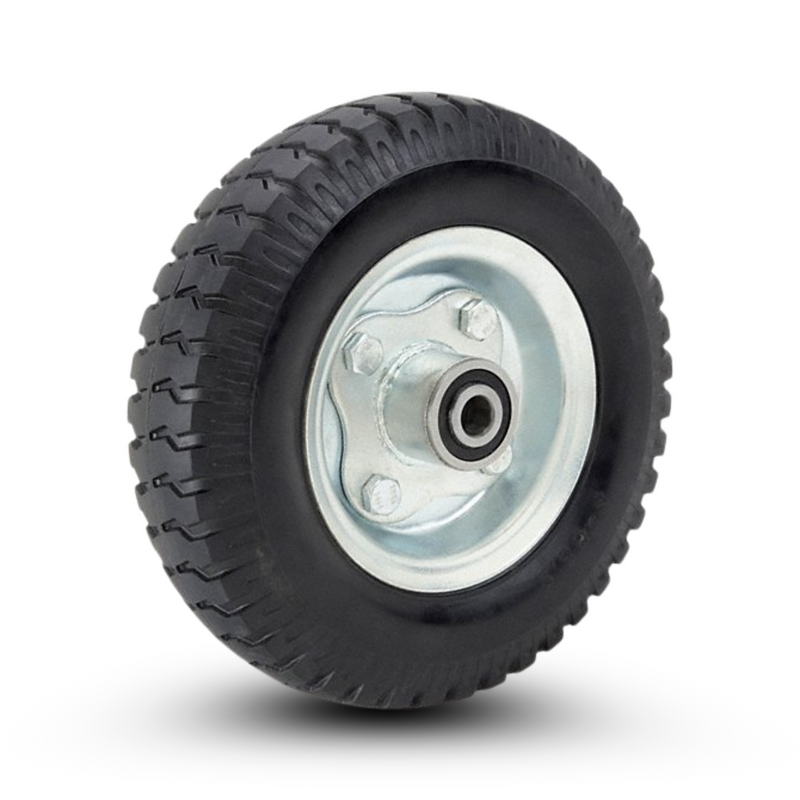
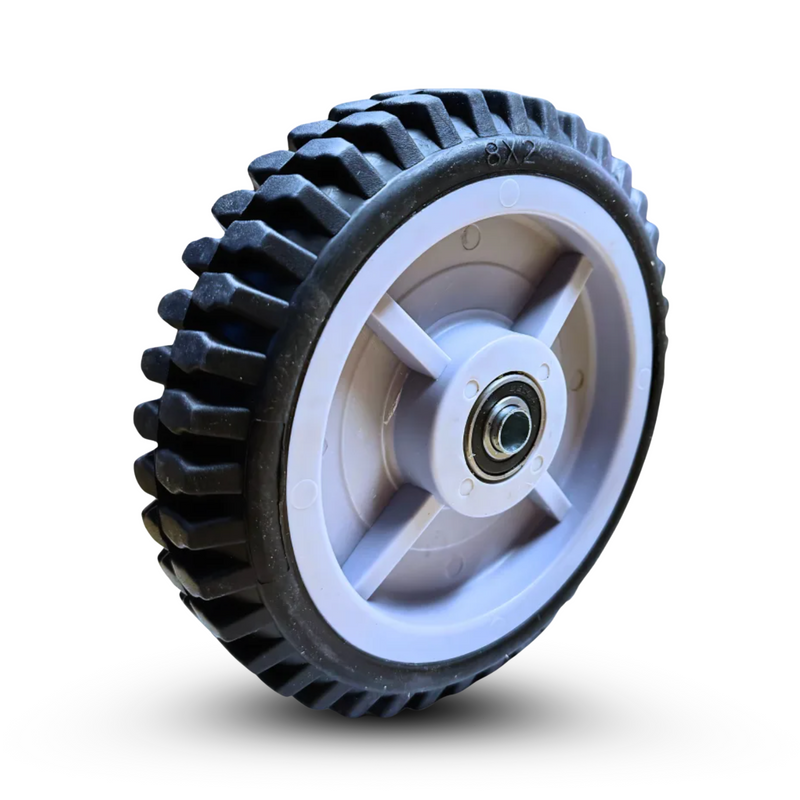
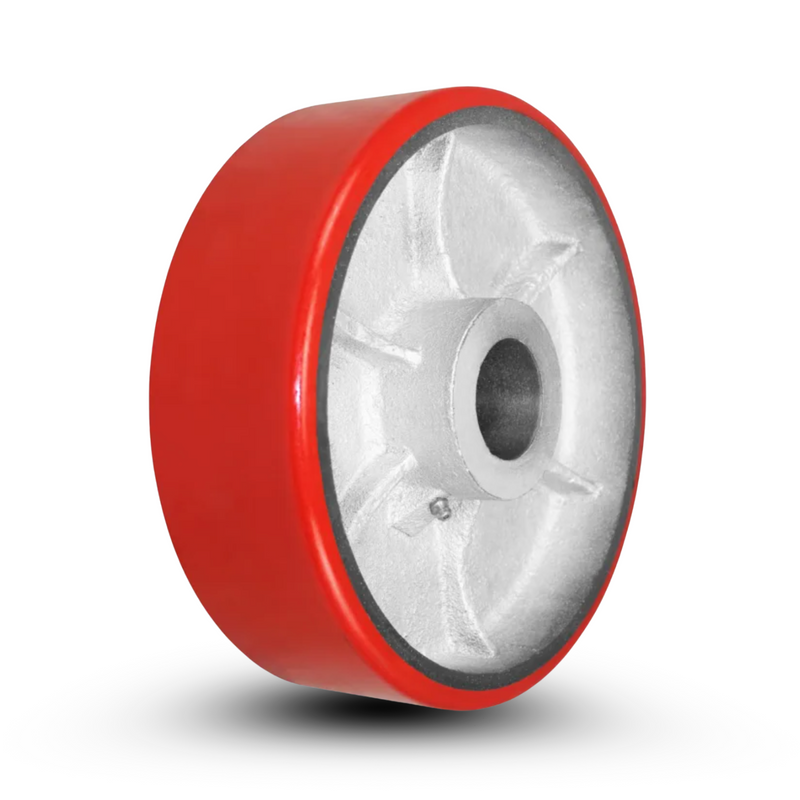
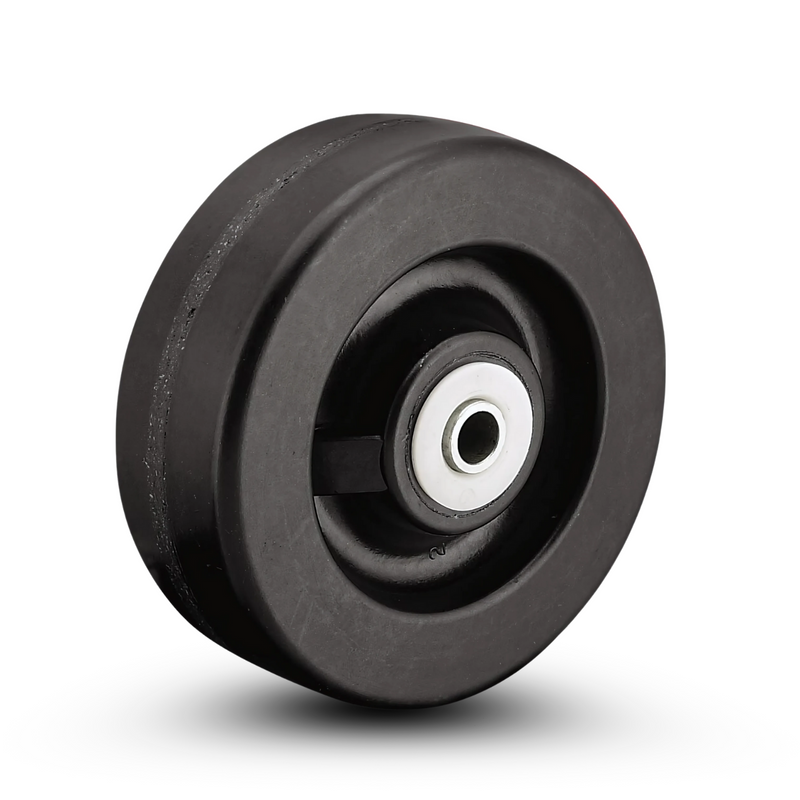

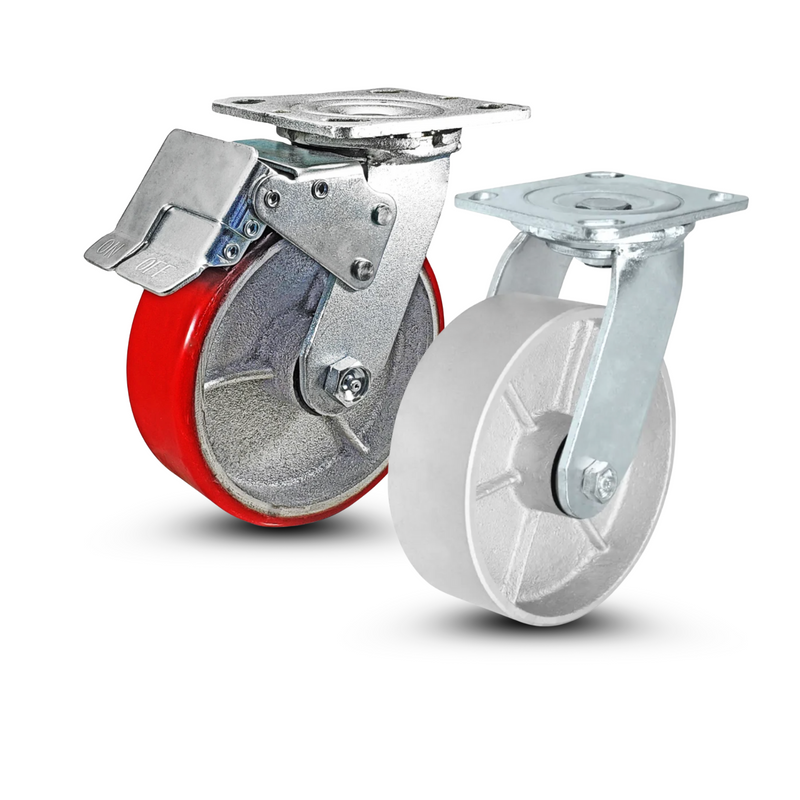
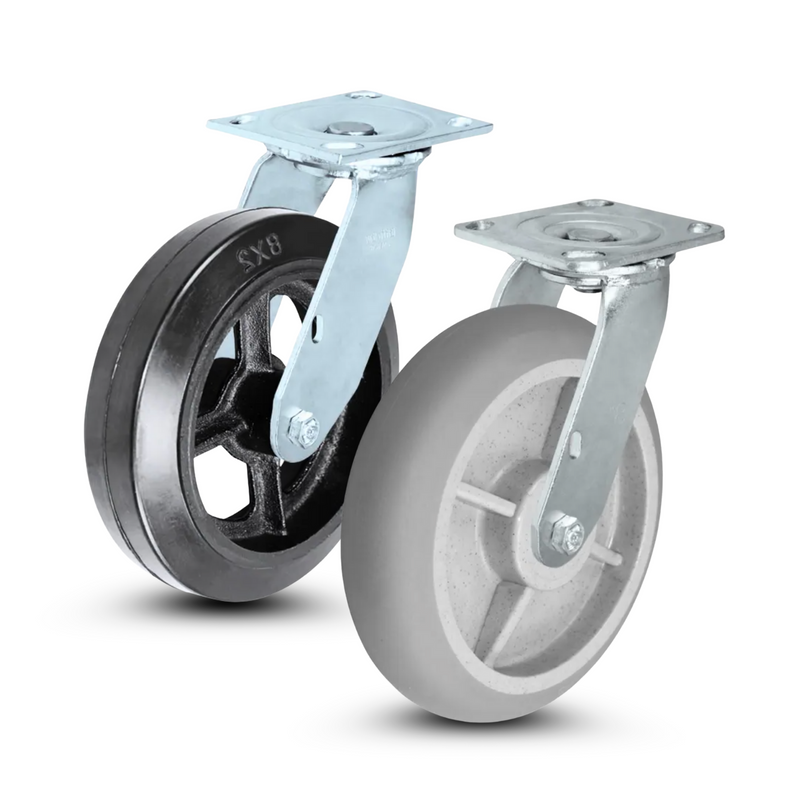
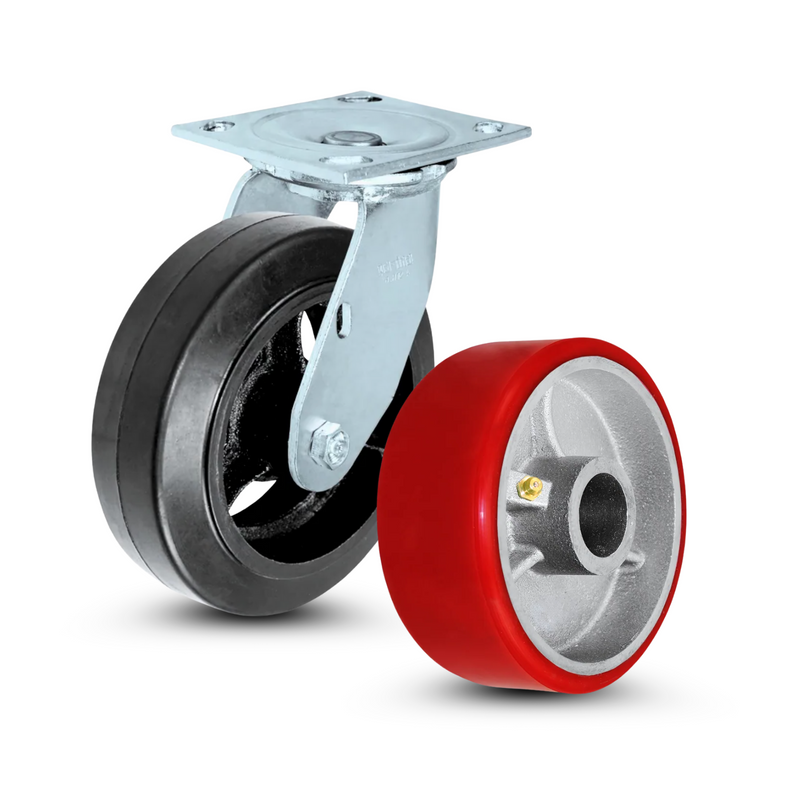












Enter the spec you currently run (or are considering). The calculator returns a 3-column comparison showing how each upgrade lever reduces force.
Push force isn't a single number you fix once — it's the product of five independent variables. Pulling any one lever reduces force; pulling all five together cuts it by 50-70%. The calculator above shows the math; the table below shows where each lever lives in real product specs.
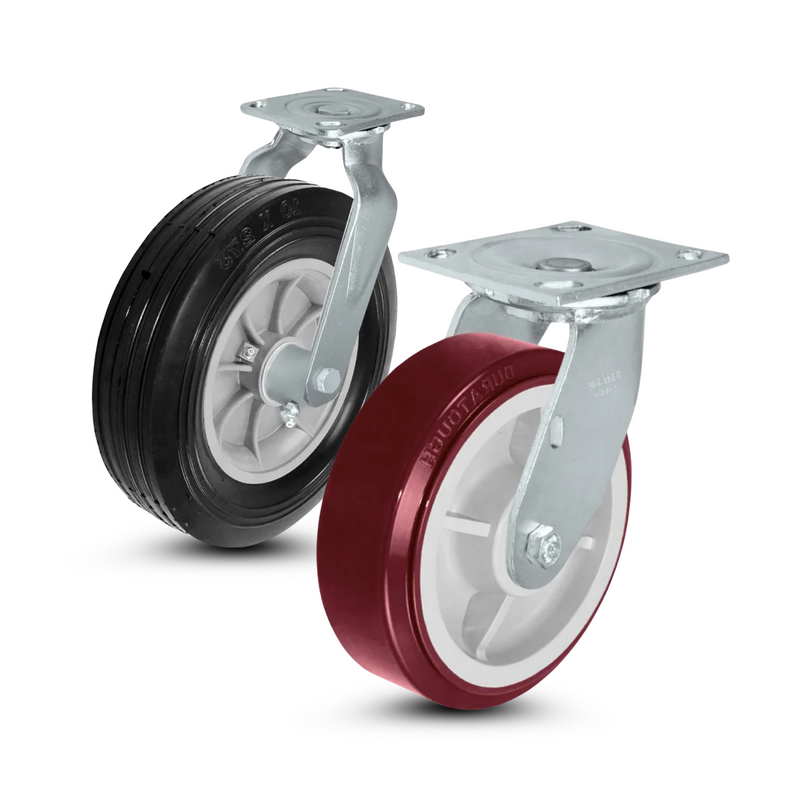
Each diameter step (4→6→8") cuts rolling resistance by ~12%. An 8" wheel bridges floor cracks instead of dropping into them. On rough floors, going from 6" to 8" alone can drop sustained force by 25%.
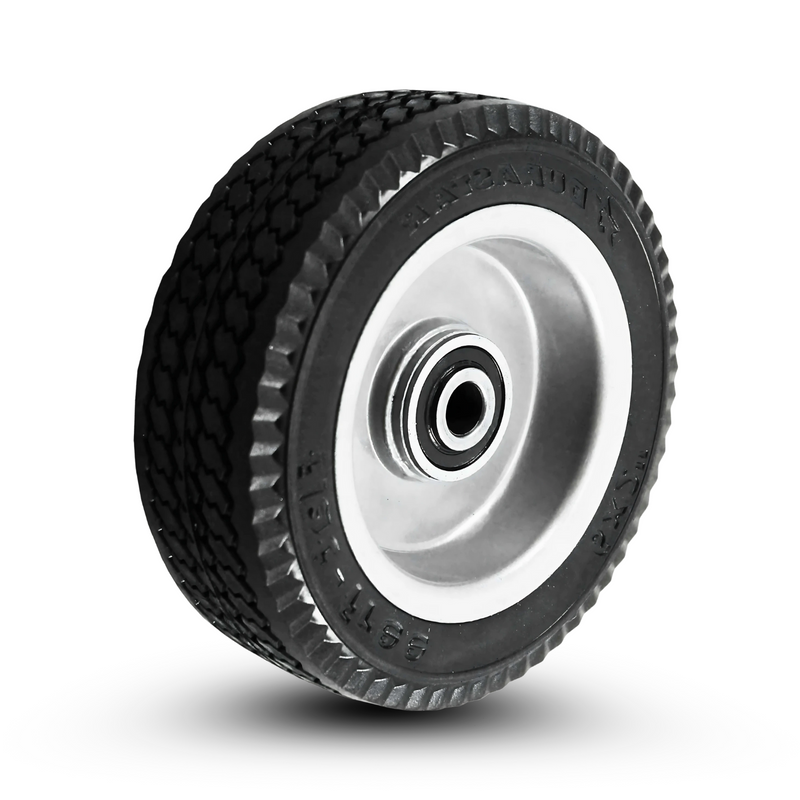
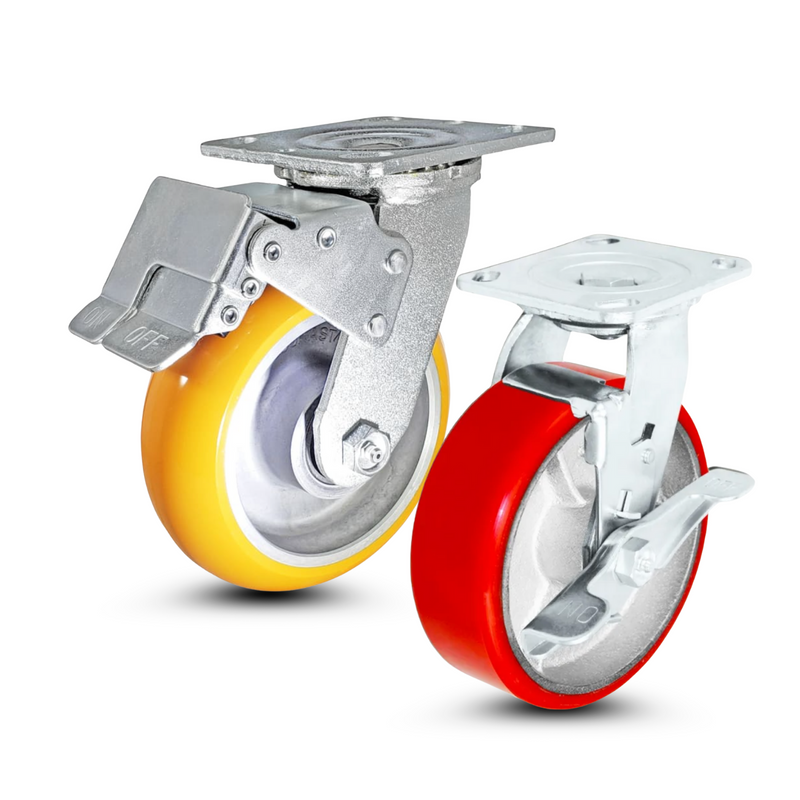
Standard poly runs 0.05 rolling resistance. Albion MAX Efficiency 85A urethane runs 0.028 — a 44% reduction over standard poly, 60% over rubber. The compound is the single largest variable.
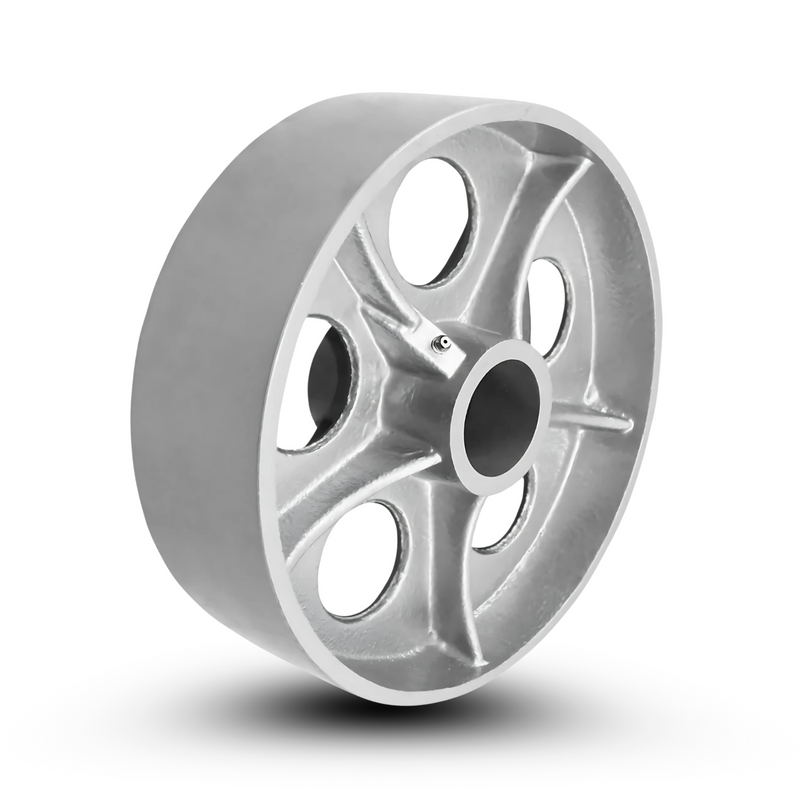
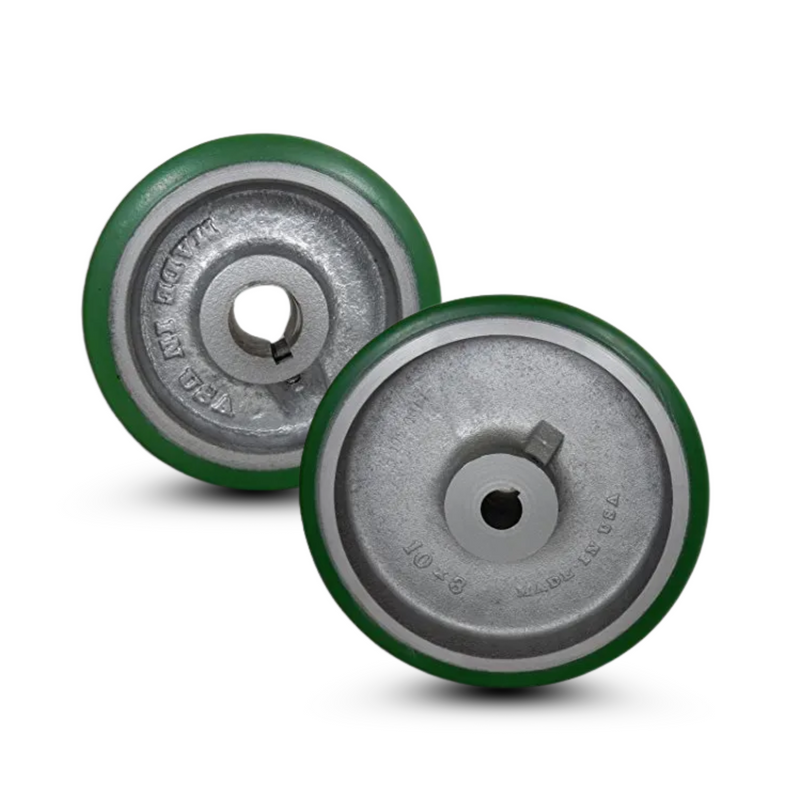
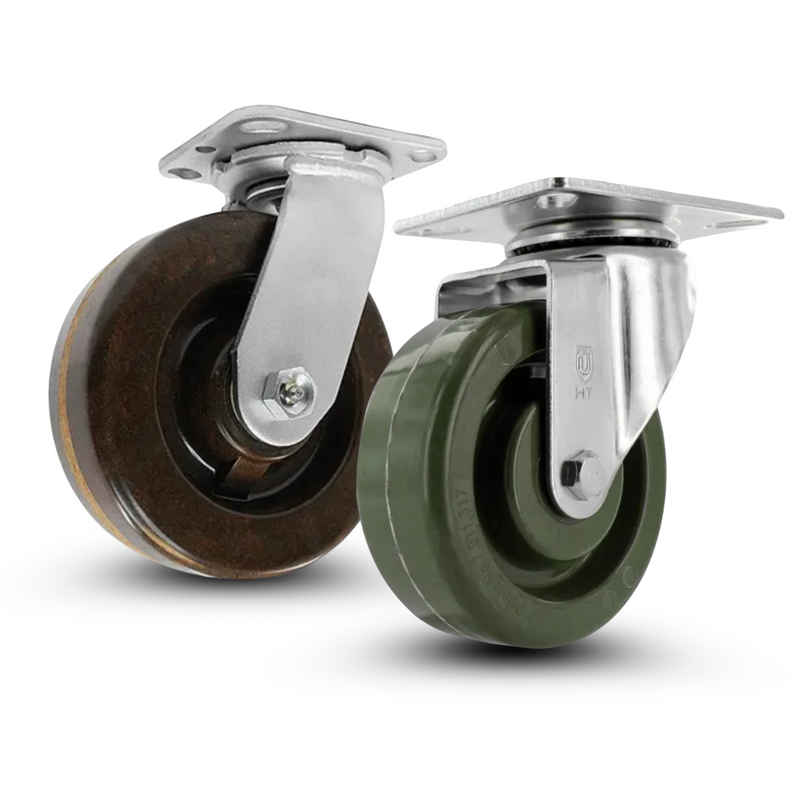
Aluminum hubs reduce wheel mass 50%, lower bearing drag, and resist heat buildup that softens urethane. Albion 110PD Poly-on-Aluminum runs 15% lower than the same compound on a cast iron hub.
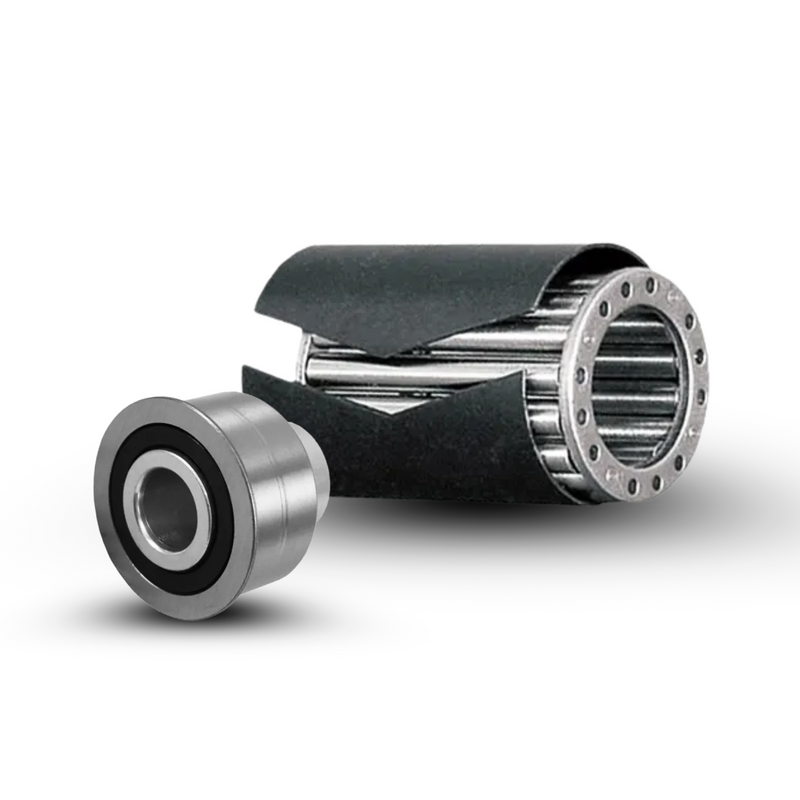
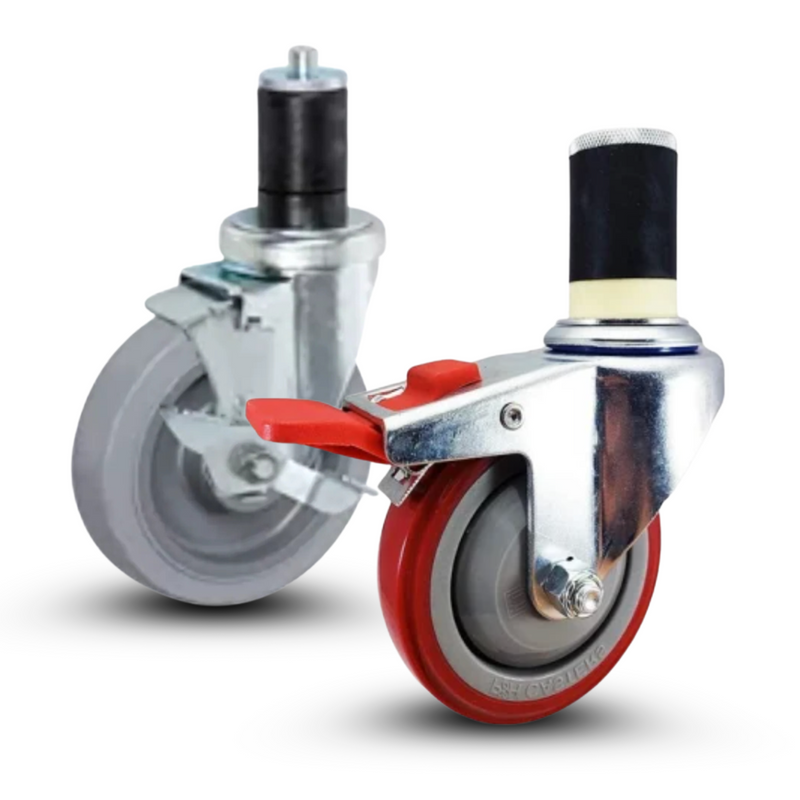
Roller bearings are baseline. Sealed precision cuts force 18%. Maintenance-Free (lifetime sealed) cuts force 25%. For continuous-duty applications, maintenance-free pays back through reduced labor + zero re-greasing schedule.
Crown tread reduces contact patch by ~8%, lowering rolling resistance vs. flat tread. Wider wheels (3" vs 2") increase contact patch and force — only go wider when load capacity demands it. Most ergonomic applications use 2" width with crown profile.
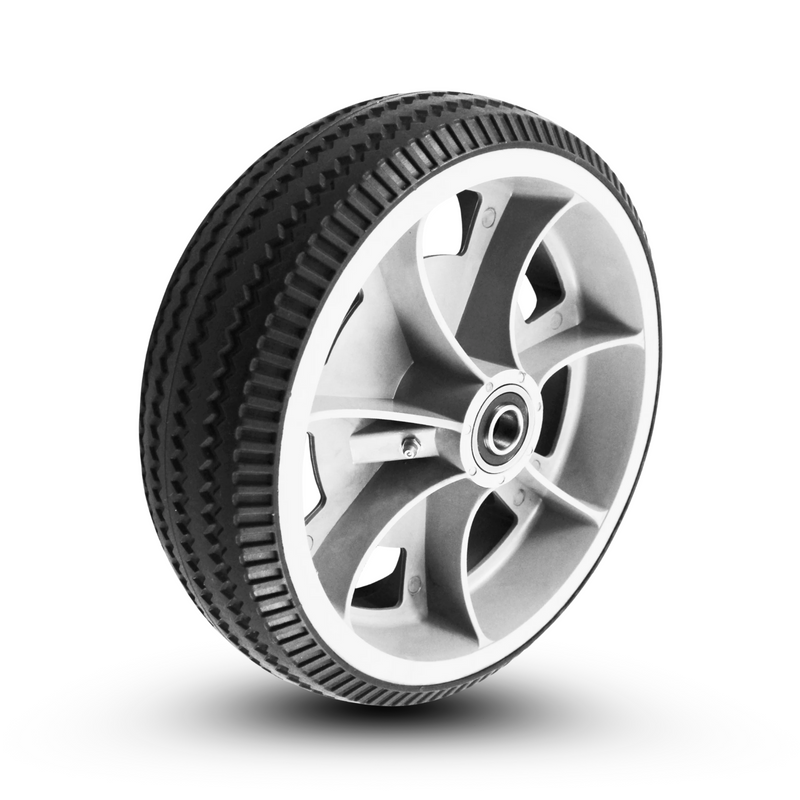
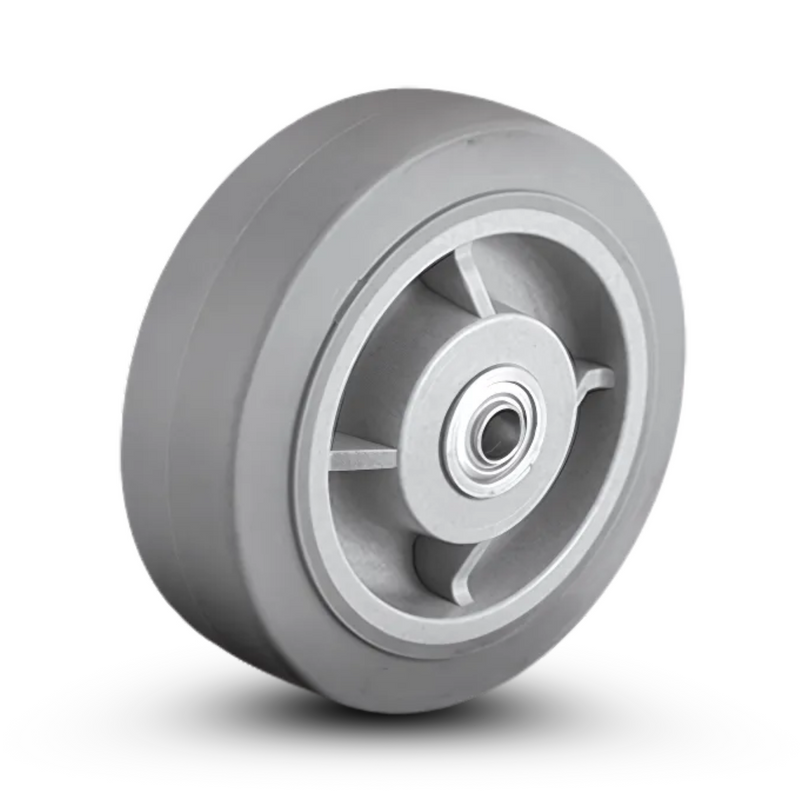
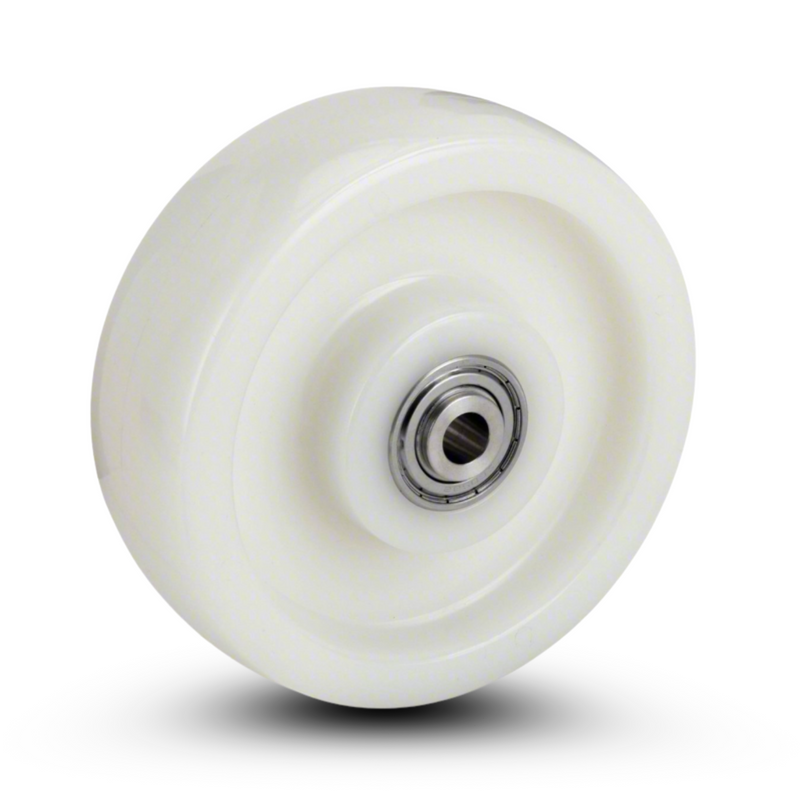
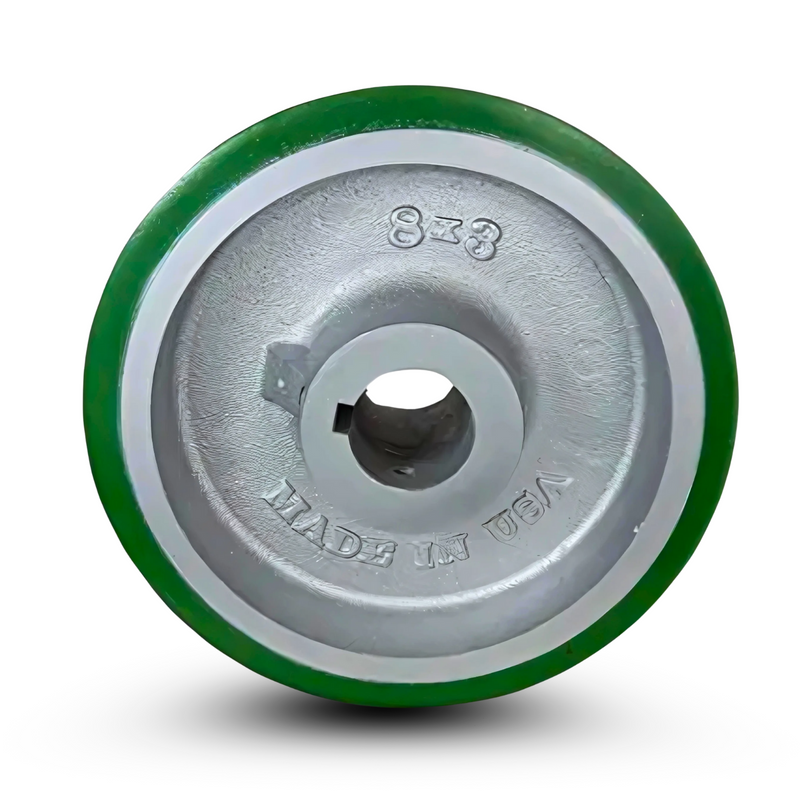
Three wheel families dominate the high-end ergonomic market. All three are stocked at CasterHQ and ship same-day on most SKUs.
85 Shore A polyurethane on aluminum hub with maintenance-free precision bearings. Lowest sustained rolling resistance of any production wheel in the industry. USA made, 5-year warranty.
In-house ergonomic line — sealed maintenance-free bearings, ergonomic urethane on cast iron core, 4-1/2" x 6-1/4" plate standard. Best price-to-performance for general industrial.
Premium wheel tech across Hamilton, Albion, and Caster Connection ranges. Ergo-Glide XT for heavy duty, UltraGlide for clean rooms, Ergo-Tech for general industrial.
Mid-Atlantic manufacturer running 24 battery transfer carts on dock plates. Operators reporting fatigue at end-of-shift, 3 worker's-comp claims in 18 months. Original spec: 6" x 2" Soft Rubber on Cast Iron, Roller Bearings.
Final result: 70% force reduction. Sustained push force from 252 lbs → 76 lbs (still above 50 lb OSHA, but operators report no fatigue at 76 lbs vs. severe strain at 252). Zero new injury claims in 14 months since rollout. ROI on $1,800 caster upgrade (24 carts × $75 SKU premium): 8 months on labor + insurance savings.
If even MAX Efficiency on 8" or 10" wheels still pushes you over 50 lbs sustained, you need powered drive casters or AGV-coupled transport. Our engineering team has converted hundreds of carts to powered drive — same-day spec turnaround on standard duty cycles.
OSHA references the Liberty Mutual / Snook tables and ANSI MH-26: 50 lbs sustained for 75th percentile males, 35 lbs for females. Initial start force can hit 60-70 lbs briefly, but sustained over 8-hour shifts must stay under 50 lbs. The calculator above flags any sustained force exceeding 50 lbs and shows what upgrade brings it into compliance.
Three reasons. First, the 85 Shore A durometer compound is engineered for low hysteresis — less energy lost as heat during compression cycle. Second, the aluminum hub reduces wheel mass 40-50% versus cast iron, lowering rotational inertia. Third, the 28-series uses maintenance-free precision sealed bearings as standard. The combination delivers a 44% reduction in rolling resistance versus standard poly on iron with roller bearings — measurable on a force-pull dynamometer.
Each diameter step (4→6→8→10") reduces rolling resistance by approximately 12%, with bigger gains on rough or jointed floors. A 4" wheel falls into a 1/4" floor crack and stops; an 8" wheel rolls over it without notice. Combined with low-resistance compound, going 4"→8" can cut sustained force by 30-40%.
Crown tread is better for ergonomic applications because it reduces contact patch area, lowering rolling resistance by ~8% versus flat tread. Flat tread is better for static load distribution (parked carts, machinery moves) where you want maximum contact with the floor. For carts that move daily, crown wins on push force.
For continuous-duty applications, yes. Maintenance-free bearings (sealed lifetime) reduce sustained force by 25% versus roller bearings. They also eliminate the re-greasing schedule (every 90 days for roller, every 30 for tapered). Over a 5-year service life on a 24/7 cart, the labor savings alone exceeds the bearing premium 4-5x. For low-utilization carts (under 4 hours daily), standard sealed precision is sufficient.
Yes — measurably. Aluminum hubs are 40-50% lighter than cast iron, which reduces rotational inertia (less energy to start the wheel rolling) and reduces bearing load (less drag at the bearing race). The Albion 110PD Poly-on-Aluminum series shows 12-15% lower rolling resistance than the same poly compound on a cast iron hub. Aluminum also dissipates heat better, preventing the urethane from softening on long towed runs.
When the calculator shows the Premium MAX Efficiency build still exceeds 50 lbs sustained, you've hit the limit of passive optimization. At that point you need powered drive — either AGV-compatible powered swivel casters, Power-Assist tuggers, or full AGV/AMR conversion. Our engineering team handles all three. Submit your spec via RFQ for a same-day powered solution recommendation.
Albion publishes 0.028 sustained rolling resistance for the 28-series MAX Efficiency on smooth concrete, validated by their engineering lab using force-pull dynamometer testing per ASTM F2298. We've replicated those numbers in field trials with major OEM customers. Real-world results vary 10-15% based on floor condition, temperature, and bearing wear — for production engineering decisions on critical applications, our team will validate the specific compound on your floor.
Yes. Polished epoxy versus cracked sealed concrete can swing required force 20-30%. Tile with grout lines doubles starting force. Outdoor pavement multiplies sustained force by 2x. If you can change floor condition (re-coat the concrete, fill expansion joints), do that before re-spec'ing casters — it's almost always cheaper than the caster upgrade and improves every cart on the floor.
Escalate for: sustained force above 50 lbs after Premium build optimization, towed applications above 5 mph, custom durometer requirements (FDA, ESD, oil-resistant), floor coefficient measurement, or any worker's-comp ergonomic compliance project. Our engineering team has done these conversions for Tesla, Lockheed Martin, and dozens of mid-market OEMs. Submit your application for engineering review.


