
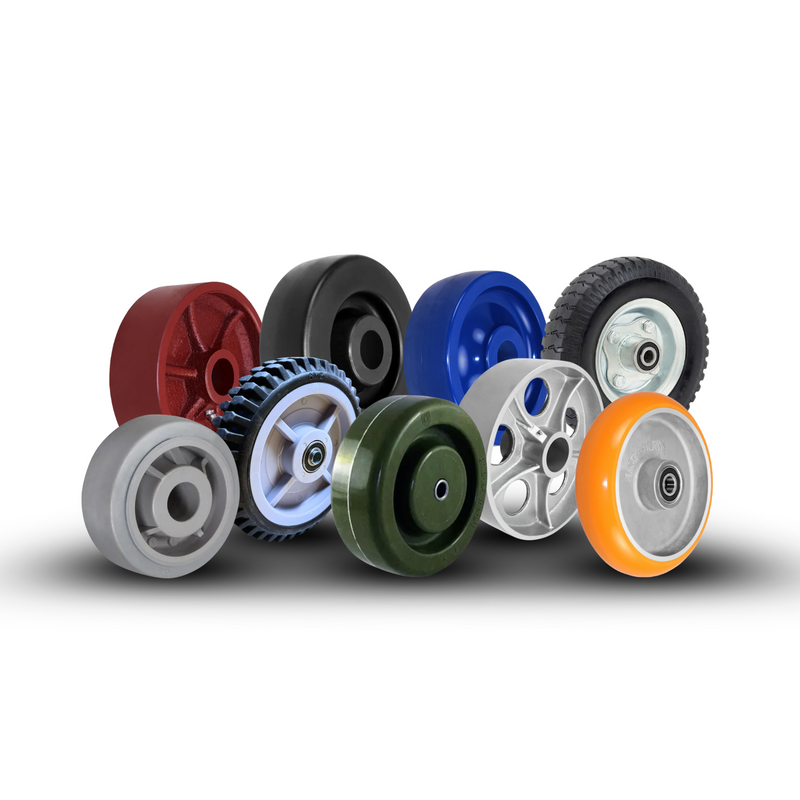
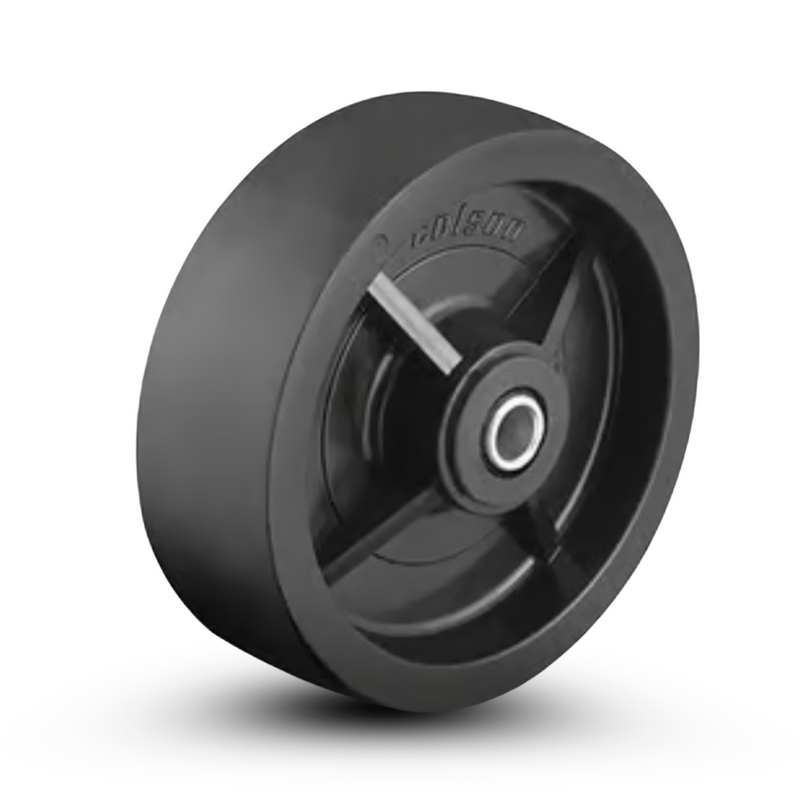
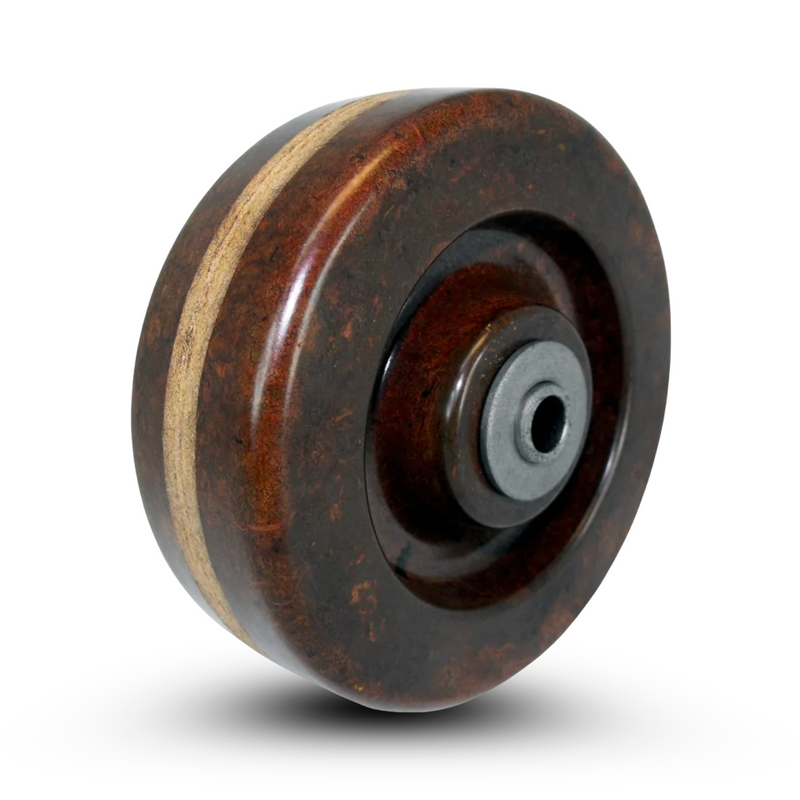
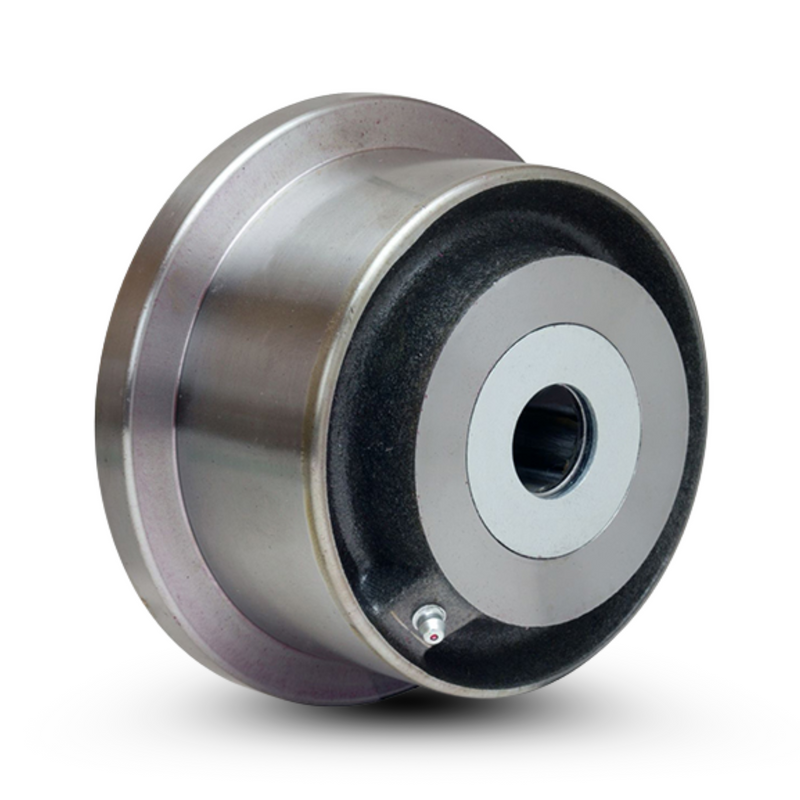
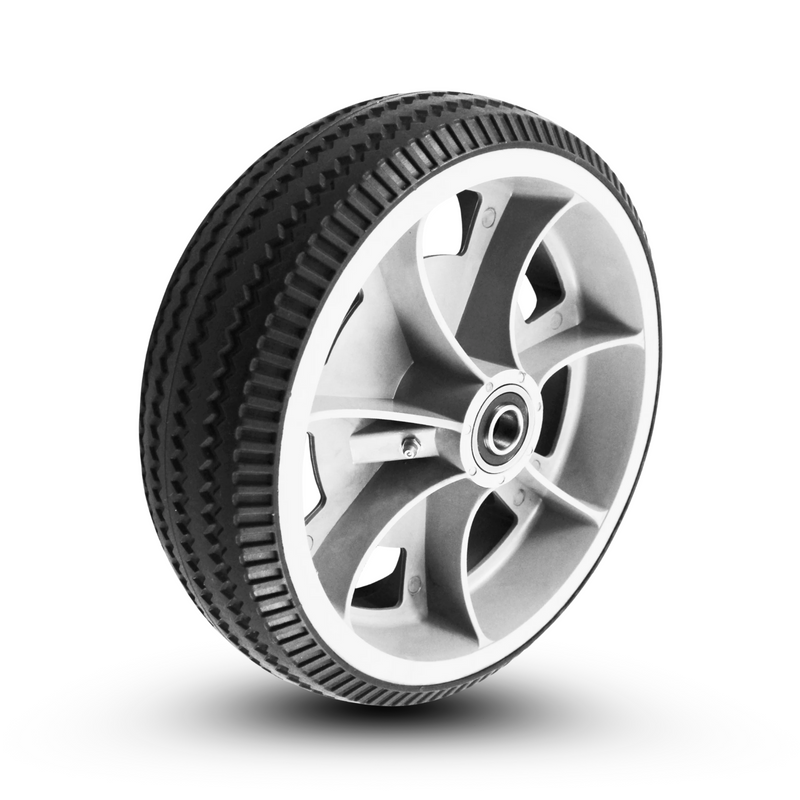
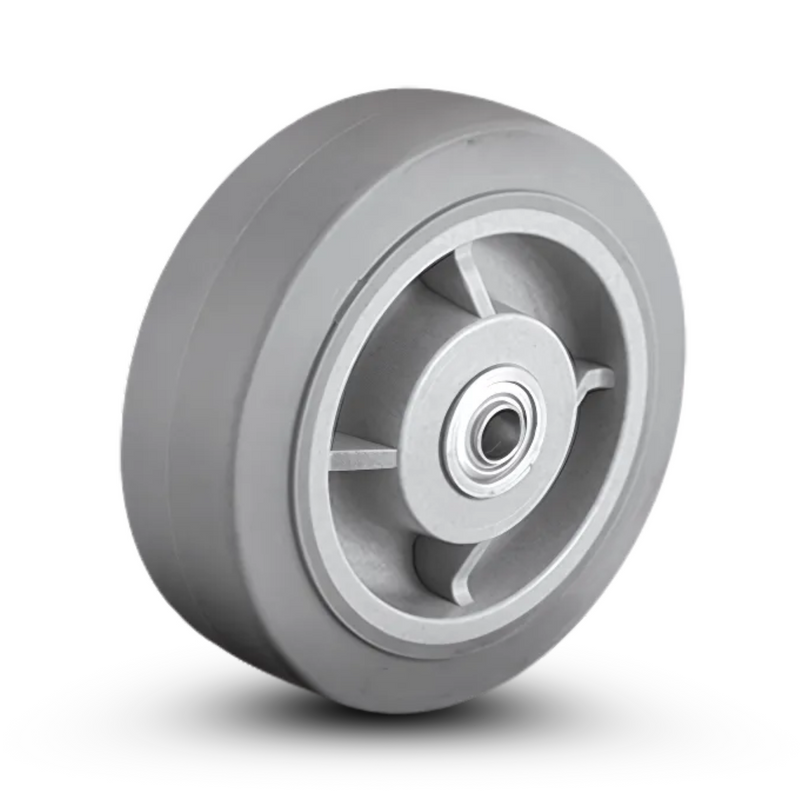
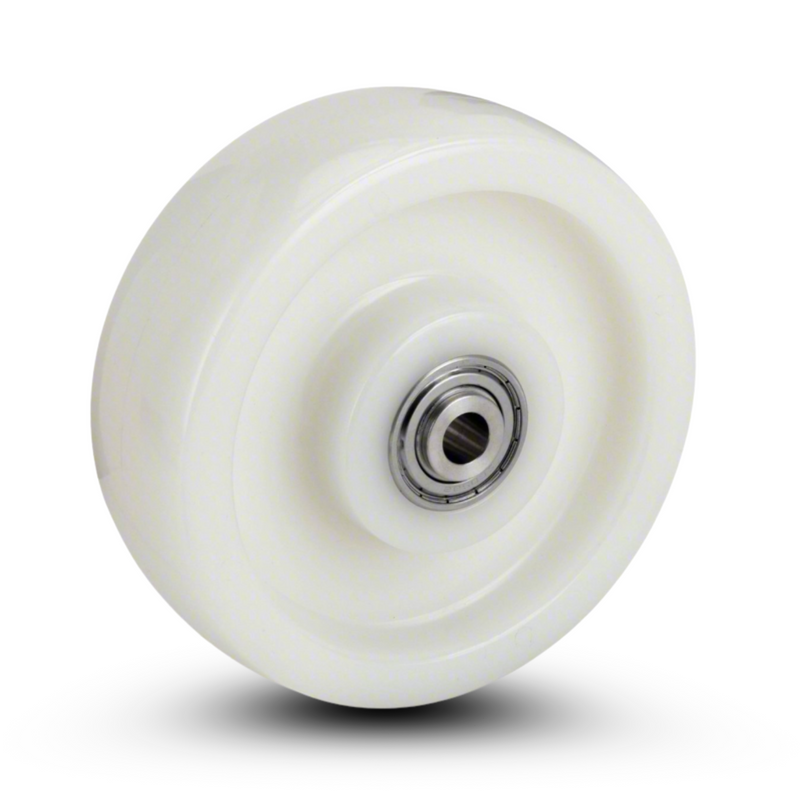
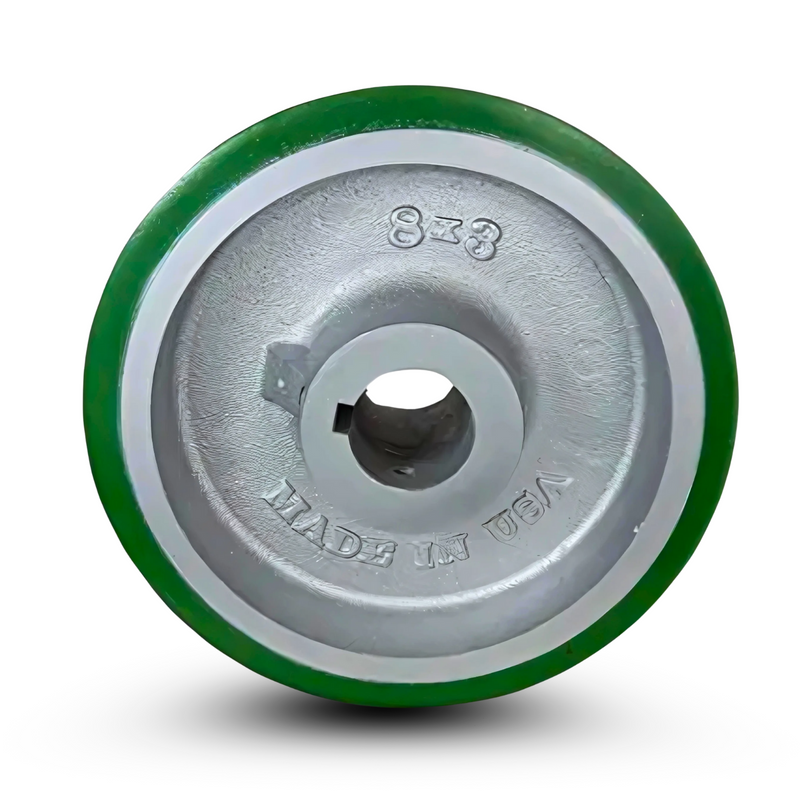
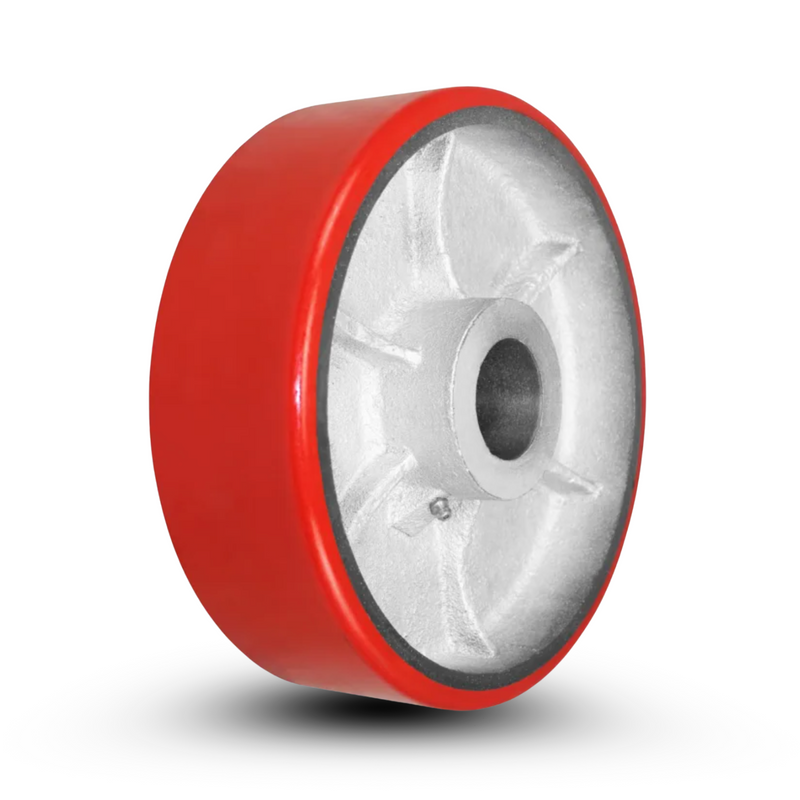
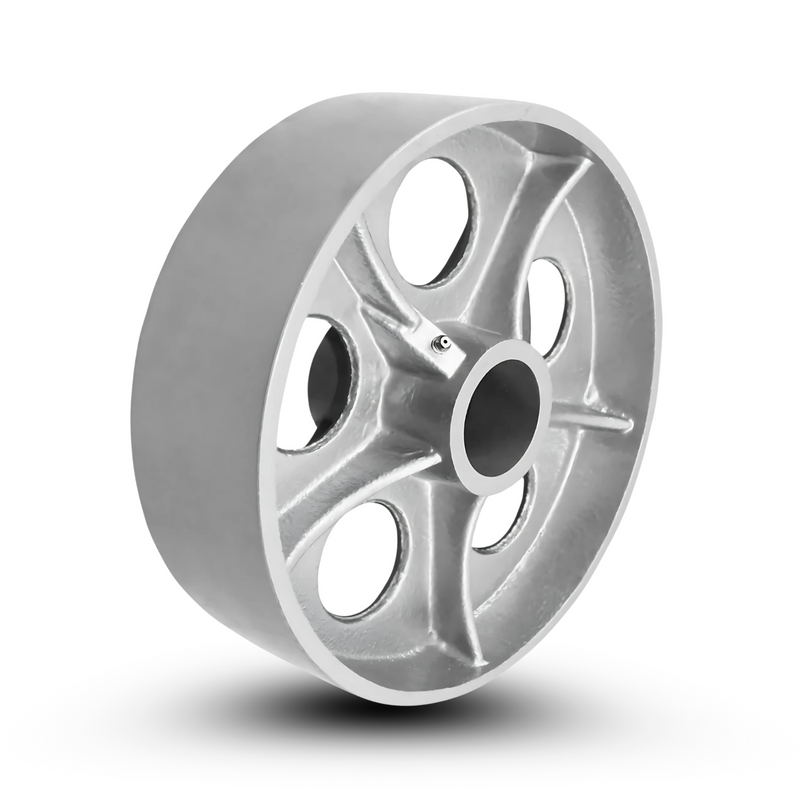
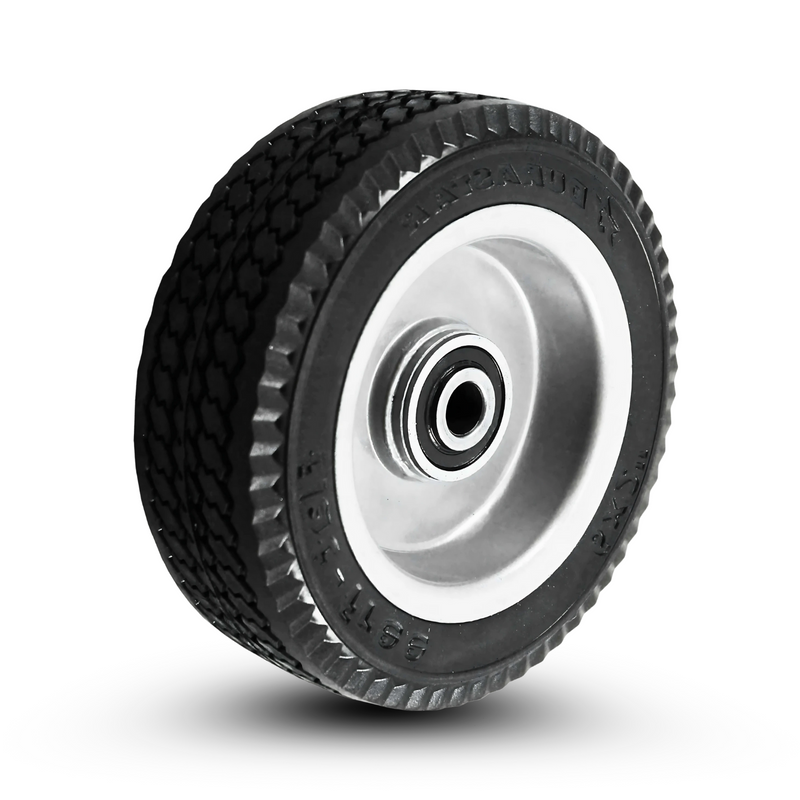

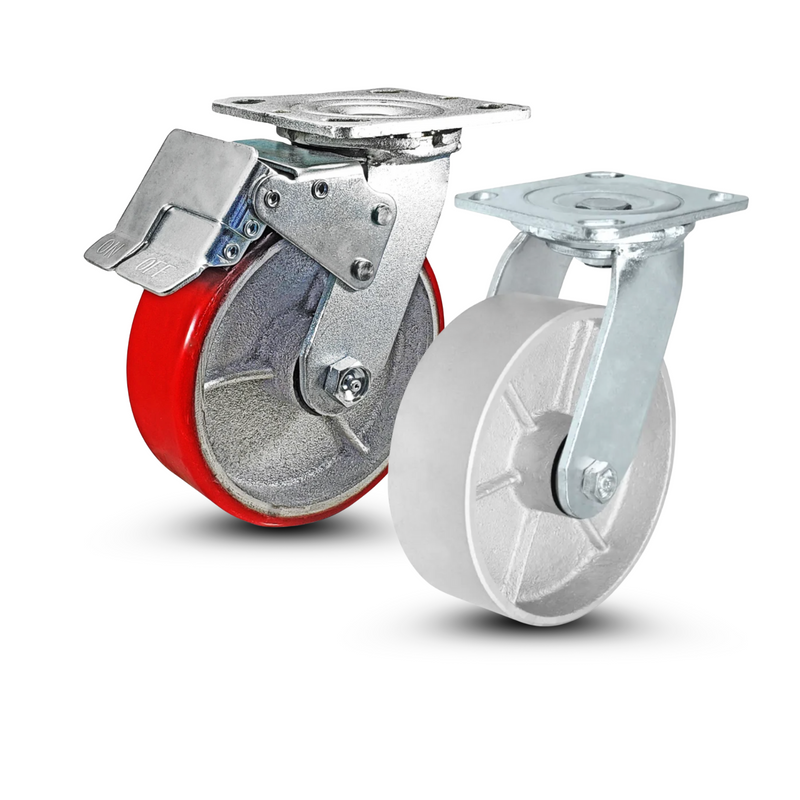
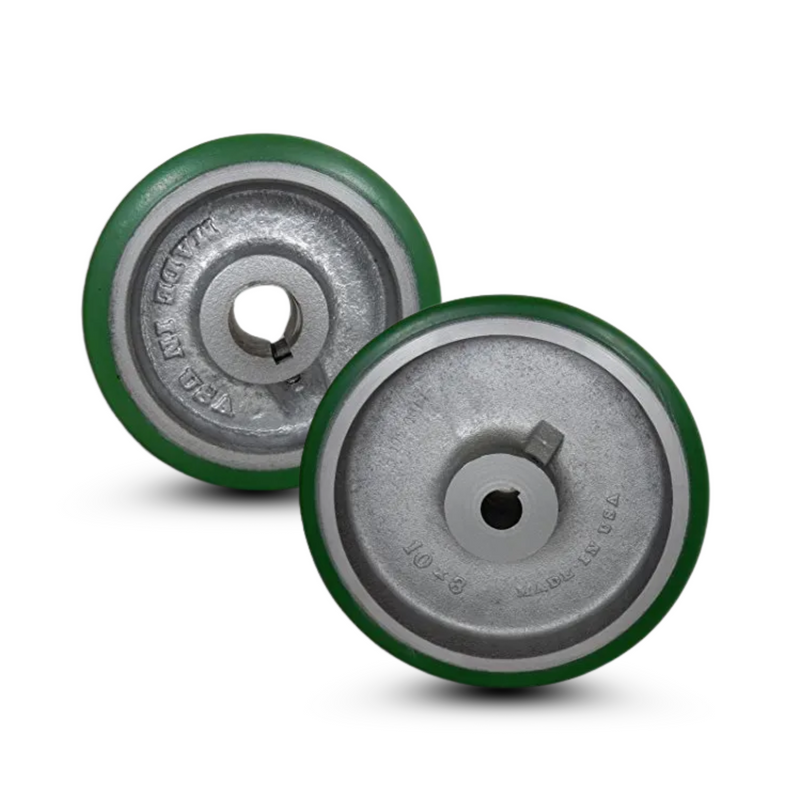
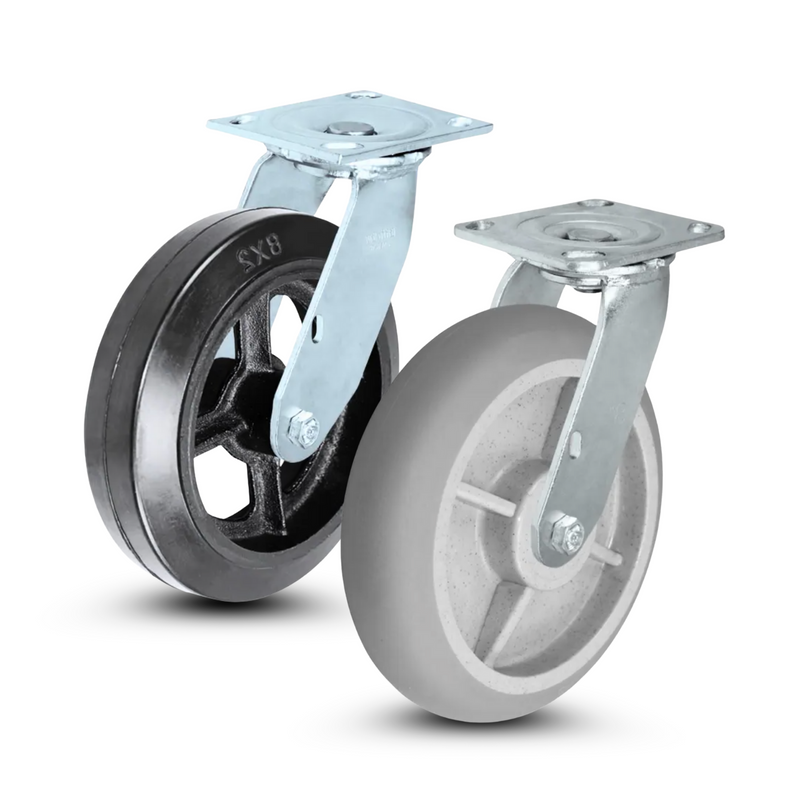
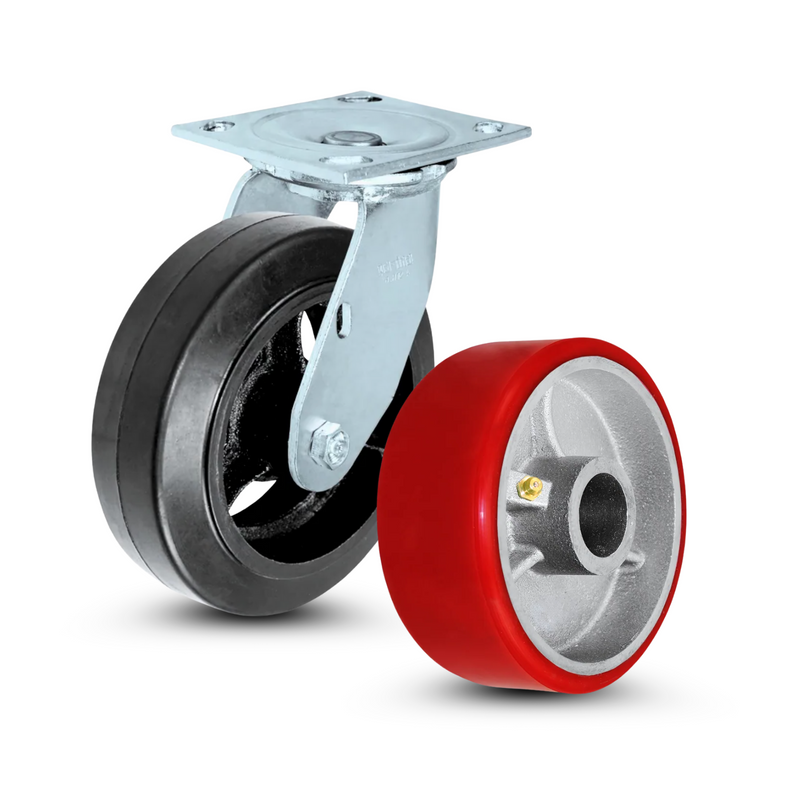
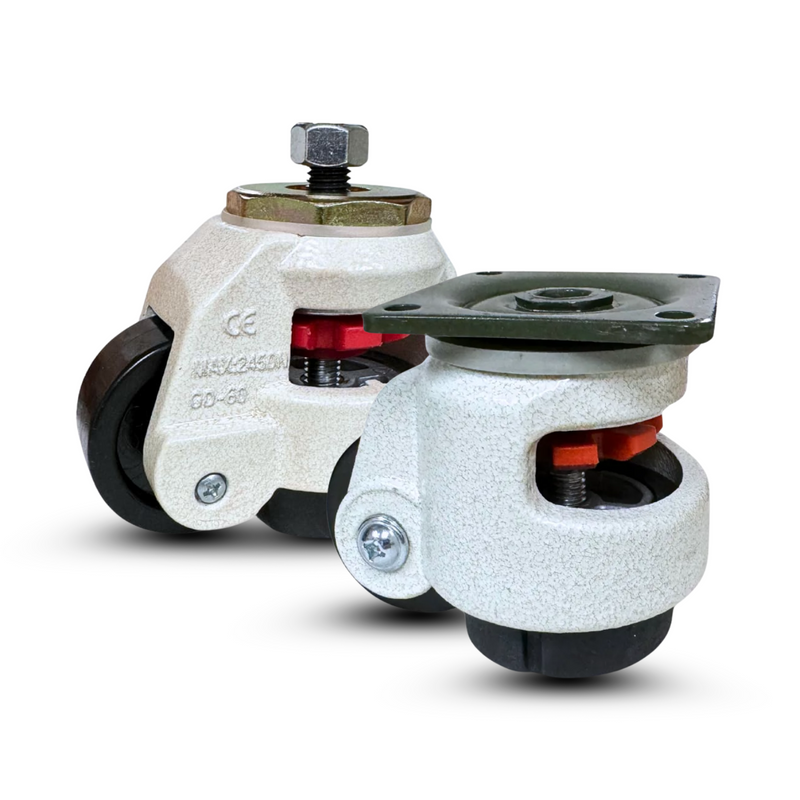
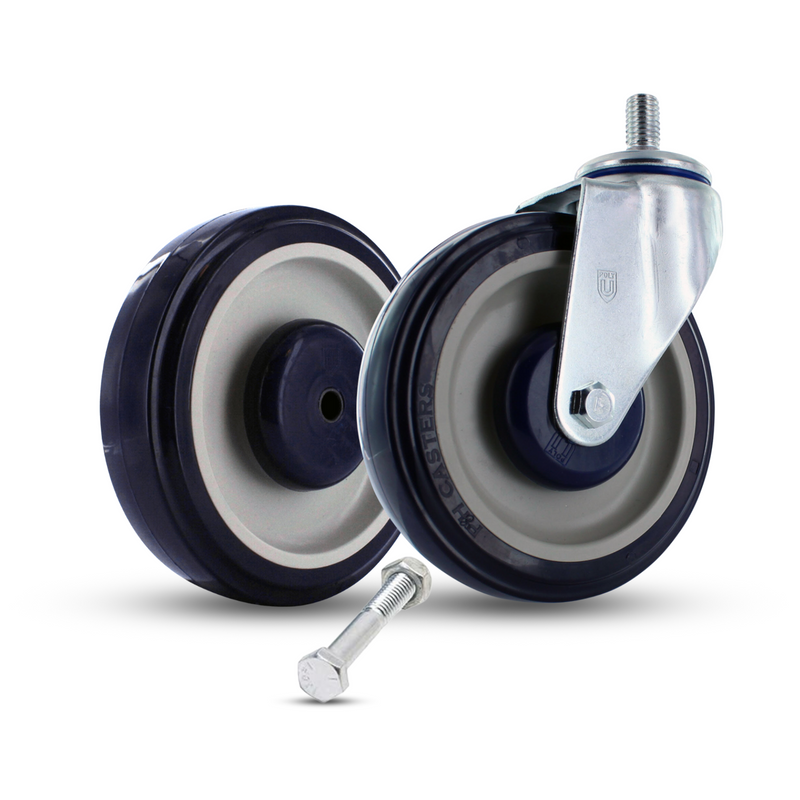
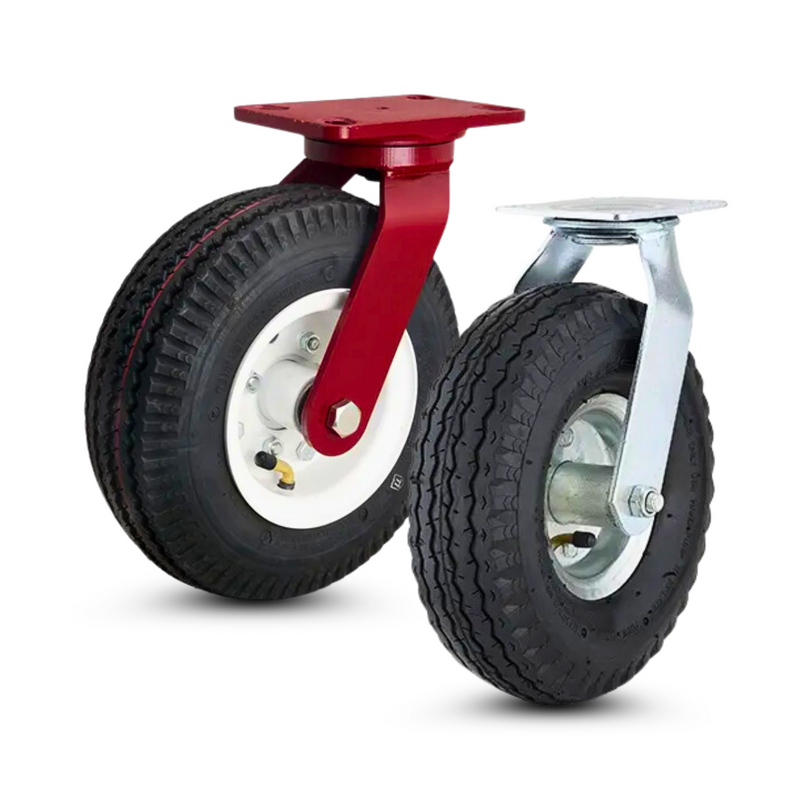
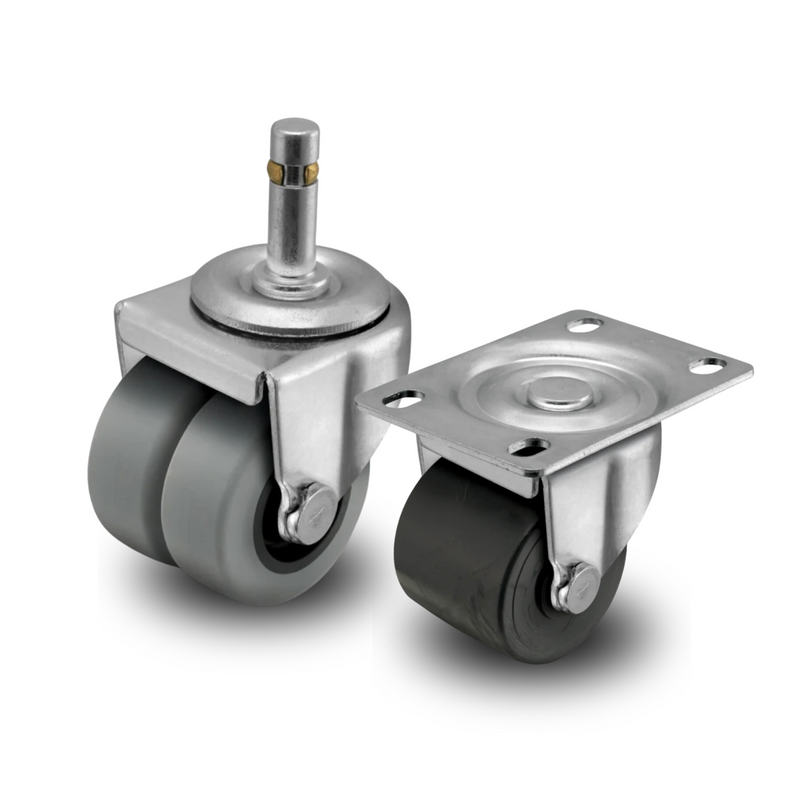
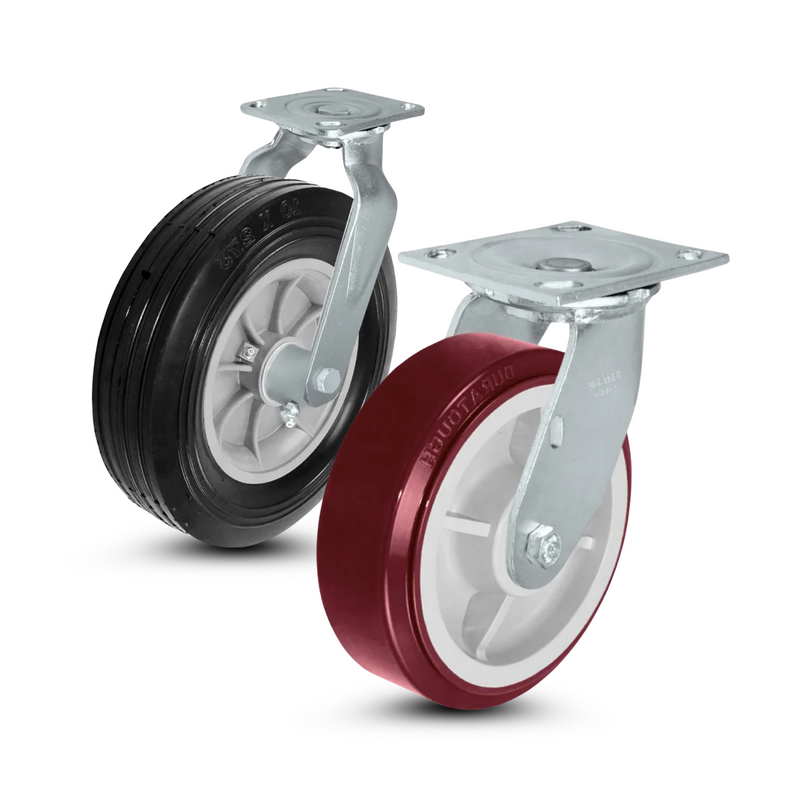
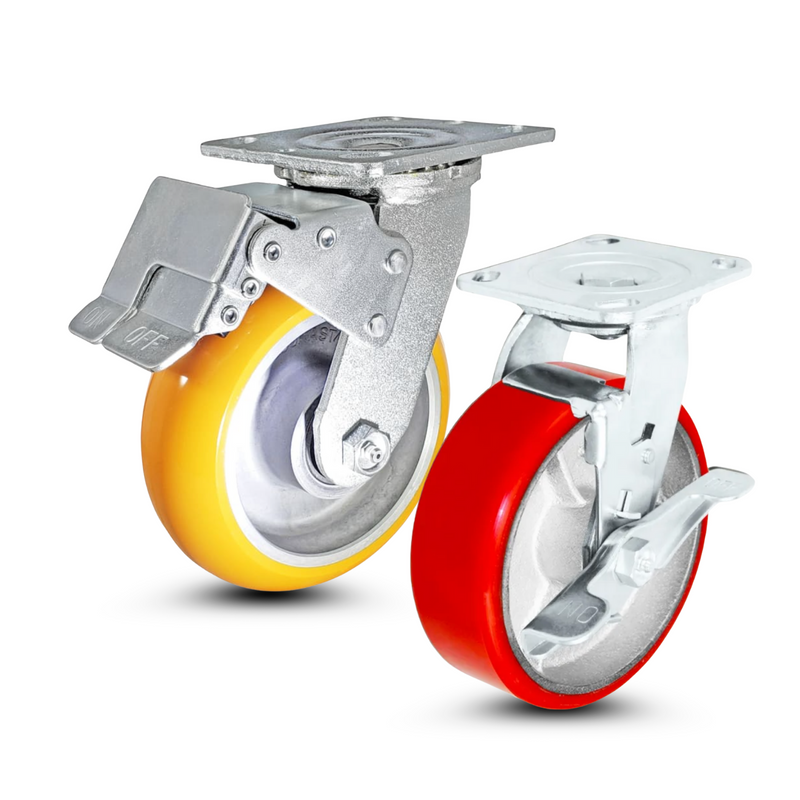
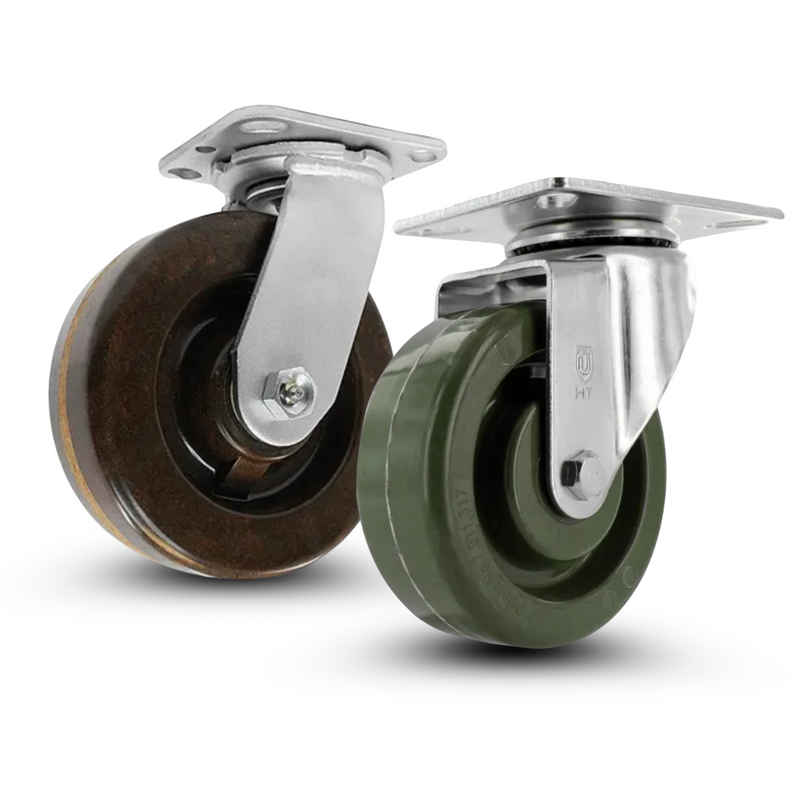
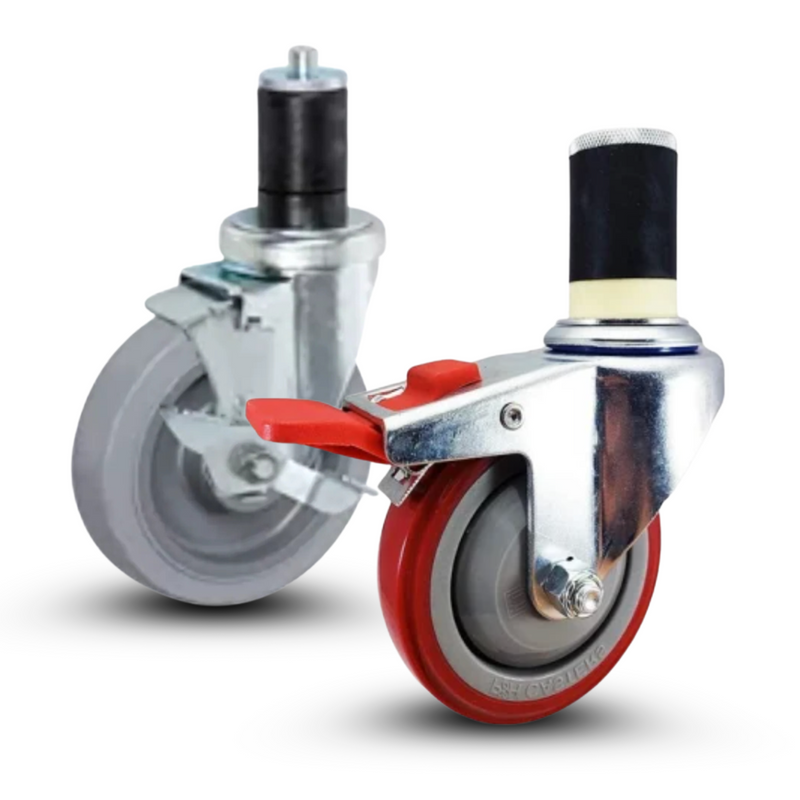













Polyurethane on aluminum wheels bond a polyurethane tread to a lightweight aluminum core — 30% lighter than iron-core equivalents while maintaining 250–1,500 lb per wheel load capacity. Spec'd for aerospace, medical, food service, and any application where total cart weight matters. Browse wheel sizes below, then jump to a complete caster configuration using poly-on-aluminum wheels.
Aluminum core is 30% lighter than iron of the same wheel size — matters when total cart weight is constrained (aerospace assembly carts, mobile medical equipment, food service trolleys). Trade-off is load capacity: aluminum tops out at ~1,500 lb per wheel vs 8,000 lb for iron. For weight-sensitive applications under 1,500 lb per wheel, aluminum wins.
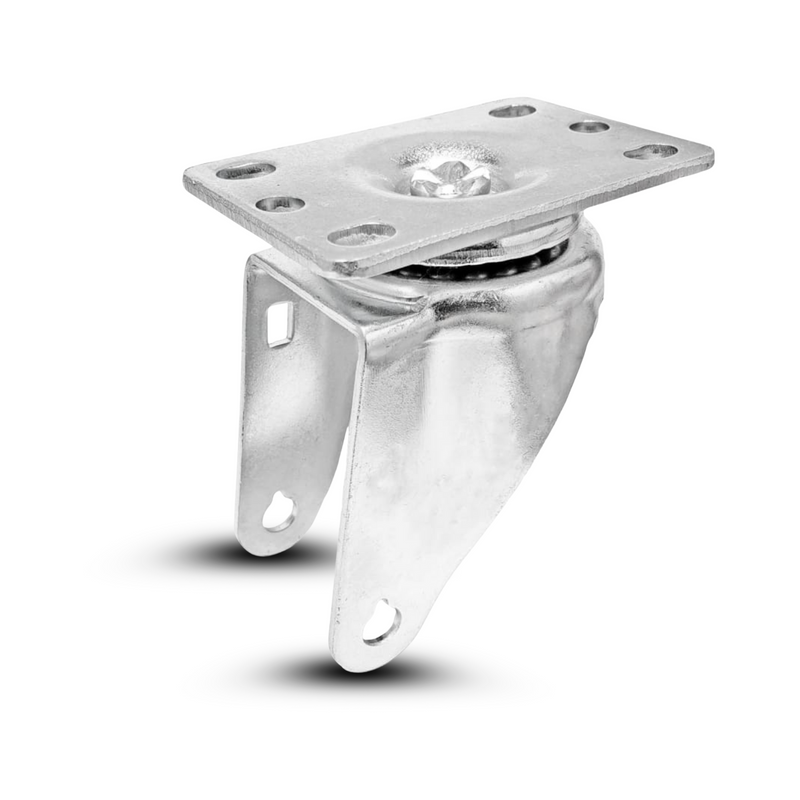
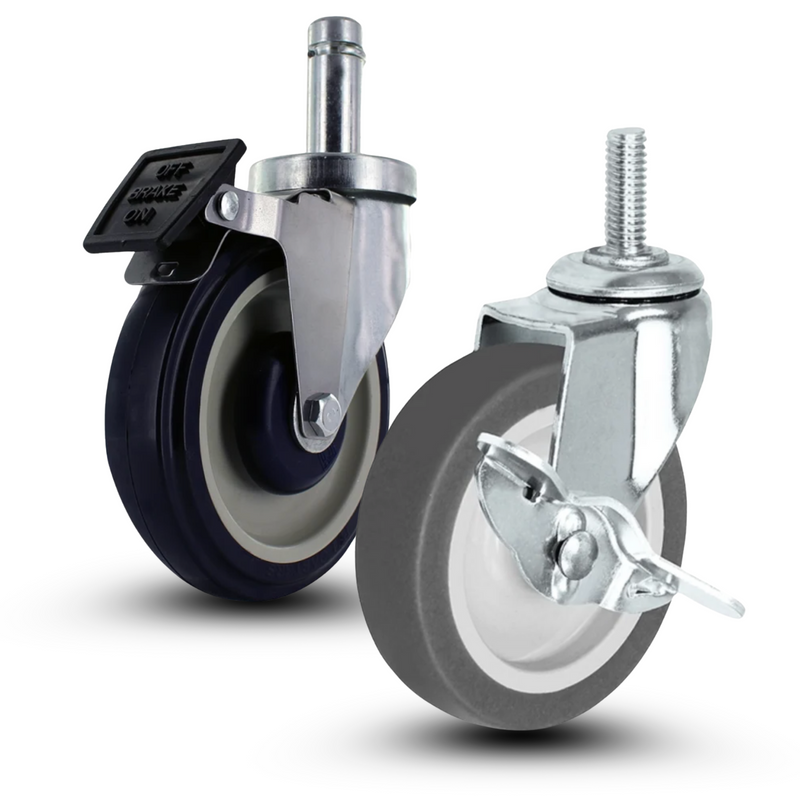
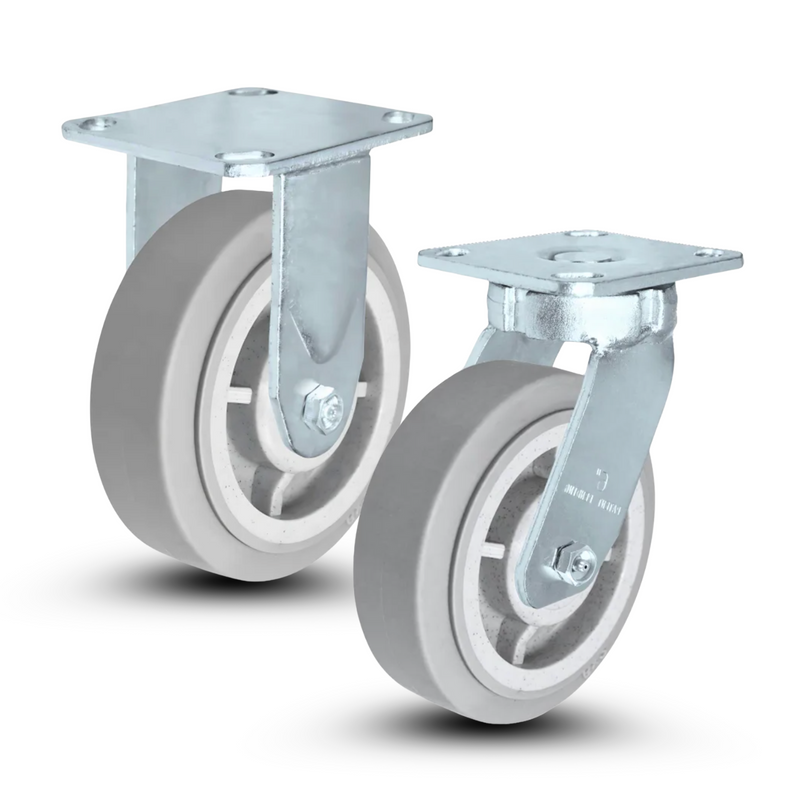
Pick a polyurethane caster yoke style: plate casters for industrial bolt-on, swivel casters, rigid casters, or side-lock brake casters. Aerospace and medical applications often spec swivel + rigid 2-and-2 layouts with total-lock brakes.
Aluminum naturally forms an oxide layer that protects against corrosion in most environments. Aluminum-core wheels are commonly spec'd for marine, food service, pharmaceutical, and clean-room applications where iron would rust. Polyurethane tread bonded to aluminum has 5+ year service life in food processing without corrosion issues.
Are these wheels weather-resistant? Yes — aluminum oxide layer protects against most outdoor exposure. Spec marine-grade for saltwater.
Build a complete caster with these wheels? Yes — see /polyurethane-plate-casters for plate-mount casters using poly-on-aluminum wheels.
FDA-compliant for food service? Yes, FDA-compliant polyurethane formulations available; aluminum core itself is food-safe.
Lighter than nylon wheels? Comparable — both significantly lighter than iron. Aluminum has better load capacity than nylon.
Cost vs poly-on-iron? Typically 20-40% more per wheel due to higher aluminum material cost.
Apply this rule when sizing the caster that will use this wheel type. Divide total cart weight by 3 (not 4) because uneven floors cause one caster to temporarily lift, redistributing load to the remaining three. Multiply by 1.25 for dynamic impact (rolling onto floor seams, dock plates). Pick the wheel core type whose load range covers your per-caster requirement.
| Wheel Core | Load/Wheel | Weight | Floor Protection | Best Use |
|---|---|---|---|---|
| Polyurethane on Iron | 700–8,000 lb | Heaviest | Excellent | Heavy industrial, tow lines |
| Polyurethane on Aluminum Most Popular | 250–1,500 lb | Light | Excellent | Aerospace, weight-sensitive |
| Solid Polyurethane | 300–1,000 lb | Medium | Excellent | General industrial, mid-load |
| Polyurethane on Polyolefin | 125–1,000 lb | Lightest | Excellent | Light-duty, chemical resistance |
Spec'd 180 aerospace assembly cart conversions to CasterHQ's 6-inch poly-on-aluminum wheels paired with kingpinless caster yokes. Cart weight dropped 240 lb each — that translated directly to operator push-effort savings on long shop-floor routes. Two years in, zero wheel core failures.
Application engineers on staff · ISO-certified facility · 50,000+ businesses served · 100+ combined years in caster design


